How to Aquascape for Loaches: Caves, Current and Hiding Spots
This aquascape loach tank guide covers everything you need to design a layout that accommodates the burrowing, hiding and exploring habits of these characterful bottom dwellers. At Gensou Aquascaping, located at 5 Everton Park in Singapore, we love keeping loaches for their playful personality and have learned what makes them thrive in a planted setup.
Understanding Loach Behaviour
Loaches are a diverse group of fish with some shared traits: most are bottom-oriented, many are nocturnal or crepuscular, and nearly all appreciate tight hiding spots where they can wedge themselves during rest periods. Kuhli loaches burrow into fine substrate and squeeze into impossibly narrow gaps. Hillstream loaches cling to smooth rocks in fast-flowing water. Clown loaches grow large and need spacious caves. Understanding which loach species you plan to keep is the first step in designing an appropriate aquascape, as their habitat requirements vary significantly.
Substrate Considerations
For burrowing species like Kuhli loaches and dwarf chain loaches, fine sand is essential. These fish partially or fully bury themselves in the substrate, and coarse gravel can injure their scaleless or fine-scaled bodies. Pool filter sand or smooth river sand with a grain size under 1.5 millimetres works well and costs under SGD 10 per bag in Singapore. For hillstream loaches, a mix of smooth pebbles and sand replicates their rocky stream habitat. Avoid sharp-edged substrates and aquasoils that break down into fine particles when disturbed by digging loaches.
Building Caves and Hiding Spots
Caves are the most important feature in a loach aquascape. Stack smooth river stones to form small caverns, ensuring the structures are stable enough that burrowing activity will not cause a collapse. Coconut shells cut in half with an entrance hole filed smooth make affordable and effective caves. Ceramic breeding tubes and PVC pipes hidden behind plants or rocks offer additional shelter. For a more natural look, arrange pieces of driftwood to overlap and create narrow gaps and tunnels. Provide at least one hiding spot per loach, plus a few extras to reduce territorial disputes. Stock up on smooth river stones and coconut shells from Pasir Ris or East Coast hardware shops for just a few dollars.
Current and Flow Design
Hillstream loaches like Sewellia and Gastromyzon species require strong, oxygen-rich flow to replicate their native fast-moving streams. Position a powerhead or wave maker to create a directional current across a section of the tank, ideally over smooth rocks where they can graze on biofilm. For Kuhli loaches and botia species, moderate flow is sufficient; a standard canister filter with a spray bar provides enough circulation. You can create varied flow zones within the same tank by directing the outflow towards one end and planting dense vegetation at the other end to slow the current, giving different loach species their preferred microhabitat.
Plant Selection for Loach Tanks
Loaches can be rough on delicate plants, especially burrowing species that uproot foreground plantings. Choose sturdy, well-anchored plants and species that attach to hardscape. Anubias tied to rocks and driftwood is practically indestructible and provides shade. Java fern and Bolbitis heudelotii are similarly resilient epiphytes. Cryptocorynes with established root systems tolerate some substrate disturbance better than carpet plants. If you want ground cover, use moss tied to flat stones or mesh pads that loaches cannot dig beneath. Avoid expensive carpet plants like HC Cuba in tanks with active diggers.
Lighting and Atmosphere
Most loaches prefer subdued lighting, and many are more active under dim conditions. Use floating plants like Amazon frogbit, Salvinia or red root floaters to filter light and create shaded zones. If your lighting is adjustable, running it at 40 to 60 per cent intensity encourages loaches to venture out during the day rather than hiding until lights off. A timer-controlled moonlight mode or dim blue LED in the evening lets you observe their peak activity. This low-light approach also benefits shade-tolerant plants like Anubias and Cryptocorynes, making the whole system easy to manage.
Stocking and Tankmates
Kuhli loaches do best in groups of six or more and suit tanks from 60 litres upward. Dwarf chain loaches (Ambastaia sidthimunki) are similarly social and need at least five companions in a 90-litre or larger tank. Clown loaches grow to 30 centimetres and require 300 litres minimum as adults, though juveniles are commonly sold in Singapore shops for SGD 5 to SGD 15 each. Hillstream loaches prefer cooler water and do well in pairs or small groups. Suitable tankmates include peaceful mid-water fish like rasboras, tetras and small gouramis. Avoid large or aggressive cichlids that may intimidate loaches out of their feeding areas.
Final Layout Tips
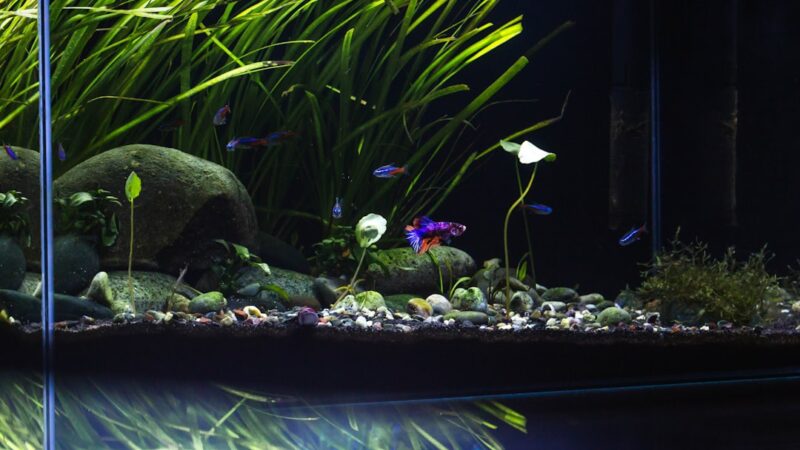
Create distinct zones in your aquascape: a rocky area with caves for hiding, an open sand or pebble area for foraging and a planted section for visual softness and additional cover. Ensure all hardscape is securely positioned, as loaches will test every gap and crevice. Feed sinking foods like wafers, frozen bloodworms and blanched vegetables directly onto the substrate after lights go dim for the most natural feeding response. Visit Gensou Aquascaping at 5 Everton Park for advice on loach-compatible hardscape and layout design for your tank.
Related Reading