How to Aquascape for a Rummy Nose Tetra Shoal: Open Swimming Space
Few aquarium sights rival a tight shoal of thirty rummy nose tetras moving as one body through open water — the synchronised red heads and black-and-white tails create a living kinetic sculpture that no static hardscape element can match. Designing an aquascape for a rummy nose tetra shoal means subordinating your design instincts to the fish: the layout exists to showcase the movement and cohesion of the shoal, not to compete with it. At Gensou Aquascaping in Everton Park, Singapore, rummy nose tetras are a go-to recommendation for planted display tanks precisely because they reward good layout with spectacular behaviour.
Why Rummy Nose Tetras Need Open Midwater
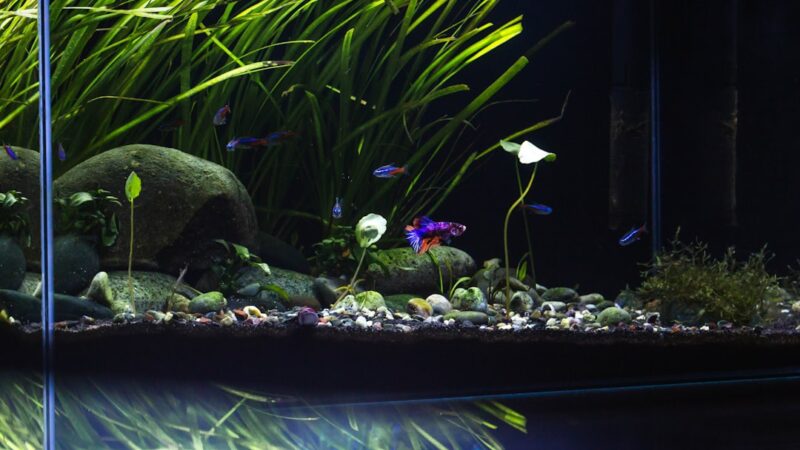
Hemigrammus bleheri is a midwater shoaling species from the Rio Negro and surrounding blackwater tributaries — vast open-water environments with minimal structure in the swimming zone. In an aquarium, a shoal that feels exposed and insecure will splinter into smaller groups and hide behind plants rather than display. The counter-intuitive design principle is that more open space in the midwater encourages the fish to shoal tightly and swim actively — they feel secure in numbers when they can see each other clearly. Dense planting belongs at the back and sides, with the central midwater zone left largely open.
Background Planting: Tall, Dense, and Trimmed Straight
Tall stem plants in the background create the visual backdrop that makes red-headed tetras pop. Rotala rotundifolia in its green or red form, Hygrophila corymbosa, and Ludwigia repens all work well as background plants that grow quickly and trim cleanly. A flat-topped, densely trimmed back wall of stem plants — like a green hedge — provides maximum contrast for the fish silhouette. Plant in tight clusters of five to seven stems per species, arranged in blocks of single species rather than mixed, for a cleaner background that doesn’t compete visually with the shoal. Trim to the same height across the back for a formal, deliberate look.
Hardscape Placement: Sides, Not Centre
Any rocks or driftwood should be positioned at the sides or front corners of the tank, not in the central midwater swimming lane. Side-positioned hardscape — a cluster of Dragon Stone or a piece of aged driftwood — anchors the composition without blocking the primary viewing axis. Anubias or Microsorum attached to the hardscape fills the transitional zone between open water and background planting. Keep the foreground low: a carpet of Hemianthus callitrichoides (HC Cuba) or Eleocharis parvula (mini hairgrass) at 1–2 cm height ensures the entire midwater column is visually accessible from the front.
Tank Dimensions and Shoal Size
Rummy nose tetras are most impressive in shoals of twenty or more — below fifteen fish, the shoal dynamics are noticeably less cohesive and the visual impact is halved. For twenty to thirty fish, a tank of at least 90 cm length and 45 cm width provides enough swimming volume for the shoal to spread out and then re-form. A 120 cm tank allows for thirty to fifty fish, which produces the river-school effect that makes this species famous at aquascaping competitions. Tank height of 40–45 cm is sufficient — rummy nose tetras occupy the middle third of the water column and rarely use extreme depth.
Water Quality: Soft, Clean, and Warm
Hemigrammus bleheri comes from naturally soft, acidic blackwater. In Singapore, PUB tap water at GH 2–4 is close to ideal — you may need to lower pH slightly towards 6.5–7.0 using peat or driftwood tannins. Temperature of 25–27°C suits the species well; Singapore’s ambient temperature of 28–30°C is at the high end of tolerable but not harmful if well-oxygenated. The critical water quality parameter is nitrate — rummy nose tetras are moderately sensitive to accumulation, and nitrate above 20 ppm causes pale head colouration and increased susceptibility to whitespot. Weekly 30–40% water changes in a heavily planted tank usually keep nitrate below 10 ppm.
Lighting and CO2 for the Planted Backdrop
The stem plant background benefits from medium to high light — PAR of 50–80 µmol/m²/s at the substrate. CO2 injection is strongly recommended for Rotala and Ludwigia; without it, the fast-growing background plants become leggy and sparse, losing the dense hedge effect that makes this layout work. A full-spectrum LED with a natural white colour temperature (5000–6500 K) showcases the red of the fish heads most effectively — warm yellow LEDs make the red look orange, while harsh cool white (>7000 K) reduces the vibrancy of plant colouration.
Tankmates for a Rummy Nose Display
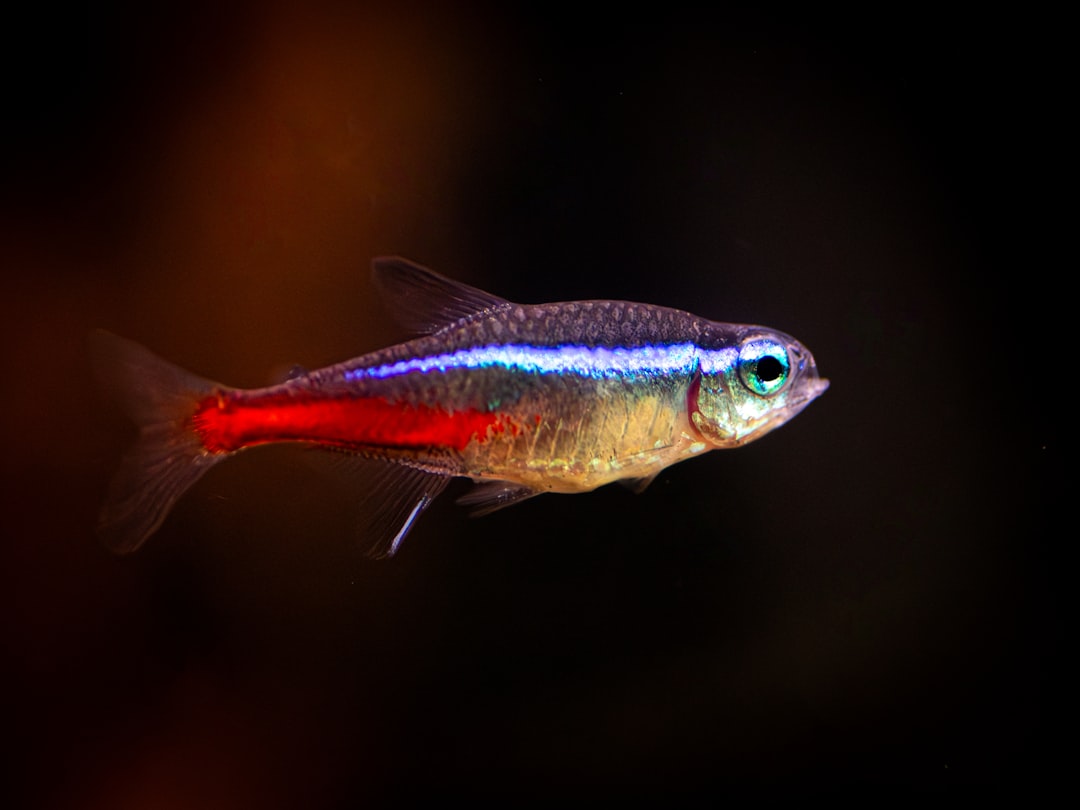
Keep tankmates minimal in a dedicated rummy nose display. A few corydoras catfish (Corydoras sterbai is temperature-appropriate) handle bottom maintenance without adding visual noise at mid-water level. A small plecostomus or otocinclus manages algae. Avoid other shoaling species in contrasting colours — mixing rummy nose tetras with neon tetras or cardinal tetras in the same midwater zone creates visual competition and the individual shoal dynamics of each species are diluted. The more focused the species selection, the more spectacular the display.
Related Reading
- False Rummy Nose Tetra Care Guide: Easier Alternative to the Real Thing
- How to Aquascape for a Harlequin Rasbora Shoal: Mid-Level Colour
- Rummy Nose Rasbora Care Guide: Sawbwa resplendens Red Nose
- How to Create an African River Biotope Aquascape
- Amazon Biotope Aquarium: Blackwater, Tetras and Driftwood
If you enjoy keeping active shoaling tetras like the rummy nose, you may also want to read our Buenos Aires tetra care guide for another hardy, fast-moving schooling species.
If you enjoy designing around shoaling tetras like the rummy-nose, you may want another characin for the group — our disk tetra care guide covers a striking tank companion.
While rummy-nose tetras work the mid-water, the substrate stays open — a group of pygmy cories fills it well, as detailed in our pygmy corydoras shoal care guide.