River Flow Aquascape Layout: Directional Movement in Your Tank
A river flow aquascape captures the energy and direction of a natural waterway inside your tank. This river flow aquascape layout guide teaches you how to create convincing directional movement using substrate channels, strategic stone placement and carefully chosen plants. At Gensou Aquascaping at 5 Everton Park, river-style layouts are among our most requested designs because they bring dynamic energy to any room.
What Makes a River Flow Layout
The river flow style creates the illusion of water moving in a specific direction through the tank. This is achieved through a combination of visual cues: a sand or gravel channel winding through the layout, stones positioned as if shaped by current, and plants leaning or flowing in one direction. The result is a layout that feels alive with motion even when the actual water flow is gentle. It draws heavily from nature aquascaping principles but adds a strong directional narrative.
Planning the River Channel
The river channel is the backbone of this layout. Sketch your design before starting, deciding whether the channel will run diagonally from one corner to the other, curve in an S-shape or fork into two branches. A diagonal channel from the front left to the back right is a classic approach that creates excellent depth. The channel should narrow as it recedes toward the back of the tank, reinforcing the perspective illusion. Use fine white or cream sand for the channel to contrast with the darker planted areas on either side.
Stone Placement for Directional Flow
Stones are your primary tool for suggesting water movement. Place them along the edges of the channel at slight angles, as if the current has pushed them into position over time. Rounder stones work better than sharp, angular pieces for this style, as flowing water naturally smooths rocks over centuries. Position larger stones upstream and smaller ones downstream to suggest the current’s sorting effect. Seiryu stone and river rock are both excellent choices, available at Singapore aquarium shops from $3 to $15 SGD per kilogram.
Substrate Layering and Banking
Build the substrate higher on the banks flanking the river channel, sloping gradually down to the sand channel itself. This creates natural-looking riverbanks that frame the flow path. Use aquasoil for the planted banks and cosmetic sand for the channel. Separate the two substrates with small stones or thin strips of plastic buried at the boundary to prevent mixing. Over time, some blending is inevitable and actually adds to the natural appearance, but a clean initial separation gives you a strong starting point.
Plant Selection for River Layouts
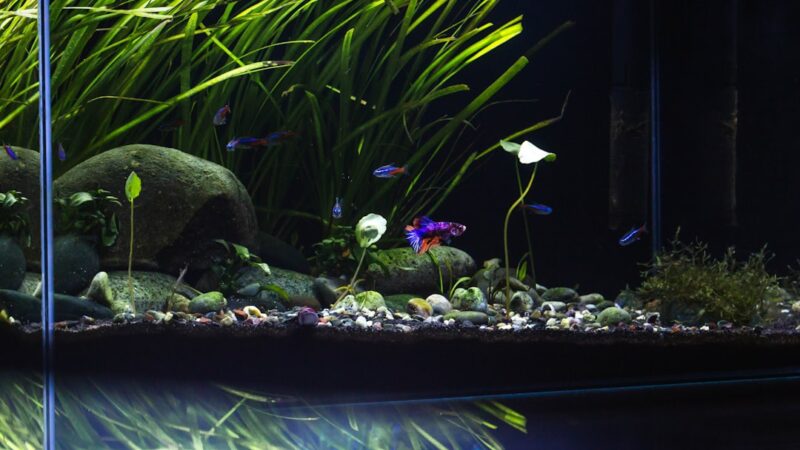
Choose plants that enhance the sense of direction. Vallisneria and other long-leaved plants planted along the banks will sway gently in the current, reinforcing the flow direction. Eleocharis or dwarf hairgrass on the banks creates a grassy riverside effect. Keep the sand channel itself free of plants to maintain the illusion of flowing water. Along the banks, plant taller species at the back and shorter ones at the front to create a natural gradient. Mosses attached to stones near the channel’s edge add a realistic waterline effect.
Creating Actual Water Flow
While the layout suggests movement visually, actual water flow along the channel enhances the effect dramatically. Position your filter outlet so the current runs in the same direction as your visual river. A lily pipe or spray bar aimed along the channel’s path creates gentle surface ripples that make the sand appear to shimmer like real flowing water. Adjust the flow strength so plants sway softly without being flattened. A flow rate of four to six times the tank volume per hour typically produces the right effect.
Fish That Complement River Layouts
Schooling fish that swim in coordinated groups add living movement to the directional theme. White cloud mountain minnows, rummy-nose tetras and zebra danios are natural choices, as they instinctively face into the current and swim in formation. Bottom-dwelling species like corydoras or kuhli loaches add interest at the substrate level, foraging along the sand channel as if navigating the riverbed. Avoid slow-moving or sedentary species that contradict the layout’s energetic character.
Maintaining the River Flow Layout
The main maintenance challenge is keeping the sand channel clear. Debris from trimming, fish waste and mulm will accumulate in the channel over time. Use a turkey baster or small siphon during water changes to gently clean the sand without disturbing the surrounding substrate. Replant any stems that have come loose and trim bank plants regularly to prevent them from encroaching into the channel. At Gensou Aquascaping, we can help you design, build and maintain a river flow layout that brings captivating directional energy to your aquarium.
Related Reading