Aquascape Maturation Timeline: Month 1 to Month 12

Every aquascape goes through predictable stages of development, and understanding this timeline prevents the frustration of comparing your one-month-old tank to a competition aquascape that has been growing for a year. This aquascape maturation timeline from Gensou Aquascaping at 5 Everton Park shows you what to expect — and what to do — each month.
Month 1: The Awkward Phase
Everything looks sparse and bare. Stem plants are short stubs, carpet plants are tiny patches, and the hardscape dominates. This is normal. Expect diatom algae (brown film on glass and surfaces) — it is a sign of a new tank establishing biological balance and disappears on its own within four to six weeks. Run lights for only 6 hours daily. Focus on water changes (50 per cent twice weekly if using aqua soil, 30 per cent weekly otherwise). Do not add too many fish — the cycle is still maturing. Patience is everything this month.
Month 2: First Signs of Growth
Stem plants begin growing noticeably. Carpet plants start spreading runners. Epiphytes show new leaves. The initial diatom bloom fades and may be replaced by a mild green algae phase. Increase light duration to 7 hours. Begin regular fertiliser dosing if you have not already. Perform your first stem plant trimming — cut the tops and replant to start building density. The tank still looks young, but growth is accelerating.
Month 3: Growth Takes Off
Stem plants are now growing fast enough to need trimming every one to two weeks. Carpet plants are visibly spreading and filling gaps. Moss on hardscape is thickening. The biological filter is mature, and water parameters are stable. This is when you can safely add your full fish complement. Algae should be diminishing as plants outcompete it for nutrients. Increase light to 8 hours if plants are responding well. The layout is beginning to look intentional rather than random.
Month 4–5: Filling In
The aquascape transitions from sparse to lush. Carpet plants form a continuous mat. Stem plants create full, bushy groups after multiple rounds of trimming and replanting. Epiphytes show significant new growth. Moss covers its intended surfaces. This is the stage where your initial design vision starts to become visible. Fine-tune the composition — move hardscape pieces that are not working, adjust plant placement, and remove species that are not thriving in their position.
Month 6: Adolescence
The aquascape looks good but not yet refined. Plant groups are full but may need shaping. Some species may be outcompeting others — adjust by trimming dominant plants more aggressively and giving slower growers more light access. The hardscape may be partially hidden by plant growth — decide whether you want it visible or fully covered. The root systems are now well-established, and plants respond vigorously to trimming.
Month 8–9: Approaching Maturity
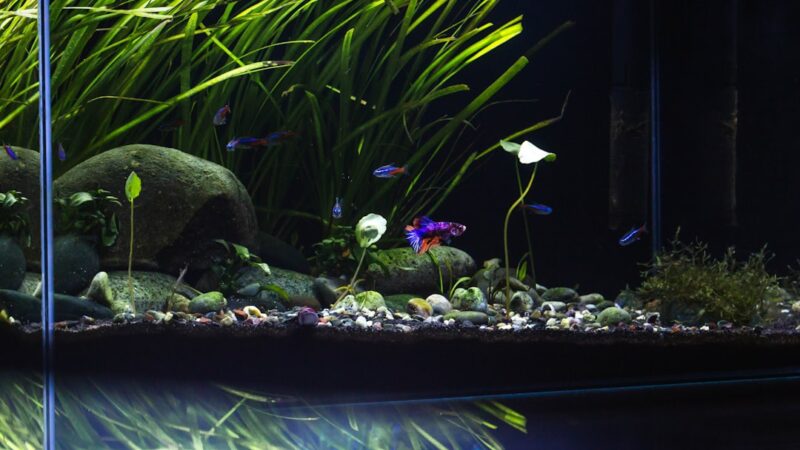
The aquascape is now lush and full. Plant groups have been trimmed into their intended shapes through multiple rounds of pruning. Carpet is thick and even. Moss has formed dense cushions. Epiphytes have colonised their hardscape surfaces. This is when most competition aquascapes are photographed — the tank has enough growth to fill the frame beautifully but is still fresh enough to avoid decay. If you are planning a photo, this is the window.
Month 10–12: Full Maturity
The aquascape reaches its peak. Every surface that should be covered is covered. Fish have grown into their adult colours and established comfortable routines. The ecosystem runs smoothly with minimal intervention beyond regular maintenance. However, some signs of aging begin: aqua soil may be depleting, root-feeding plants may slow, and some stem plants may develop bare lower stems despite trimming. This is natural — all aquascapes eventually age.
Beyond Month 12: Rescape or Refresh
After a year, most aquascapes benefit from a partial refresh: replacing depleted substrate sections, replanting tired stem plant groups with fresh cuttings, and potentially updating the hardscape. Some aquascapers perform a full rescape at 12–18 months — tearing down and starting fresh with lessons learned. Others maintain their layout for years through careful ongoing management. Either approach is valid — the skills you developed over those 12 months make the next aquascape significantly better than the first.
Related Reading