Aquascaping 101: Nature, Iwagumi and Dutch Styles Explained
Aquascaping is the art of designing underwater landscapes — and like any art form, it has distinct schools of thought, each with its own philosophy, aesthetic principles, and technical requirements. Whether you are drawn to the wild, organic feel of a Nature Aquarium, the minimalist discipline of Iwagumi, or the exuberant plant density of a Dutch aquascape, understanding these styles will help you find your own creative direction. This guide sits inside our broader Freshwater Aquarium Complete Beginner Hub reference.
This guide breaks down the three most influential aquascaping styles, their origins, key characteristics, and what it takes to create each one.
Nature Style Aquascaping
Origins and Philosophy
The Nature style was pioneered by Takashi Amano, the legendary Japanese aquascaper and photographer whose work through Aqua Design Amano (ADA) transformed aquarium keeping from a pet hobby into a recognised art form. Amano drew inspiration from Japanese gardening principles — particularly wabi-sabi, the appreciation of imperfection and transience — and from natural landscapes he encountered during his travels and nature photography.
The core philosophy is deceptively simple: recreate the feeling of a natural scene. Not a literal replica of a specific riverbed or forest floor, but an evocation of nature’s essence. A well-executed Nature aquascape should look as though it could exist in the wild, even if the specific combination of plants and hardscape would never occur naturally in one place.
Key Characteristics
- Asymmetrical composition: Nature layouts avoid symmetry. The focal point is placed off-centre, following the rule of thirds. Visual weight is distributed to create a sense of natural imbalance and movement.
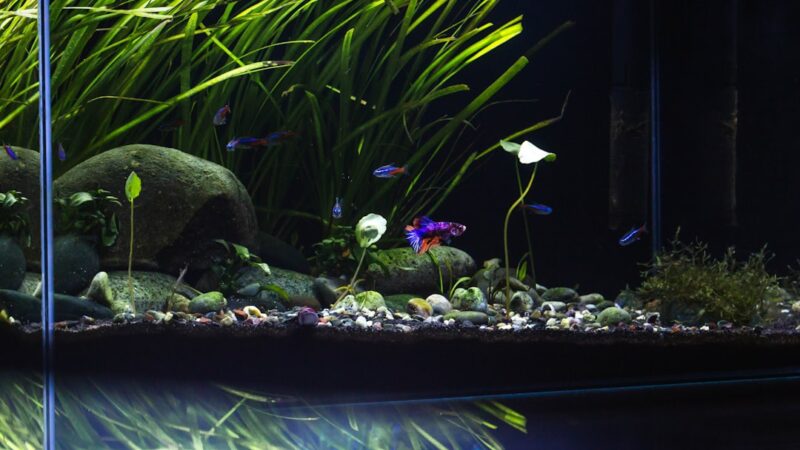
- Hardscape-driven design: Driftwood and rocks form the structural skeleton. Plants grow around, over, and through the hardscape — enhancing it rather than concealing it.
- Diverse plant species: Nature tanks typically use 5 to 15 or more plant species, layered to create depth and texture. Foreground carpets, mid-ground mosses and epiphytes, and background stems each play a defined role.
- Negative space: Open areas of substrate or clear water are as important as planted areas. They provide visual breathing room and direct the viewer’s eye through the composition.
- Organic transitions: The boundaries between different plant groups are gradual and irregular, mimicking how vegetation naturally transitions in the wild.
Difficulty Level: Intermediate to Advanced
Nature aquascapes are moderately demanding. The diversity of plant species means managing different growth rates, light requirements, and nutrient needs simultaneously. Regular trimming is essential to maintain the intended composition — left unmanaged, fast-growing stems will overwhelm slower species within weeks.
Equipment Requirements
- Lighting: Medium to high intensity. Full-spectrum LEDs like the Chihiros WRGB II or Twinstar S Series provide the PAR levels and colour rendition needed.
- CO2: Pressurised CO2href=”/co2/”>CO2 injection is strongly recommended, though simpler Nature layouts with undemanding plants can work without it.
- Substrate: Nutrient-rich aquasoil (ADA Amazonia, Tropica Soil) is the standard choice. The combination of root-feeding plants and aquasoil is central to Nature style tanks.
- Filtration: Canister filter with lily pipe inflow and outflow for clean lines and optimal circulation.
Iwagumi Style Aquascaping
Origins and Philosophy
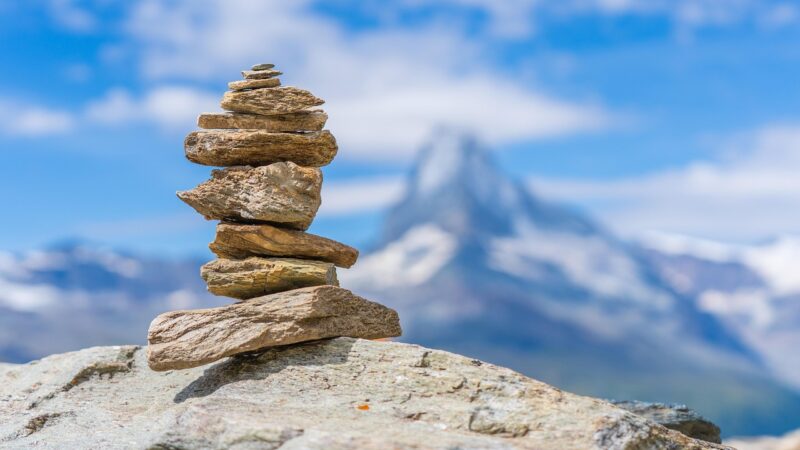
Iwagumi is also attributed to Takashi Amano, who adapted principles from Japanese rock garden (suiseki) traditions for the aquarium. The word “Iwagumi” translates roughly to “rock formation” — and rocks are the absolute centrepiece of this style.
The philosophy is one of restraint, minimalism, and meditative simplicity. An Iwagumi layout aims to convey a sense of vast open space, tranquility, and harmony through the careful placement of a few stones and a single species of carpeting plant. It is the most disciplined of the three styles and leaves no room for clutter or distraction.
Key Characteristics
- Odd number of stones: Iwagumi layouts traditionally use an odd number of rocks — 3, 5, or 7 — arranged according to strict compositional rules.
- The Oyaishi (main stone): The largest and most visually striking stone is placed off-centre at approximately two-thirds of the tank width. It is the undisputed focal point and is typically tilted slightly to suggest dynamic movement or natural erosion.
- Supporting stones: Secondary stones (Fukuishi, Soeishi, Suteishi) complement and balance the main stone. Their size, angle, and placement are all subordinate to the Oyaishi.
- Single carpeting plant: Most Iwagumi layouts use just one species of low-growing plant — Dwarf Hairgrass (Eleocharis parvula), Monte Carlo (Micranthemum tweediei), or Dwarf Baby Tears (Hemianthus callitrichoides). This carpet fills the substrate, softening the stone arrangement and creating a sense of rolling green meadow.
- Open space and simplicity: There are no background stems, no driftwood, and no vertical distractions. The entire composition is horizontal and spacious.
Difficulty Level: Advanced
Iwagumi is paradoxically the simplest in concept and the most difficult in execution. The minimalism that makes it beautiful also makes every flaw visible. There is nowhere to hide an algae problem, a patchy carpet, or a poorly placed stone. Specific challenges include:
- Carpeting plants demand high light and CO2 — there is no low-tech Iwagumi
- The low plant diversity means fewer nutrient sinks, leading to frequent algae battles during the establishment phase
- Stone hardscape raises water hardness (GH and KH), which can affect pH stability and plant health if not monitored
- Achieving an even, dense carpet requires consistent conditions over many weeks
Equipment Requirements
- Lighting: High intensity is non-negotiable. Carpeting plants need strong, even light coverage across the entire substrate. PAR values of 100 or more at substrate level are typical.
- CO2: Pressurised CO2 is essential. Without it, carpeting plants will grow slowly, unevenly, or fail entirely.
- Substrate: Fine-grained aquasoil, sloped from back to front, provides nutrients and the aesthetic foundation.
- Filtration: Strong circulation to distribute CO2 evenly. Inline diffusers are popular in Iwagumi setups for a cleaner look inside the tank.
Dutch Style Aquascaping
Origins and Philosophy
The Dutch style predates both Nature and Iwagumi by decades. It originated in the Netherlands in the 1930s and grew through the Dutch aquarium societies (NBAT) that established formal judging criteria and competitions. While Amano drew from nature, the Dutch tradition is closer to horticulture — specifically, the art of arranging plants for maximum visual impact, much like a terrestrial flower garden.
The philosophy prioritises plant health, colour contrast, and structured arrangement above naturalism. A Dutch aquascape is not trying to look like a wild landscape — it is a cultivated display of aquatic plant diversity at its best.
Key Characteristics
- No visible hardscape: In a classic Dutch tank, rocks and driftwood are either absent or completely hidden behind dense planting. The plants themselves are the architecture.
- Street planting: A signature Dutch technique where a row of a single low-growing species (such as Saurus cernuus or Lobelia cardinalis) is planted in a diagonal line from front to back, creating visual depth and drawing the eye into the scene.
- Colour grouping and contrast: Plants are arranged in distinct groups, chosen for contrasting leaf shapes, textures, and colours. Red stems next to bright green, fine-leaved plants beside broad-leaved ones. The effect is vibrant and highly structured.
- Dense planting: Every square centimetre of substrate is covered. There is no negative space. The tank is a wall-to-wall display of lush growth.
- Terracing: Plants are arranged in ascending height from front to back, with clear separation between species groups — no intermingling or natural-looking transitions.
Difficulty Level: Intermediate to Advanced
Dutch aquascapes are demanding in terms of ongoing maintenance rather than initial setup difficulty. The dense planting and high species count require:
- Regular, meticulous trimming to maintain the shape and proportion of each plant group
- Robust nutrient dosing — so many plants in a small space consume nutrients rapidly
- Knowledge of individual species’ growth rates and habits to prevent faster growers from overwhelming slower neighbours
Equipment Requirements
- Lighting: High intensity and full spectrum, as most Dutch layouts include demanding red and colourful stem plants.
- CO2: Pressurised CO2 is essential for the dense growth and vibrant colouration that define this style.
- Substrate: Aquasoil or enriched substrate, often supplemented with root tabs for heavy feeders.
- Fertilisation: Comprehensive dosing regime — EI (Estimative Index) dosing is commonly used in Dutch tanks to ensure nutrients never become limiting.
Style Comparison at a Glance
| Aspect | Nature Style | Iwagumi | Dutch Style |
|---|---|---|---|
| Origin | Japan (Takashi Amano, 1990s) | Japan (Takashi Amano, 1980s) | Netherlands (1930s onward) |
| Philosophy | Evoke natural landscapes | Minimalist stone composition | Horticultural plant display |
| Hardscape | Prominent (rock and wood) | Dominant (stone only) | Hidden or absent |
| Plant Species Count | 5 to 15+ | 1 to 3 | 10 to 20+ |
| CO2 Required | Recommended | Essential | Essential |
| Lighting | Medium to High | High | High |
| Maintenance Level | Moderate to High | High | Very High |
| Difficulty | Intermediate | Advanced | Intermediate to Advanced |
| Best For | Most aquascapers | Experienced hobbyists | Plant enthusiasts |
Choosing Your Style
For beginners, the Nature style is the most forgiving starting point. It accommodates a range of plant difficulties — you can begin with easy species and gradually introduce more demanding ones as your skills develop. The use of hardscape provides a strong visual foundation even before plants fully grow in, meaning your tank looks presentable from day one rather than requiring months of growth to take shape.
If you are drawn to clean minimalism and enjoy a challenge, Iwagumi rewards patience and precision with an aesthetic that no other style can match. Just be prepared for a steeper learning curve and a more demanding maintenance routine.
If you are a plant collector who loves variety and colour, the Dutch style lets you showcase the broadest range of species in a single tank. It is the most maintenance-intensive style but also the most dynamic — a Dutch tank is never quite the same from one month to the next as plants grow and are reshaped.
Beyond the Three Classics
These three styles are the foundation, but modern aquascaping has expanded well beyond them. Jungle style (dense, overgrown, wild), biotope style (accurately recreating a specific natural habitat), and hardscape-dominant dioramas (creating miniature landscapes with tiny scale elements) are all gaining popularity. Many of the best contemporary aquascapes blend elements from multiple styles — and that is perfectly valid. Rules are useful for learning, but the best aquascapes ultimately reflect the creator’s personal vision.
Create Your Aquascape with Gensou
At Gensou, aquascaping is our craft. Whether you are attempting your first Nature layout or want a competition-grade Iwagumi designed and installed in your space, our custom aquascaping service brings professional design, premium materials, and years of experience to every project. We work with clients across Singapore to create aquascapes in any style, at any scale.
Browse our shop for hardscape, plants, substrates, and equipment to start your own aquascaping journey. And if you want to discuss which style suits your space, skill level, and aesthetic preferences, get in touch — we are always up for an aquascaping conversation.