
Axolotl Care Guide for Singapore: The Smiling Salamander
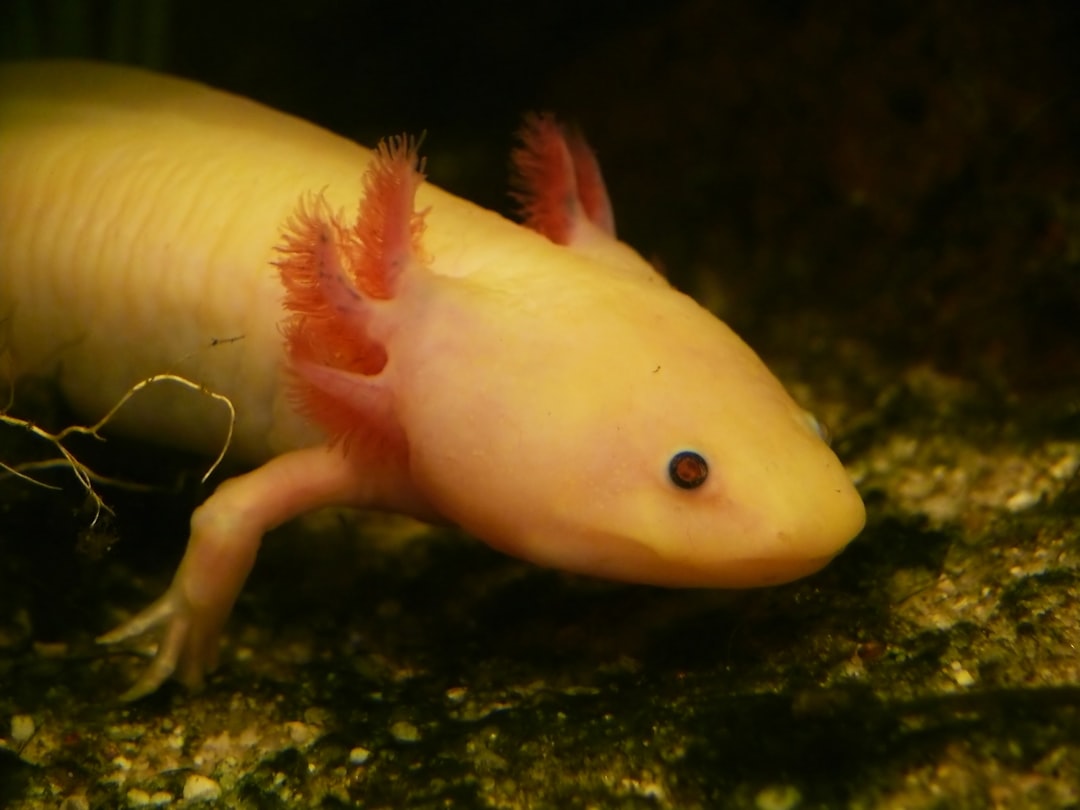
The axolotl (Ambystoma mexicanum) has taken the pet world by storm. With its perpetual “smile,” feathery external gills and bizarre ability to regenerate lost limbs, this fully aquatic salamander is unlike anything else in the hobby. But there is a catch — and for Singapore keepers, it is a significant one. This guide sits inside our broader Tropical Fish Species Master Index reference.
Axolotls need cold water. Their ideal temperature of 16–20°C is a world away from Singapore’s ambient 28–32°C. Keeping axolotls here requires a chiller, careful planning and honest self-assessment. This axolotl care guide for Singapore covers everything you need to know before committing.
What Are Axolotls?
Axolotls are neotenic salamanders, meaning they retain their larval features throughout life. Unlike other salamanders that metamorphose into land-dwelling adults, axolotls remain fully aquatic — keeping their external gills, fin-like tail and aquatic lifestyle permanently. They never “grow up” in the traditional amphibian sense.
Native to Lake Xochimilco near Mexico City, axolotls are critically endangered in the wild. Virtually all pet axolotls are captive-bred, with thriving breeding populations worldwide. Adults reach 20–30 cm in length and can live 10–15 years with proper care.
Their most famous trait is regeneration. Axolotls can regrow lost limbs, tails, parts of their heart, spinal cord and even portions of their brain. This ability has made them invaluable in scientific research — and endlessly fascinating as pets.
The Singapore Challenge: Temperature
Let us be direct: keeping axolotls in Singapore is difficult and expensive. Their required temperature range of 16–20°C means you need an aquarium chiller running constantly in our tropical climate.
Chiller Requirements
- A quality aquarium chiller suitable for an axolotl tank costs $300–$800+ SGD
- Running the chiller 24/7 adds significantly to your electricity bill — expect an additional $30–$80 SGD per month depending on the unit and ambient temperature
- The chiller generates heat exhaust, warming the room it sits in — factor in ventilation
- A chiller failure during a power outage or malfunction can be fatal within hours at Singapore temperatures
Temperatures above 24°C cause stress, appetite loss and weakened immunity. Sustained temperatures above 26°C can be lethal. There is no shortcut here — fans and frozen bottles are temporary measures, not solutions.
For chiller recommendations and sizing, see our best aquarium chiller Singapore guide.
Honest Assessment
If you cannot guarantee stable temperatures of 16–20°C year-round, an axolotl is not the right pet for you. This is not gatekeeping — it is animal welfare. Singapore’s climate makes axolotl keeping a niche, equipment-intensive commitment. Be certain before you begin.
Colour Morphs
Captive breeding has produced a stunning range of axolotl colour morphs. All require identical care.
| Morph | Appearance | Availability in SG |
|---|---|---|
| Wild Type | Dark brown/olive with gold speckling | Common |
| Leucistic | White/pink body, dark eyes | Very common (the “classic” look) |
| Golden Albino | Yellow-gold body, pink/red eyes | Common |
| Melanoid | Solid dark (no iridophores/speckling) | Moderate |
| GFP (Green Fluorescent Protein) | Glows green under blue/UV light | Moderate (often crossed with leucistic) |
| Copper | Light brown with copper sheen | Less common |
Leucistic axolotls — white with dark eyes and pink gills — are the most popular and widely available morph in Singapore. GFP morphs carry a gene from jellyfish that makes them fluoresce under blue light, which is visually spectacular.
Tank Setup
Axolotls are not demanding in terms of tank complexity, but a few rules are non-negotiable.
Tank Size
A single axolotl needs a minimum of 80 litres (roughly a 2-foot tank). For two, aim for 120 litres or more. Axolotls produce a substantial bioload, so bigger tanks are easier to maintain.
Substrate: The Impaction Risk
This is the single most important setup decision. Axolotls are suction feeders — they inhale food by creating a vacuum, and they inevitably suck up substrate too.
- Bare bottom — the safest option; easy to clean
- Fine sand (grain size under 1 mm) — passes through the gut safely
- Gravel of any size — NEVER — gravel causes fatal gut impaction
If in doubt, go bare bottom. Many experienced keepers use bare bottom tanks exclusively.
Other Setup Considerations
- Lighting: dim or moderate — axolotls have no eyelids and dislike bright light
- Hides: essential — PVC pipes, terracotta pots, smooth ceramic caves
- Filtration: gentle flow (sponge filter ideal) — strong currents stress axolotls
- Plants: optional; cold-tolerant species like Java fern, Elodea and Marimo moss balls work
- No sharp decor — axolotls have delicate skin and gills
Feeding
Axolotls are carnivorous and have a straightforward diet. They locate food primarily by scent and movement.
Best Foods
- Earthworms (nightcrawlers) — the gold standard; nutritionally complete, readily available in SG
- Sinking carnivore pellets — Hikari Sinking Carnivore Pellets are widely used
- Frozen bloodworms — suitable for juveniles; insufficient nutrition as a sole diet for adults
- Frozen prawns — occasional variety
Feeding Schedule
- Juveniles: daily
- Adults (over 15 cm): every 2–3 days
Axolotls are not enthusiastic chasers. Drop food directly in front of them or use tongs to wiggle an earthworm near their nose. Uneaten food should be removed promptly to prevent water quality deterioration.
Health and Regeneration
Regeneration
Axolotls can regrow a fully functional limb — bone, muscle, nerves and all — in approximately 40–60 days. They can also regenerate their gills, tail and parts of internal organs. While remarkable, this ability should never be tested deliberately. Injuries still cause pain and stress.
Fungal Infections
White, fluffy growth on the gills or body. Common in tanks with poor water quality or temperatures above the ideal range. Treat with refrigerated salt baths (2–3 teaspoons of non-iodised salt per litre, 10–15 minutes) and improve water conditions.
Gill Deterioration
Healthy axolotl gills are full, fluffy and well-branched. Shrunken or curled-forward gills indicate stress, poor water quality or high temperatures. In Singapore, this is most often a sign that the chiller is insufficient or malfunctioning.
Impaction
Caused by swallowing gravel or large substrate particles. Symptoms include bloating, loss of appetite and lethargy. Prevention (bare bottom or fine sand) is far preferable to treatment. Severe cases may require veterinary intervention.
Tank Mates
The simplest advice: keep axolotls only with other axolotls.
Axolotls eat anything that moves and fits in their mouth — fish, shrimp, snails, smaller axolotls. Conversely, fish will nip at their gills (a common problem with even “peaceful” fish like guppies). The only potentially compatible tank mate is another axolotl of similar size, housed in a tank large enough to prevent territorial conflict.
Even with other axolotls, nipping is common — particularly juvenile axolotls biting each other’s limbs and gills. While they regenerate, it causes stress. Keep a close eye on multi-axolotl tanks and separate any persistent aggressors.
Frequently Asked Questions
Can I keep an axolotl without a chiller in Singapore?
No. Singapore’s ambient temperature of 28–32°C is dangerously high for axolotls. Air-conditioned rooms may drop to 24–25°C, which is still above ideal and only maintained when the AC runs. Fans cool water by 2–3°C at best — insufficient. A dedicated aquarium chiller is the only reliable solution.
How much does an axolotl cost in Singapore?
Axolotl prices in Singapore range from $20–$50 SGD for common morphs (leucistic, wild type) to $80–$200+ SGD for rare morphs (copper, chimera, high-expression GFP). However, the axolotl itself is the cheapest part of the setup. The chiller alone typically costs $300–$800 SGD, plus ongoing electricity.
Do axolotls bite?
Axolotls may snap at fingers during feeding, but their teeth are tiny and the bite is painless — more like a gentle gummy grip. They are not aggressive toward humans. Hand-feeding with tongs is safer for both you and the axolotl, as it prevents accidental ingestion of substrate during feeding.
Can axolotls live on land?
No. Despite being salamanders, axolotls are permanently aquatic due to neoteny. They lack the lung capacity and skin structure to survive on land. Removing an axolotl from water causes rapid stress and can be fatal. In extremely rare cases, forced metamorphosis can be induced with thyroid hormones, but this is harmful, stressful and drastically shortens the animal’s lifespan.
Considering an Axolotl in Singapore?
Axolotls are extraordinary animals, but keeping them in Singapore demands commitment to temperature control. If you are prepared for the investment, the reward is a fascinating, long-lived pet with genuine personality. For help selecting the right chiller, tank and setup, visit Gensou at 5 Everton Park or contact us. With over 20 years of aquarium expertise, we will help you get it right from the start.
Related Reading



