
African Butterfly Fish Care Guide: The Ancient Surface Predator
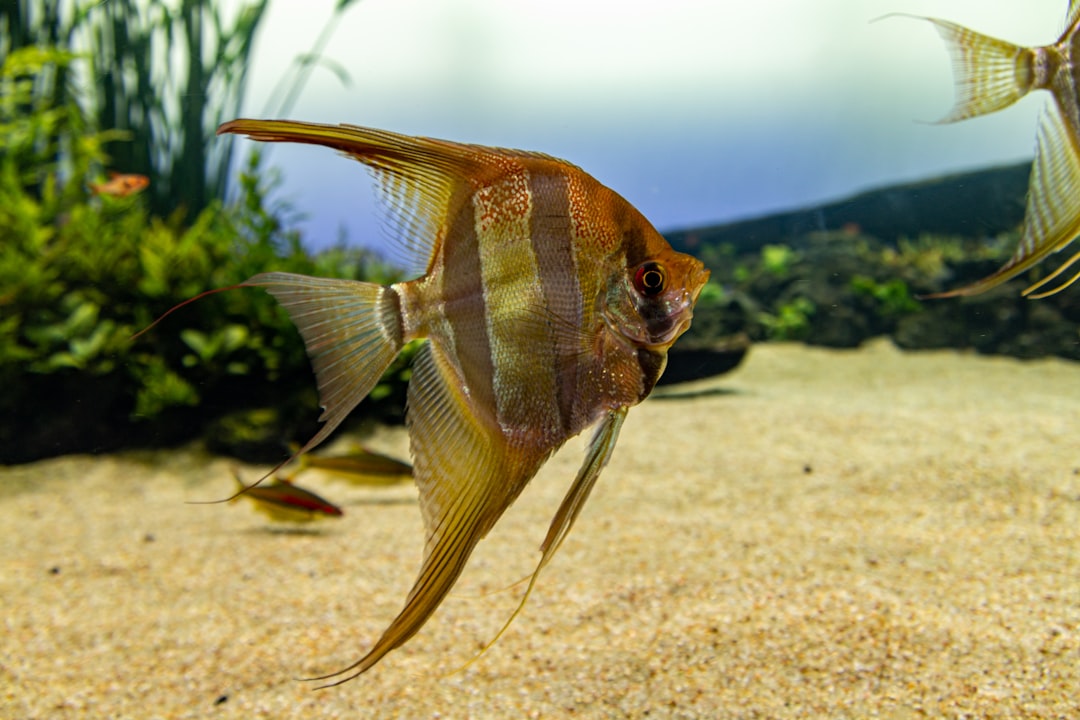
The African butterfly fish (Pantodon buchholzi) looks like it swam straight out of the Cretaceous period — and in a sense, it did. This remarkable surface predator has remained virtually unchanged for over 100 million years, making it one of the oldest living fish species on the planet. With its wide, wing-like pectoral fins, upward-facing mouth and patient hunting style, it is unlike anything else in the freshwater hobby. This guide sits inside our broader Tropical Fish Species Master Index reference.
This African butterfly fish care guide covers everything you need to know about keeping this ancient predator in a Singapore aquarium: tank design, feeding, tankmate selection and the one piece of equipment you absolutely cannot skip — a tight-fitting lid.
Table of Contents
Species Overview
| Attribute | Detail |
|---|---|
| Scientific Name | Pantodon buchholzi |
| Family | Pantodontidae (monotypic — only species in its family) |
| Origin | West and Central Africa (Nigeria, Cameroon, Congo basin) |
| Adult Size | 10–13 cm |
| Lifespan | 5–8 years |
| Temperament | Predatory but sedentary; peaceful with appropriate tankmates |
| Diet | Carnivore — insects, small fish, floating foods |
| Minimum Tank Size | 75 litres (60 cm long) |
Appearance and Anatomy
The African butterfly fish is unmistakable. Its large, fan-shaped pectoral fins spread out like wings when viewed from above, giving the appearance of a butterfly resting on the water surface. The body is flattened dorsally, the mouth points directly upward, and the tail fin is elongated in the centre with thread-like extensions.
Every aspect of this fish’s anatomy is designed for one purpose: ambush hunting at the water surface. The upturned mouth snatches insects that land on or fall near the water. The wing-like pectorals stabilise the fish at the surface film, and the large eyes provide excellent vision for detecting prey from below.
In the wild, these fish have even been observed making short, powered leaps out of the water to snatch insects — true aerial predation facilitated by their wing-like fin structure.
Tank Setup
Because the African butterfly fish is a strict surface dweller, tank design should prioritise surface area and surface features over depth or elaborate mid-water aquascaping.
Essential Elements
- Floating plants — Salvinia, Amazon frogbit, water lettuce and red root floaters. These provide shade, reduce stress and mimic the lily pad-covered habitats where butterfly fish naturally hunt. Leave some open surface areas for feeding.
- Subdued lighting — floating plant cover naturally dims the tank. Avoid intense overhead lighting, which makes butterfly fish uncomfortable and pale.
- Gentle surface flow — strong current disrupts their ability to rest at the surface. Baffle filter outputs or use a spray bar directed along the back glass.
- Tall plants and driftwood — these break sightlines below the surface but do not interfere with the butterfly fish’s domain at the top.
- A tight-fitting lid — covered in detail below.
Tank Dimensions
A minimum of 60 cm in length is recommended. Width is more important than height — a long, wide tank gives the butterfly fish adequate surface territory. In HDB and condo setups, a 60 cm or 75 cm rimmed tank with a solid lid is ideal.
Water Parameters
| Parameter | Ideal Range | SG Notes |
|---|---|---|
| Temperature | 25–30 °C | Singapore’s ambient 28–30 °C is perfect; no heater needed |
| pH | 6.0–7.5 | Slightly acidic to neutral; Indian almond leaves help |
| GH | 3–12 dGH | Soft to moderate; SG tap water is generally suitable |
| KH | 2–8 dKH | Moderate buffering |
Always condition Singapore tap water to neutralise chloramine before adding it to the tank. PUB uses chloramine rather than free chlorine, and it requires a conditioner specifically designed to break the chloramine bond. Weekly water changes of 20–25% maintain water quality without disrupting the surface environment.
The Lid: Non-Negotiable
This section gets its own heading because it is that important. The African butterfly fish is one of the most notorious jumpers in the freshwater hobby.
In the wild, these fish launch themselves out of the water to escape predators and catch flying insects. In captivity, they will jump through any gap — and their flat body shape means they can fit through surprisingly narrow openings. A butterfly fish on the floor is, unfortunately, a common story among unprepared keepers.
Lid Requirements
- Use a solid glass or acrylic lid with no gaps larger than a few millimetres.
- Block openings around filter tubing, heater cables and airline with foam or mesh.
- If using a rimless tank, a custom-cut lid or mesh screen is essential.
- Leave a small air gap (2–5 cm) between the lid and water surface — butterfly fish need access to the air-water interface.
If your tank does not currently have a suitable lid, our custom aquarium service can fabricate one to fit your exact setup.
Feeding
Feeding the African butterfly fish is where the real fun begins. This is a predator that prefers its food alive and at the surface.
Preferred Foods
- Live crickets (small) — the most natural food; dropped onto the water surface, they trigger an immediate strike
- Live or wingless fruit flies — excellent enrichment; butterfly fish hunt them eagerly
- Floating pellets — high-quality carnivore pellets accepted by most captive-raised individuals
- Frozen bloodworms — thawed and offered at the surface with tweezers
- Freeze-dried krill — floats well; a convenient supplement
- Live mealworms (small) — offered at the surface; taken with a dramatic snap
- Feeder guppies or mosquito fish — controversial but natural; small surface-dwelling fish may be taken
Feeding Tips
- Feed once daily, offering only what the fish can consume in a few minutes.
- Use feeding tongs or tweezers to present food directly at the surface near the fish.
- Newly imported butterfly fish may refuse dried food initially. Start with live insects and gradually introduce pellets.
- In Singapore, live crickets are readily available from pet shops and reptile suppliers. Wingless fruit fly cultures can be maintained at home with minimal effort.
Tank Mates
The African butterfly fish is peaceful — with a crucial caveat. Any fish small enough to fit in its mouth will eventually be eaten. Its upward-facing mouth and ambush style mean surface-dwelling fish under 3–4 cm are at particular risk.
Safe Tank Mates
- Congo tetras (too large to eat, share the same geographic origin)
- Medium-sized barbs (tiger barbs, cherry barbs)
- Corydoras catfish (bottom dwellers, well out of range)
- Bristlenose and medium plecos
- Kribensis and other small-medium West African cichlids
- Larger gouramis (pearl, moonlight)
Avoid
- Neon tetras, ember tetras, small rasboras — will be eaten
- Guppies, endlers — surface dwellers and snack-sized
- Clown killifish — too small and surface-dwelling
- Dwarf shrimp — taken opportunistically at the surface
- Bettas — territorial conflict at the surface zone
- Other surface predators — competition and aggression
Multiple Butterfly Fish
A single specimen is the safest approach. In tanks of 120 litres or more, a pair can coexist provided there is ample floating plant cover to break sightlines. Two males in a small tank will spar and stress each other. If keeping more than one, provide at least 40 litres of surface territory per fish.
Behaviour
The African butterfly fish spends virtually its entire life at the surface film. It hovers motionless among floating plants, wings spread, mouth pointing upward — watching. When prey appears, the strike is lightning fast: a lunge, a snap, and it returns to its station.
Between feedings, butterfly fish are remarkably sedentary. They may appear to do nothing for hours. This is not lethargy — it is the patient hunting strategy of an ambush predator that has been perfected over 100 million years. For keepers accustomed to active, darting fish, this stillness takes some adjustment, but it is endlessly fascinating once you appreciate the behaviour for what it is.
At night, butterfly fish become slightly more active, cruising slowly just below the surface. This is when jumping is most likely to occur, making a secure lid especially important during dark hours.
Breeding
Breeding Pantodon buchholzi in captivity is challenging but has been accomplished by dedicated hobbyists.
Requirements
- Sexing: Males have a slightly concave anal fin edge; females have a straight edge. This difference is subtle and best observed from below.
- Conditioning: Feed heavily with live insects for three to four weeks.
- Spawning trigger: A large water change with slightly cooler water (2–3 °C below tank temperature) can initiate spawning.
- Egg care: Eggs are laid at the surface among floating plants. They are buoyant and float. Remove eggs to a separate container, as parents will eat them.
- Hatching: Eggs hatch in approximately 36–48 hours. Fry hang at the surface and need very small live foods — infusoria, followed by baby brine shrimp.
Breeding success is uncommon in home aquaria, making captive-bred specimens relatively rare and valuable.
Frequently Asked Questions
Can I keep an African butterfly fish in a community tank?
Yes, provided all tankmates are too large to be eaten (above 4 cm) and do not compete for surface territory. Bottom and mid-water dwellers are the safest companions. The butterfly fish will ignore fish that stay out of its zone.
Will an African butterfly fish eat my shrimp?
Adult shrimp that stay on the substrate are generally safe. However, shrimp that swim near the surface — as Amano shrimp sometimes do — risk being snapped up. Neocaridina shrimplets are particularly vulnerable. If shrimp keeping is a priority, the butterfly fish is not compatible.
How do I get my butterfly fish to accept pellets?
Start by offering floating pellets immediately before or mixed with live food. Over time, many individuals learn to accept pellets on their own. Some never do, in which case a diet of frozen bloodworms, freeze-dried krill and occasional live insects is a workable alternative. Patience is essential — this is a wild-type predator, not a farm-raised omnivore.
Is the African butterfly fish suitable for beginners?
It is suitable for informed beginners who understand the lid requirement, feeding demands and tankmate restrictions. The fish itself is hardy and tolerant of a range of water conditions. The challenge is management — providing live food, securing the tank and selecting appropriate companions. If you are willing to meet these needs, a butterfly fish is a rewarding and low-maintenance centrepiece.
Add a Living Fossil to Your Tank
The African butterfly fish is a conversation starter and a genuine piece of natural history. Its ancient lineage, dramatic feeding response and otherworldly appearance make it a centrepiece species that never gets boring — even when it appears to be doing nothing at all.
For Singapore aquarists, the warm ambient temperatures are a natural advantage, and the availability of live feeder insects from local reptile suppliers makes feeding straightforward. If you are ready to set up a tank for this remarkable predator, contact us at 5 Everton Park. Our team has over 20 years of experience creating aquariums that bring out the best in unusual species.
Related Reading



