Albino Tiger Barb
Puntigrus tetrazona · Semi-aggressive · Beginner care
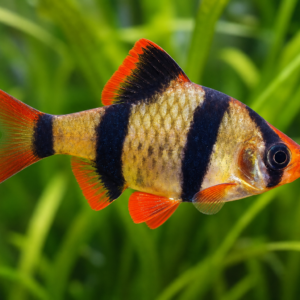
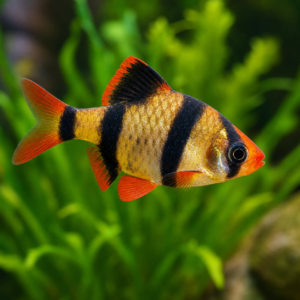
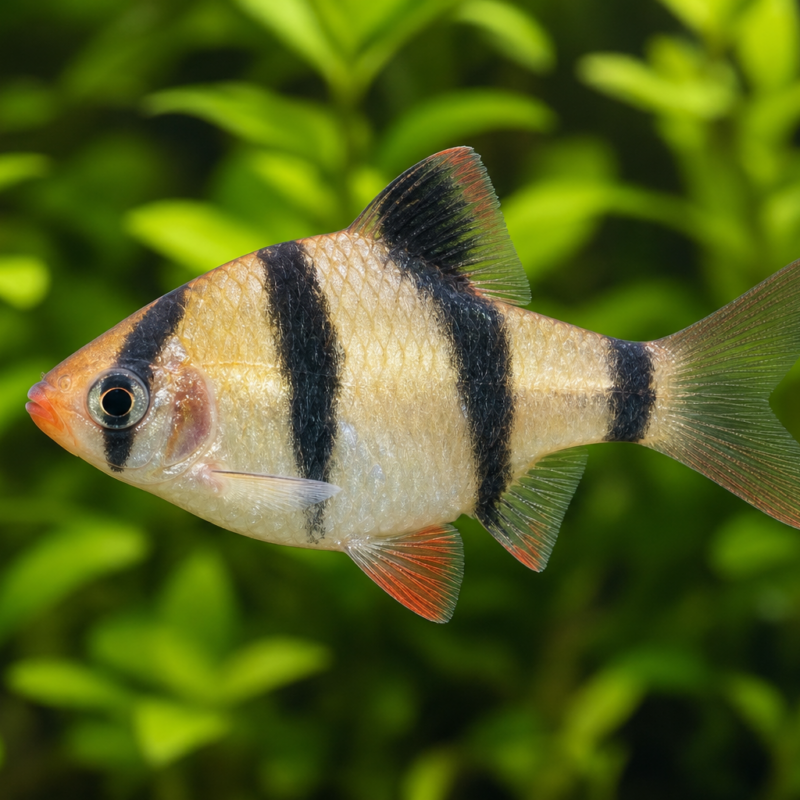
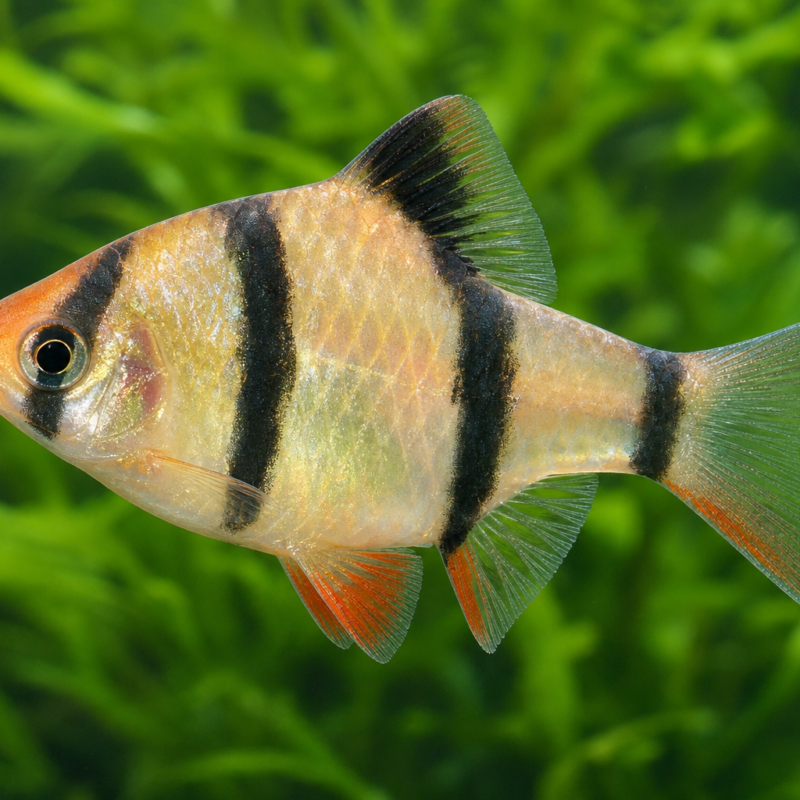
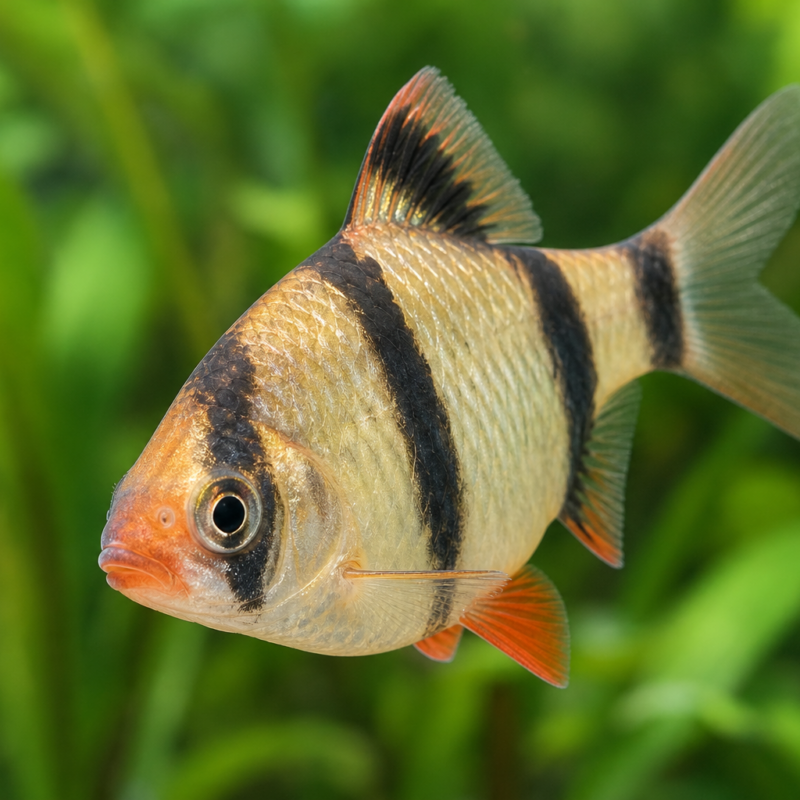
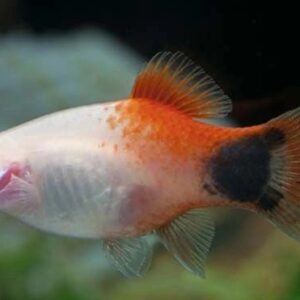
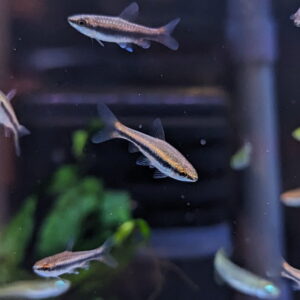
The albino form of the classic Tiger Barb — a peach-gold body with pearly bands and warm red fins. A fast, playful shoaler with real presence; keep a proper group and it becomes the energy of the tank.
Out of stock
Ask on WhatsAppAt a glance
Species profile Puntigrus tetrazona
Origin
Sumatra and Borneo, Southeast Asia
Family
Cyprinidae (carp/minnow family)
Adult size
Up to 7 cm (2.8 in)
Diet
Flake, pellet, plus frozen/live and some veg (Omnivore)
Temperament
Semi-aggressive
Swimming level
Middle
Minimum group
6+ (shoaling)
Lifespan
5-7 years
Minimum tank
90 L (24 gal)
Water type
Freshwater
Size to scale
7 cm adult length, shown to scale against an iPhone 15 Pro (14.66 cm).
Natural range
Where it comes from — Southeast Asia
Sumatra and Borneo, Southeast Asia
Water
Singapore tap water vs its needs
Hardness: Soft to hard (4-18 dGH).
In the aquarium
How it lives in the tank
Swims in the middle of the tank
Keep in a group of 6+
Sensitivity Index — Hardy
Hardy and beginner-friendly; keep up routine water changes and it will thrive.
Our own read on how forgiving this species is of water changes — not a formal standard.
Keeping & care
What this fish needs
Family
About the Cyprinidae family carp/minnow family
Cyprinidae is one of the largest families of freshwater fishes, native to North America, Africa, and especially Eurasia, and includes many of the hobby's most familiar aquarium fishes — barbs, danios, rasboras, "sharks," and goldfish among them. Members are typically small to medium, toothless-jawed (they grind food with pharyngeal teeth), egg-laying schooling fishes, and most popular species are active, peaceful, and undemanding. Care demands vary by species, but the common aquarium members generally prefer soft-to-moderate, slightly acidic-to-neutral water and thrive in groups.
Keep the schooling species (barbs, danios, rasboras) in groups of at least six to eight in a planted, gently-to-moderately flowing tank; larger and boisterous species can nip fins or outgrow small aquaria, so match adult size and temperament to tankmates.
Breeding
Egg-scatterer (most common; some substrate/plant depositors)Most aquarium cyprinids are egg-scattering spawners that release adhesive eggs among fine-leaved plants, spawning mops, or over a substrate, giving no parental care. Breeding is typically triggered by conditioning adults on rich foods and then providing warmer, slightly softer water and morning light; the parents should be removed after spawning because they readily eat their own eggs and fry. Many species — danios, rasboras, barbs, and white cloud mountain minnows — spawn reliably in home aquaria, while others are bred only in commercial or specialist setups.
Feeding
Recommended food
Compatibility
Best tankmates
Community