Best Lily Pipe Alternatives for Aquariums on a Budget
Glass lily pipes are the aesthetic standard for planted tank filtration outflows — elegant, minimal, and near-invisible in a well-composed aquascape. But quality borosilicate glass lily pipes from established brands cost $30–80 per piece, and the cheap knock-offs available on Lazada and Shopee break with alarming regularity. The good news: several lily pipe alternatives for aquariums deliver comparable flow distribution and surface agitation at a fraction of the price. This best lily pipe alternative aquarium budget guide from Gensou Aquascaping at 5 Everton Park, Singapore covers the options honestly — performance, durability, and aesthetics considered.
Why Lily Pipes Matter (and Why They Break)
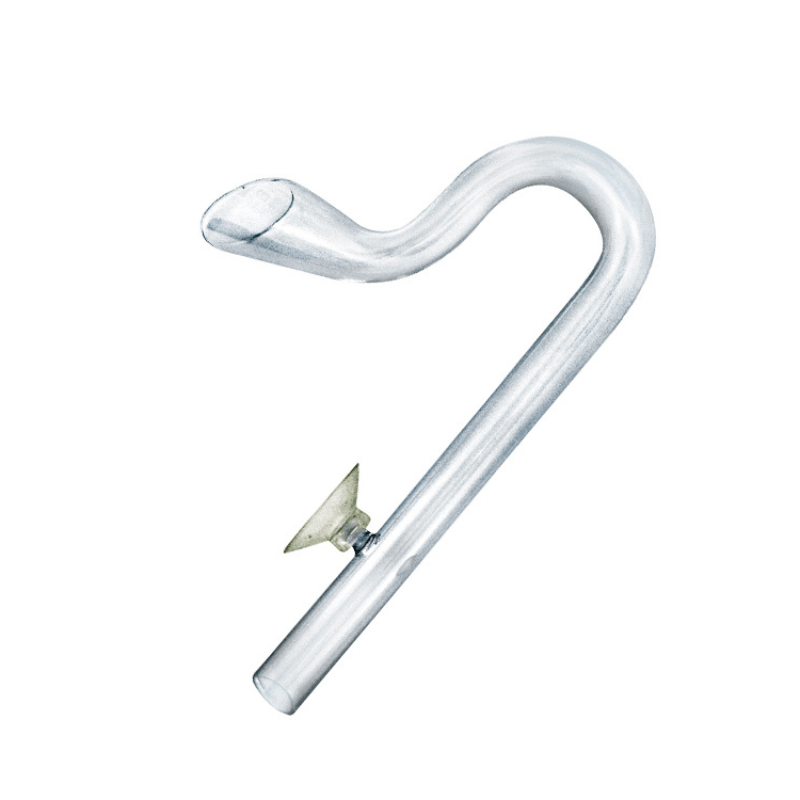
A lily pipe does two things: it directs filtered water output along the surface of the tank to promote gas exchange and distribute flow evenly, and it does so without the visual clutter of plastic spray bars or powerhead nozzles. The curved glass inlet creates a surface-skimming vortex that pulls the top layer of water — where oil films accumulate — into the filter return.
Standard glass lily pipes break because glass, even borosilicate glass, is brittle under impact and thermal stress. A maintenance accident, a knock from a magnetic glass cleaner, or pulling a hose under tension can crack the pipe cleanly at the neck — an expensive and frustrating failure. Budget glass versions from unknown brands use thinner, less pure glass that breaks even more readily. The alternatives below sidestep this failure mode entirely.
Plastic Spray Bars
The humble spray bar is overlooked because it lacks the visual elegance of glass, but for planted tank function it matches or exceeds a lily pipe. A spray bar directed along the surface produces the same CO2 distribution and surface agitation; directed downward, it circulates CO2 throughout the water column more effectively than a lily pipe’s surface skim.
Most canister filter brands include a plastic spray bar in the box. Aftermarket versions in black or white ABS plastic are available for $5–15 from local shops and online. In a tank with dense background planting, a spray bar positioned behind stem plants is barely visible from the front viewing angle. Aesthetic downside: in an open aquascape or iwagumi layout, a plastic component breaks the minimalist look.
Acrylic Lily Pipe Equivalents
Acrylic outflow pipes styled identically to glass lily pipes offer the best balance of aesthetics, durability, and price. Acrylic bends without breaking, is impact-resistant, and can be formed into the characteristic lily pipe curve. Clarity is slightly lower than borosilicate glass — there is a faint bluish tinge visible on thick-walled pieces — but at viewing distance in a planted tank, the difference is negligible.
Acrylic equivalents from reputable sellers cost $12–25 per piece, roughly half the price of quality glass equivalents. They clean well with a lily pipe brush and do not suffer the catastrophic cracking failure of glass. Available through Shopee sellers and some local aquarium shops; search for “acrylic lily pipe” or “plastic glass pipe aquarium” to find them. Confirm the pipe diameter matches your filter hose — standard sizes are 12/16 mm (for smaller canisters) and 16/22 mm (for larger systems).
Stainless Steel Outflow Pipes
Several manufacturers produce stainless steel outflow nozzles — a more industrial aesthetic that suits biotope tanks, minimalist setups, and rimless tanks with a contemporary design language. Stainless steel is indestructible for practical purposes, easy to clean with a pipe brush, and does not discolour or develop algae growth the way clear pipes can.
Pricing sits at $15–35 per piece. The main limitation is aesthetics — stainless steel is visible in the tank in a way that clear glass or acrylic is not. For aquascapers aiming for the invisible filtration aesthetic, stainless is a compromise. For breeders, biotope keepers, or anyone prioritising function over appearance, it is arguably the superior material choice for long-term durability.
DIY PVC Options for Budget Builds
For the truly budget-conscious — or for a quarantine or breeding tank where aesthetics are irrelevant — a short section of PVC tubing bent to a 90-degree angle with a heat gun and positioned to skim the surface performs the same hydrodynamic function as a lily pipe at near-zero cost. PVC fittings available from hardware shops for under $5 can be configured into functional spray bars and surface skimmers with basic tools.
This is not a display-tank solution, but knowing the principle helps: the lily pipe’s function is surface agitation and flow distribution, not its material. Any pipe configuration that achieves those two things serves the same purpose.
What to Avoid
Avoid extremely cheap glass lily pipes (under $8 on Shopee) from unspecified manufacturers — these use thin, low-quality glass that breaks at the slightest provocation and may not be manufactured from food-safe glass compounds. One broken glass pipe in a tank risks cutting fish and making the tank unusable until every shard is retrieved.
Avoid “lily pipe” listings that are actually inflow pipes sold as outflows — the internal structure is different, and a mislabelled pipe will not produce the correct flow pattern. The team at Gensou Aquascaping uses a mix of quality glass lily pipes and acrylic equivalents depending on the tank and client budget — both work well when sourced from reputable suppliers.
Related Reading