Best Aquarium Feeding Rings: Keep Food Where You Want It
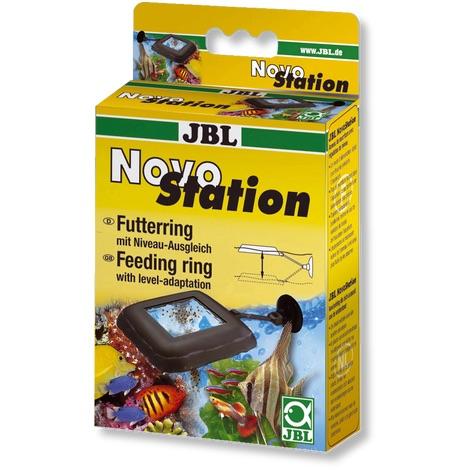
Table of Contents
- What Feeding Rings Do
- Types of Feeding Rings
- When Feeding Rings Help
- Which Fish Benefit Most
- When You Do Not Need One
- DIY Feeding Ring
- Buying in Singapore
- Placement and Usage Tips
- Frequently Asked Questions
What Feeding Rings Do
An aquarium feeding ring is a simple floating device — typically a ring of plastic or buoyant material — that sits on the water surface and contains floating food within a defined area. Instead of food drifting across the entire surface, getting sucked into filter intakes, or wedging into corners where it rots, the ring keeps everything neatly corralled in one spot.
The concept is beautifully simple, and the benefits are surprisingly significant:
- Less food waste — When food stays in one visible area, you can see exactly how much is being eaten and how quickly. This makes it much easier to avoid overfeeding, which is the single most common mistake in fishkeeping.
- Cleaner tank — Food that drifts into corners, behind hardscape or into filter intakes decomposes and contributes to ammonia, nitrite and organic waste. A feeding ring keeps uneaten food where you can easily remove it.
- Consistent feeding location — Fish quickly learn where food appears. Within a few days of using a feeding ring, your fish will begin congregating at the ring at feeding time, making the experience more interactive and enjoyable.
- Prevents surface skimmer interference — If you use a surface skimmer or a filter with a surface-skimming attachment, floating food can get sucked in before fish have a chance to eat it. A feeding ring positioned away from the skimmer solves this.
Types of Feeding Rings
Suction Cup Feeding Rings
The most common type. A plastic or acrylic ring (typically 7-10cm in diameter) is attached to a suction cup that fixes to the inside of the tank glass. This holds the ring in a fixed position, preventing it from drifting around the tank. The ring sits at the water surface, rising and falling with the water level. Some models have an adjustable arm that allows you to set the height.
Advantages:
- Stays in one place — fish learn the feeding spot quickly
- Does not drift into filter intakes or corners
- Easy to install and reposition
Disadvantages:
- Suction cups can lose grip over time, especially in Singapore’s warm water (30°C+ surface temperatures can soften suction cups faster)
- Fixed to the glass, which may be visible in open-top setups
Free-Floating Feeding Rings
These are simple buoyant rings, often made of foam, rubber or hollow plastic, that float freely on the water surface. They are not attached to anything, so they drift with water currents. Some hobbyists prefer these because they look more natural and are less visible, but they can migrate toward filter outflows or corners over time.
Advantages:
- No suction cup to fail
- Less visible (no attachment hardware)
- Can be placed anywhere on the surface
Disadvantages:
- Drifts with water current — may end up near filter intakes
- Needs repositioning after water changes or maintenance
Square and Rectangular Feeding Stations
Some manufacturers offer square or rectangular versions that provide a larger contained area. These are useful for larger tanks or when feeding multiple types of food simultaneously (for example, flakes and freeze-dried foods). They function identically to circular rings but offer more surface area.
When Feeding Rings Help
Feeding rings are not essential for every setup, but they genuinely improve the feeding experience in several specific scenarios:
Surface Feeders
Fish that naturally feed at the surface — such as bettas, gouramis, hatchetfish and killifish — benefit most from feeding rings. These species are already inclined to look upward for food, and a ring concentrates their food in a predictable spot. This reduces competition and ensures every fish gets a fair share.
Multiple Feeding Zones
In larger tanks or community setups with both surface and mid-water feeders, you can use a feeding ring to dedicate a surface area for floating food while dropping sinking pellets in a different part of the tank. This reduces competition between species with different feeding habits.
Keeping Food Away from Filter Intakes
This is perhaps the most practical use case. If your filter intake or surface skimmer is pulling in floating food before your fish can eat it, a feeding ring positioned on the opposite side of the tank solves the problem immediately. This is especially relevant for tanks with hang-on-back filters, which are common in Singapore’s hobbyist setups.
Tanks with Strong Surface Current
Canister filters with spray bars or wavemakers can create strong surface currents that scatter floating food across the tank in seconds. A feeding ring provides a calm zone where food stays put long enough for fish to find and eat it.
Training Fish for Target Feeding
If you are trying to train fish to eat from a specific location — useful for hand-feeding, medication delivery or simply for the enjoyment of interaction — a feeding ring creates a consistent visual and spatial cue that fish associate with food.
Which Fish Benefit Most
| Fish Type | Feeding Ring Benefit | Why |
|---|---|---|
| Bettas | High | Surface feeders; ring prevents pellets from scattering |
| Gouramis | High | Surface/mid-water feeders; reduces competition |
| Hatchetfish | High | Exclusively surface feeders |
| Tetras | Moderate | Mid-water feeders but will eat at surface; ring concentrates food |
| Goldfish | Moderate | Enthusiastic eaters; ring prevents food from reaching filter |
| Corydoras | Low | Bottom feeders; sinking food is more appropriate |
| Plecos | Low | Bottom feeders; use sinking wafers instead |
| Shrimp | Low | Bottom/mid-water feeders; shrimp dishes are more useful |
When You Do Not Need One
Feeding rings are unnecessary — and sometimes counterproductive — in certain situations:
- Sinking foods only — If you exclusively use sinking pellets, wafers or gel food, a surface feeding ring serves no purpose. The food drops straight through.
- Tanks with very gentle or no current — If food naturally stays in one area because there is minimal surface flow, a ring adds clutter without adding value.
- Nano tanks under 20 litres — In very small tanks, a feeding ring takes up a disproportionate amount of the already limited surface area and can look oversized.
- Heavily planted surface — Tanks with extensive floating plants (salvinia, frogbit, duckweed) already have natural barriers that contain food. A ring may simply get tangled in the plants.
- Auto-feeders — Some automatic feeders have integrated feeding chutes that direct food to a specific area, making a separate ring redundant.
DIY Feeding Ring
You do not need to buy a commercial feeding ring. A perfectly functional one can be made from airline tubing in a few minutes.
Materials
- A length of standard airline tubing (about 25-30cm)
- A small airline connector or a short piece of rigid tubing to join the ends
Method
- Cut a piece of airline tubing to your desired ring circumference. For a small ring, 20cm is sufficient; for a larger ring, use 30-35cm.
- Insert an airline connector into one end of the tubing.
- Bend the tubing into a circle and push the other end onto the connector.
- The trapped air inside the tubing provides buoyancy, and the ring floats on the surface.
This DIY approach costs almost nothing, and the soft, transparent airline tubing is far less visually obtrusive than many commercial rings. Many experienced hobbyists in Singapore prefer this method for its simplicity and clean look.
Buying in Singapore
Commercial feeding rings are widely available in Singapore:
- Local fish shops — Most aquarium shops carry at least one or two models, typically the suction-cup variety. Expect to pay SGD 3-8 for a basic ring.
- Shopee and Lazada — A wider range of options, including square feeding stations, adjustable-arm models and multi-ring sets. Prices range from SGD 2-12.
- Aquarium accessory brands — ISTA, Up Aqua and Hopar all produce feeding rings that are commonly stocked in Singapore. The ISTA model with adjustable suction cup arm is a popular choice.
Given the low cost and potential benefits, a feeding ring is worth trying even if you are not sure whether your tank needs one. At SGD 3-5, it is one of the cheapest accessories in the hobby.
Placement and Usage Tips
- Position away from filter outflow — Place the ring in a calm area of the surface, away from filter returns, spray bars or wavemaker outlets. This prevents food from being pushed out of the ring.
- Keep away from filter intakes — Similarly, position the ring away from intake tubes and surface skimmers to avoid food being pulled out.
- Clean regularly — Protein film and algae will accumulate on the ring over time, particularly in Singapore’s warm water. Rinse it during water changes.
- Remove during major maintenance — Take the ring out during water changes and gravel vacuuming to avoid damaging it or knocking the suction cup loose.
- Feed small amounts — A feeding ring works best when you add small pinches of food rather than dumping a large quantity at once. The ring has a finite area, and overcrowding it defeats the purpose.
Frequently Asked Questions
Do feeding rings work with all types of food?
Feeding rings work best with floating foods — flakes, floating pellets, freeze-dried bloodworms and similar. Sinking pellets, wafers and gel food will simply fall through the ring. For sinking foods, consider a feeding dish placed on the substrate instead.
Will my fish still find food outside the ring?
Yes. Fish are not confined to the ring; they can swim freely. The ring simply contains the food. Fish will quickly learn where the ring is and will come to it at feeding time. Any food that escapes the ring (from splashing or fish activity) will be found by scavenging species.
Can I use multiple feeding rings in one tank?
Absolutely. In larger tanks or with territorial species that dominate a single feeding area, multiple rings placed in different zones ensure all fish get access to food. This is a useful strategy in cichlid community tanks where dominant fish may guard a single feeding spot.
My suction cup keeps falling off. What can I do?
This is a common issue in Singapore due to warm water temperatures softening suction cups. Try these fixes: clean both the suction cup and the glass with isopropyl alcohol before attaching; replace the suction cup with a new one (they degrade over time); or switch to a free-floating ring or DIY airline tubing ring that does not require a suction cup at all.
Small accessories like feeding rings can make a genuine difference to tank cleanliness and feeding efficiency. If you are looking for advice on feeding strategies or tank accessories, visit us at 5 Everton Park — our team has over 20 years of experience helping hobbyists in Singapore get the details right.
Related Reading