Best Aquarium Background Films and How to Apply Them
Table of Contents
- Why Use an Aquarium Background
- Types of Background Film
- Colour Choices and When to Use Each
- Step-by-Step Application Guide
- Where to Buy in Singapore
- How to Remove Background Film
- Paint as an Alternative
- Frequently Asked Questions
Why Use an Aquarium Background
An aquarium background is one of the simplest upgrades you can make to dramatically improve the appearance of your tank. Without a background, you see the wall behind the aquarium — cables, power sockets, peeling paint, or the back of a television. This visual clutter distracts from your aquascape and makes the tank look unfinished.
A background does several things:
- Eliminates visual clutter — Hides cables, wall imperfections and equipment behind the tank.
- Creates depth — A dark background makes the tank appear deeper and draws the eye to the interior of the aquascape.
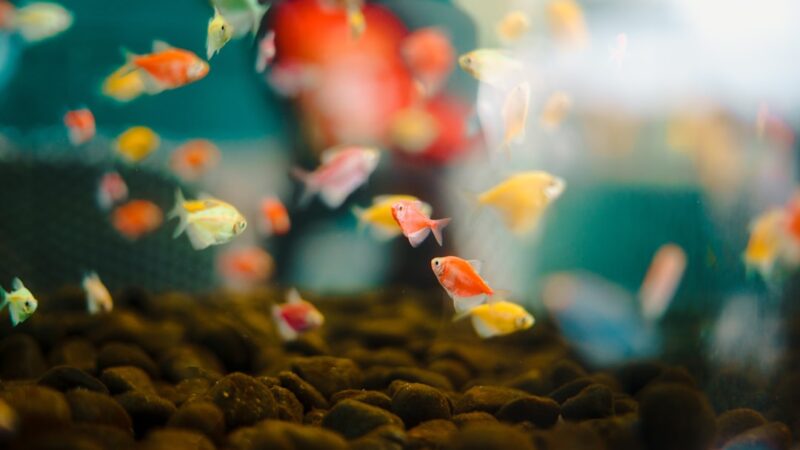
- Enhances fish colours — Many fish display more vibrant colours against a dark background. This is particularly noticeable with neon tetras, cardinal tetras, rummy-nose tetras and other species with iridescent or reflective colouring.
- Reduces fish stress — Fish can feel exposed when they can see movement behind the tank. A solid background on one or more sides provides a sense of security.
- Completes the aquascape — Professional aquascapers and competition entrants always use backgrounds. It frames the composition the way a canvas frames a painting.
Types of Background Film
Solid Colour Vinyl
The most popular choice among serious aquascapers. Solid colour vinyl film is a thin, self-adhesive or static-cling sheet that applies directly to the outside of the rear glass panel. It provides a clean, uniform colour without any pattern or texture. Available in rolls or pre-cut sheets, it is inexpensive and easy to work with.
Printed Scene Backgrounds
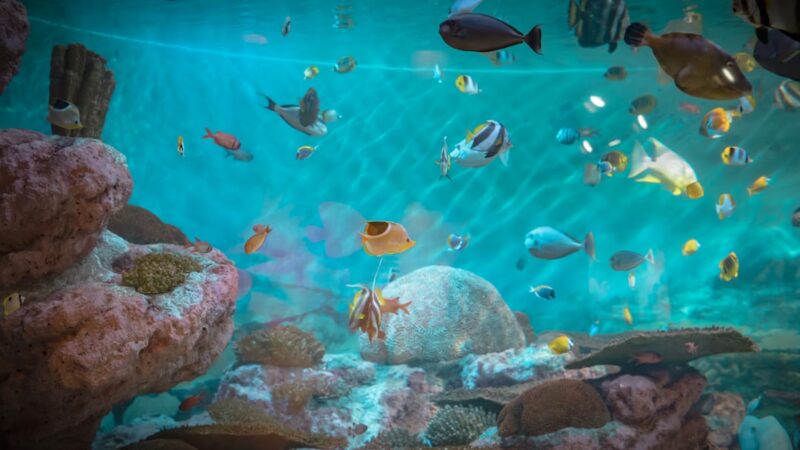
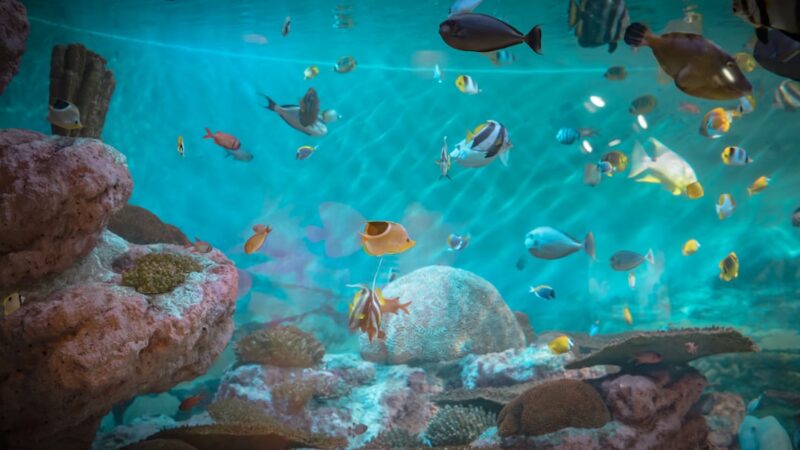
These are poster-style backgrounds featuring printed images — typically underwater scenes, coral reefs, planted tank images or rock formations. They are usually sold in rolls at aquarium shops and cut to size. While popular with beginners, printed backgrounds can look artificial and are generally avoided in aquascaping circles. They do not age well, often fading or developing moisture damage behind the glass.
Frosted / Sandblast Effect
Frosted vinyl creates a translucent, diffused appearance similar to frosted glass. It allows some light through while obscuring detail, giving the tank a modern, minimalist aesthetic. This style has become increasingly popular in contemporary home interiors and works beautifully with LED backlighting — you can place an LED strip behind the tank to create a glowing, ethereal background effect.
Gradient Film
Gradient backgrounds transition from dark at the bottom to light (or transparent) at the top, or from one colour to another. They are less common but can create a natural-looking depth effect, simulating the way light fades in a natural body of water. These are typically available as custom prints or from specialist suppliers online.
Colour Choices and When to Use Each
Black — The Most Popular Choice
Black is the default background colour for aquascaping, and for good reason. It makes colours pop, creates the illusion of infinite depth, hides equipment shadows, and works with virtually every aquascaping style. Green plants, red plants, bright fish and hardscape all stand out dramatically against black. If you are unsure what colour to choose, black is almost always the right answer.
Blue — The Classic
Blue backgrounds evoke a sense of open water and are traditionally associated with marine and reef aquariums. In freshwater tanks, a mid to dark blue can look attractive, particularly with silver or light-coloured fish. However, blue is less forgiving than black — it can clash with certain plant colours and makes algae on the rear glass more visible.
White
White backgrounds create a bright, airy look and are popular in ADA (Aqua Design Amano) style aquascapes. They make the tank feel larger and more open. The downside is that they show every speck of algae on the rear glass and can look stark if the aquascape does not fill the visual space well. White backgrounds require more frequent rear glass cleaning.
Frosted / Translucent
Frosted backgrounds offer a middle ground between white and solid colours. They diffuse light beautifully and create a soft, modern look. Paired with backlighting, they can produce stunning effects — warm white light behind frosted film creates a sunrise-like glow that changes the entire mood of the tank.
Step-by-Step Application Guide
Applying background film is straightforward if you follow the right method. The wet application technique ensures a bubble-free, smooth result.
What You Need
- Background film, cut slightly larger than the rear panel
- Spray bottle filled with water and a few drops of dish soap
- Plastic squeegee or an old credit card
- Utility knife or sharp scissors
- Clean cloth or paper towels
- Masking tape (optional, for positioning)
Step 1: Clean the Glass
Clean the outside of the rear glass panel thoroughly. Remove all dust, fingerprints, residue and water spots. Use a glass cleaner (or isopropyl alcohol) and a lint-free cloth. Any debris trapped under the film will show as bumps, so be meticulous. In Singapore’s humid environment, condensation can form quickly on glass — dry the surface completely just before application.
Step 2: Spray the Glass
Liberally spray the clean glass with soapy water. The soap reduces surface tension and allows you to slide the film into position before it adheres. Use just 2-3 drops of dish soap per 500ml of water — too much soap and the film will not stick; too little and you will not be able to reposition it.
Step 3: Position the Film
Peel the backing off the film (if it has adhesive) and spray the adhesive side with soapy water as well. Place the film on the wet glass, positioning it so there is an even overlap on all edges. The soapy water allows you to slide the film around until it is perfectly aligned.
Step 4: Squeegee Out Bubbles
Starting from the centre, use the squeegee to push water and air bubbles outward toward the edges. Work slowly and methodically, pressing firmly. Overlap your strokes to ensure no air pockets remain. Pay extra attention to the corners and edges. If a stubborn bubble refuses to move, lift that section of the film slightly and re-squeegee from the centre outward.
Step 5: Trim the Excess
Once the film is flat and bubble-free, use a sharp utility knife to trim the excess along the edges of the glass. A metal ruler can help guide straight cuts. Leave a 1-2mm gap from the edge of the glass to prevent peeling.
Step 6: Dry and Settle
Allow 24-48 hours for the soapy water to fully dry and the film to bond to the glass. Any remaining tiny bubbles will usually disappear as the water evaporates. Avoid touching or pressing the film during this curing period.
Where to Buy in Singapore
Background film is readily available in Singapore through several channels:
- Local fish shops — Most aquarium shops stock rolls of printed scene backgrounds and basic solid colour vinyl. Shops in the Serangoon North area, Clementi, and Pasir Ris Farmway typically carry a range of options.
- Shopee and Lazada — The widest selection is online. Search for “aquarium background film” to find solid colours, frosted film and gradient options. Many sellers ship from local warehouses, so delivery is typically 2-4 days.
- Vinyl wrap suppliers — For premium solid-colour vinyl, consider suppliers that sell vehicle or furniture wrap vinyl. Brands like Oracal and 3M offer high-quality adhesive vinyl in every colour imaginable. These are more durable than aquarium-specific film and cut to any size.
- Art supply shops — Frosted window film from shops like Art Friend can work as an aquarium background and is available in large sheets.
For more creative background approaches, including 3D backgrounds and painted options, see our article on aquarium background ideas.
How to Remove Background Film
Removing background film is easier than applying it. Peel one corner away from the glass and pull slowly at a 45-degree angle. If adhesive residue remains, clean it off with isopropyl alcohol, lighter fluid (naphtha) or a commercial adhesive remover like Goo Gone. Static-cling films peel off cleanly with no residue — another reason to choose static cling over adhesive-backed film if you think you might want to change backgrounds in the future.
Paint as an Alternative
Some aquascapers prefer to paint the rear glass instead of using film. This produces the most uniform, flawless finish possible and is completely permanent (until you scrape it off).
The standard approach is to use a water-based acrylic paint or a spray paint rated for glass. Apply 2-3 thin coats on the outside of the rear panel, allowing each coat to dry fully. Black spray paint is the most common choice. The result is a perfectly opaque, smooth background with no bubbles or wrinkles.
Advantages of paint over film:
- No bubbles, wrinkles or peeling — ever
- Cheaper than quality vinyl film
- Extremely durable
Disadvantages:
- More difficult to remove if you change your mind (requires scraping with a razor blade)
- Must be done before the tank is set up or with the tank emptied and moved
- Spray paint fumes require good ventilation — ideally done outdoors or on a balcony
Frequently Asked Questions
Can I apply background film to a tank that is already set up and filled?
Yes, provided you can access the outside of the rear glass. You do not need to drain the tank or disturb anything inside. Simply clean and dry the outside of the rear panel and apply the film using the wet method described above. This is one of the great advantages of background film over paint.
Will background film damage the glass or leave permanent marks?
No. Adhesive-backed film may leave some sticky residue when removed, but this cleans off easily with isopropyl alcohol. Static-cling film leaves no residue at all. Neither type will scratch, etch or otherwise damage the glass.
Should I put the background on the inside or outside of the tank?
Always apply background film to the outside of the rear glass. Placing it inside the tank means the film would be submerged, and the adhesives, inks and materials are not designed to be aquarium safe. Internal backgrounds also trap algae and debris behind them, creating maintenance headaches.
How do I deal with condensation behind the film in Singapore’s humidity?
If you apply the film properly using the wet method and allow it to cure fully, condensation should not be an issue. The film creates a seal against the glass. If you notice moisture forming, it usually means the film did not adhere properly in that area. Peel back the affected section, re-spray with soapy water, squeegee again and allow it to dry in an air-conditioned room if possible.
A quality background transforms an ordinary aquarium into a polished display piece. If you are setting up a new aquascape or refreshing an existing tank, drop by our studio at 5 Everton Park to see background options in person. Our team is happy to help you choose the right look for your setup.
Related Reading