
Bucephalandra Green Wavy Care Guide: Ruffled Edges on Stone
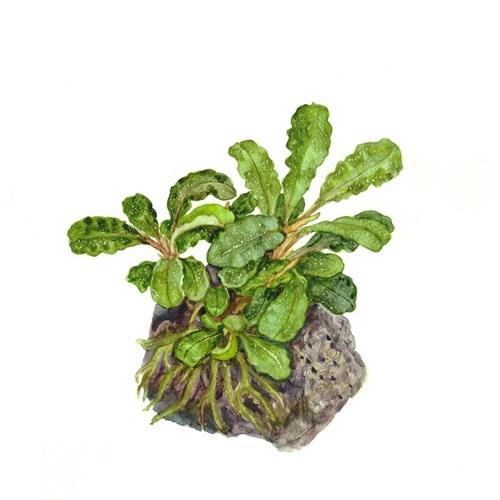
Few aquatic plants combine texture and resilience like bucephalandra, and the Green Wavy variety is one of the most sought-after forms. Its ruffled, undulating leaf margins and deep olive-green colour create an organic, almost sculptural effect when attached to stone or driftwood. This bucephalandra green wavy care guide from Gensou Aquascaping at 5 Everton Park, Singapore, walks you through keeping this Bornean rheophyte healthy and looking its best.
Origin and Classification
Bucephalandra is a genus of rheophytic plants endemic to Borneo, growing on rocks in fast-flowing streams and waterfalls. “Green Wavy” is a trade name rather than a formal species designation — it likely falls under Bucephalandra motleyana or a closely related species. Leaves are 2-4 cm long with distinctive ruffled edges and a slightly iridescent sheen underwater. The plant grows from a creeping rhizome, much like anubias, and attaches to hard surfaces with fine roots.
Attachment and Positioning
Like anubias, bucephalandra must never have its rhizome buried in substrate. Attach it to lava rock, dragon stone or driftwood using cyanoacrylate super glue gel — a small dab on the rock, ten seconds of pressure and it holds permanently. Cotton thread or fishing line also works but looks less tidy during the weeks before the roots grip naturally. Position Green Wavy in the midground or on vertical rock faces where its ruffled texture catches the light. Grouping three to five portions together creates a lush cluster faster than waiting for a single piece to spread.
Lighting and CO2
Green Wavy does well under low to moderate light — 20-40 PAR at leaf level. It tolerates higher light but gains little benefit from it, and excessive intensity invites algae growth on the slow-growing leaves. CO2 injection is not required. Without CO2, expect growth of one new leaf every two to three weeks per rhizome tip. With CO2 at 15-25 ppm, that pace roughly doubles. Either approach produces a beautiful plant; the difference is simply how quickly it fills in.
Water Parameters
Bucephalandra adapts to a wide range: pH 6.0-7.5, GH 2-12 and temperatures of 22-28 °C. Singapore’s tap water is well within these ranges without adjustment. The plant appreciates gentle to moderate flow — in nature it clings to rocks in streams, so some current across the leaves mimics its native conditions and helps prevent detritus from settling on leaf surfaces. Weekly water changes of 20-30% maintain nutrient balance and prevent the organic build-up that encourages algae.
Dealing With Bucephalandra Melt
New bucephalandra frequently “melts” — existing leaves deteriorate and fall off within the first two weeks of being introduced to a new tank. This is a stress response to changed conditions, not a sign of death. As long as the rhizome remains firm and green, the plant will recover and push out new leaves adapted to your water. Tissue culture portions melt less than emersed-grown specimens. To minimise melt, float the plant in the tank for a few days before attaching it, allowing gradual acclimation.
Algae Management
The same slow growth that makes bucephalandra low-maintenance also makes it vulnerable to algae. Black beard algae and green spot algae are the usual culprits. Keep lighting periods at 6-8 hours, ensure adequate phosphate (above 0.5 ppm to prevent GSA) and maintain good flow. Amano shrimp are the most effective biological control — three to four per 30 litres keep bucephalandra leaves remarkably clean. Nerite snails also help with diatoms and soft green algae on the leaf surface.
Propagation
Divide the rhizome once a section has at least four to five leaves. Use a clean, sharp razor blade and cut between leaf nodes. Each divided piece should have visible root nubs. Attach the new section to fresh hardscape and give it two to three weeks to establish before expecting new growth. Bucephalandra also occasionally produces side shoots from the rhizome — these can be separated once they develop their own root system. Portions sell for $5-15 on Carousell and Shopee in Singapore, depending on size and variety rarity.
Design Applications
Green Wavy’s ruffled texture contrasts beautifully with smooth-leaved plants like anubias and the fine fronds of Java fern ‘Petit’. Attach it to prominent rock faces in an iwagumi or nature-style aquascape where the leaf detail draws the eye. It also works wonderfully in paludariums, growing emersed above the waterline with increased humidity. For aquascaping layouts that feature bucephalandra as a focal element, Gensou Aquascaping offers design consultations tailored to Singapore homes and offices.
Related Reading
- Malachite Green in Aquariums: Treating Ich and Fungus Safely
- Bucephalandra Brownie Ghost Care Guide: Iridescent Borneo Gem
- Bucephalandra Brownie Purple Care Guide: Rare Borneo Rheophyte
- How to Fix Browning Leaves on Bucephalandra in Aquariums
- Bucephalandra Kedagang Care Guide: Dark Green Borneo Classic



