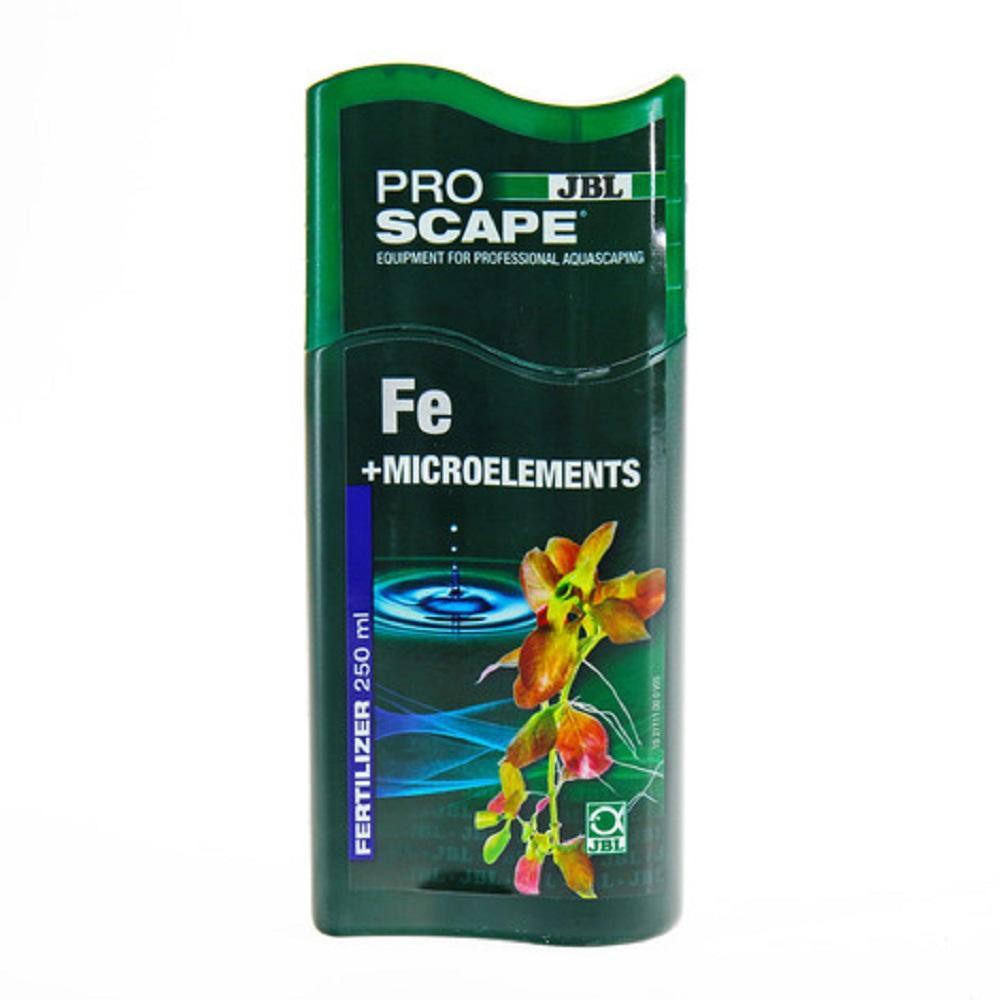
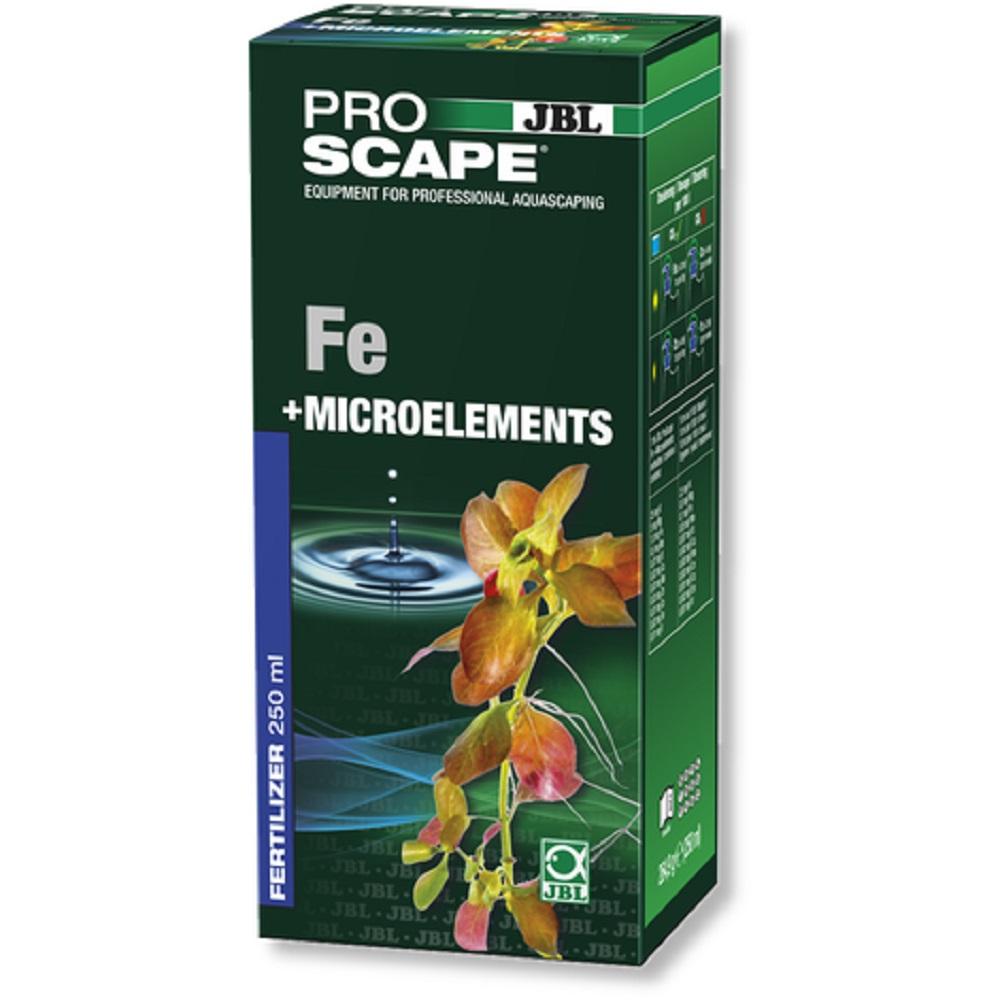
JBL ProScape Fe + Micro Elements (250ml)
Out of stock
Ask on WhatsAppDescription
Primary care for plants: basic fertiliser for aquascaping aquariums.
Dosing is dependent on the intensity of the lighting, CO2 supply and consumption.
Healthy plant growth, prevents deficiency symptoms: with iron and a lot of other trace elements.
Add nitrogen, phosphorus, potassium and magnesium separately. Check with iron, potassium and magnesium tests.
Contents: 1 bottle ProScape Fe + Microelements.
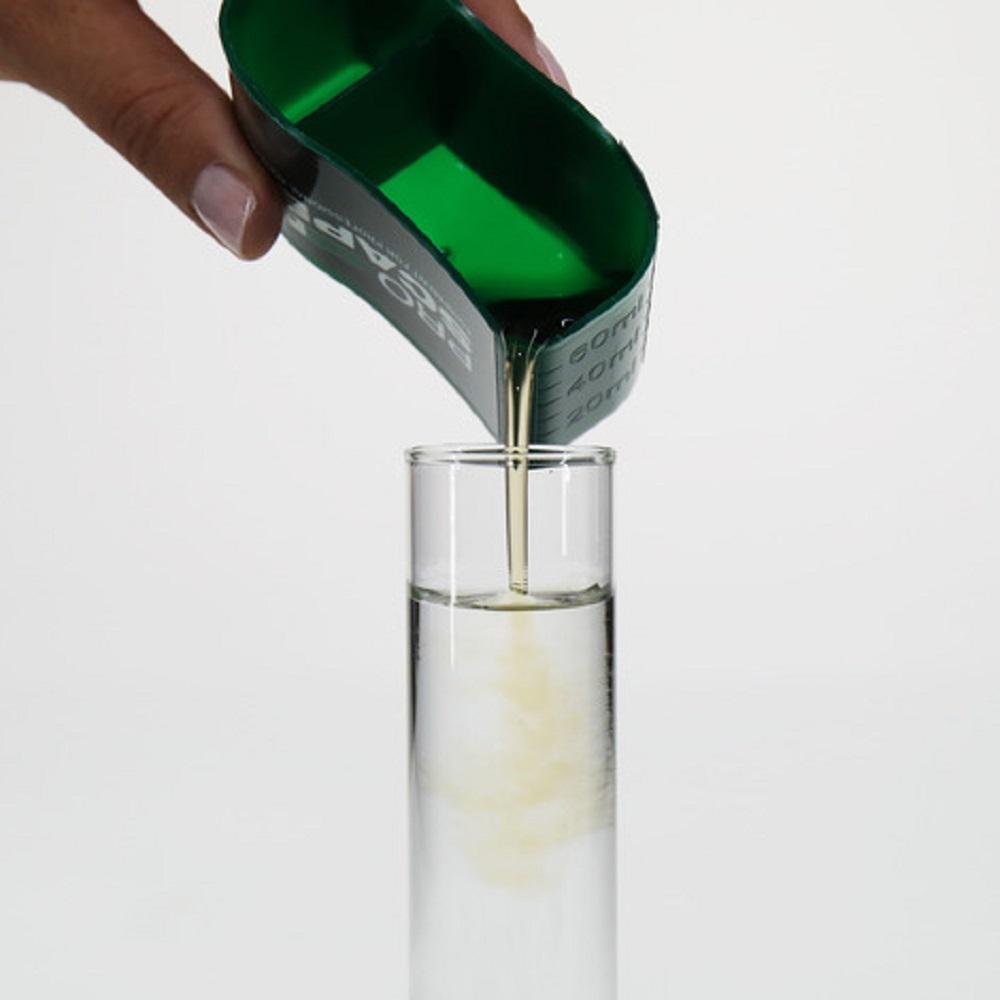
Use daily:10 ml/100 l in high power light + CO2; 3x weekly: 4 ml/100 l high power light/no CO2; daily: 4 ml/100 in weak light conditions + CO2; weekly: 2 ml/100 l in weak light conditions/no CO2
Product Information
| Underwater gardener: | Aquascaping is the term used to describe the technique of designing aquarium landscapes., This is the place for plant compositions, for the reproduction of a landscape above water or for natural biotopes., An aquascaping aquarium contains no or few fish and invertebrates., This way the nutrient supply for plants is reduced and their growth is limited. Nitrogens, phosphorus and other minerals become scarce substances and need precise re-dosing., The plants need light for their healthy growth in a beautiful underwater landscape, CO2 and the right nutrients., Please use the dosing calculator at www.proscape.de, to determine the exact fertiliser amount by taking into account the initial values of the aquarium water. |
|---|
Faq
I would like to fertilise my plants with your product and change over completely. How do I go about doing that?
> Generally, one should never change plant fertilizers abruptly. The fertilizers from different manufacturers have somewhat different compositions in terms of trace elements. This may cause temporary nutrient changes. It is best to change over in 3 steps:
1) Reduction of the old fertilizer by 1/3; replace this with 1/3 of the new fertilizer. Wait approx. 3-4 weeks and observe the reaction of the plants.
2) Reduction of the old fertilizer by 2/3; replace this with 2/3 of the new fertilizer. Wait approx. 3-4 weeks and observe the reaction of the plants.
3) Complete discontinuation of the old fertilizer and change-over to the new fertilizer.
It is important to observe the reaction of plant growth and, in addition, to check the iron content of the water at least 2x weekly.
Whereas the value should never drop to 0, it should never exceed 0.2 mg/l if possible. However, short peaks are no cause for concern.
These measures should generally be carried out on a weekly basis, ideally right after a water change. This achieves better results than fertilizing in large doses at longer intervals.
Where did my algae come from?
> Algae problems in an aquarium can never be traced to just one factor or general condition, and instead, are always the result of a combination of different factors, which include light, fertilization, water changes – specifically, how often and how much – feeding, fish population and, of course, the specific water parameters.
According to analyses that were performed over a course of a number of years, red algae, at least the common brush algae and beard algae, occur in descending order at the following parameters:
1) too little carbon dioxide (in relationship to 100 % of the measured tank); the pH level should be in the slightly acetic range, depending on the carbonate hardness, in every case.
2) elevated phosphate levels (over 90 %); phosphate limitation by means of JBL PhosEx ultra is often helpful here.
3) too little and too irregular fertilization (there should always be traces of iron at least).
4) insufficient water changes; a weekly water change of over 30 % is recommended for algae problems.
5) not enough fast-growing plants.
Should the amount of fertiliser be reduced when there is algae trouble ?
> A comprehensive answer to this question cannot be provided, as this would require a comprehensive analysis of the water, the fertilisation, lighting and the carbon dioxide supply, plus regular water care.
Although algae can be attributed to an excess of nutrients – particularly phosphate and nitrate in this case, – in many cases, they are also the result of a lack of so-called micronutrients, of which iron is the best known. Very often, this is the deeper cause of the algae problem.
When algae growth occurs, it is generally highly advisable to increase the amount and frequency of water changes, make sure there is a sufficient supply of fast-growing plants and fertilise these with JBL Ferropol or JBL Ferropol 24 in accordance with the instructions.
Do JBL Ferropol, JBL Ferropol 24 or JBL ProScape Fe+ Microelements contain copper, which is harmful for shrimps?
> As with all good trace element fertilisers, all the fertilisers for ornamental plants in aquariums we have mentioned contain copper. Copper is an essential trace element for plants and animals.
For shrimps, other decapods but also for some other animal groups copper is a central atom of the blood pigment haemocyanin, which makes it essential for transporting oxygen inside the animal.
The concentration in JBL Ferropol, JBL Ferropol 24 and JBL ProScape Fe +Microelements is so designed that all trace elements are available in the required quantities. Not even multiple overdosing of the fertilisers can lead to consequences with shrimps and other decapods.
JBL ProScape Fe + Micro Elements for SG Planted Tanks
This is the iron and trace-element half of the ProScape dosing system, the foundation fertiliser that keeps aquascape plants free of the pale, stunted look that comes from micronutrient shortfalls. It is designed to be dosed against your light intensity and CO2, and crucially it leaves out the big macros so you can add nitrogen, phosphorus and potassium separately. That separation is what gives experienced SG scapers the control they want.
In our climate, planted tanks run warm at 27-29C, which speeds plant metabolism and trace-element uptake, so consumption can be higher than the bottle’s general guidance suggests. Start conservatively, watch new growth, and let an iron, potassium and magnesium test tell you when to adjust rather than guessing. Pairing this with the NPK macro bottle gives a complete, tunable system for a high-tech scape running pressurised CO2.
See the rest of our conditioners and treatments range. For dialling in doses, our trace element dosing guide and iron dosing guide explain how to read your plants and adjust.