
Exclamation Point Rasbora Care Guide: Boraras Urophthalmoides
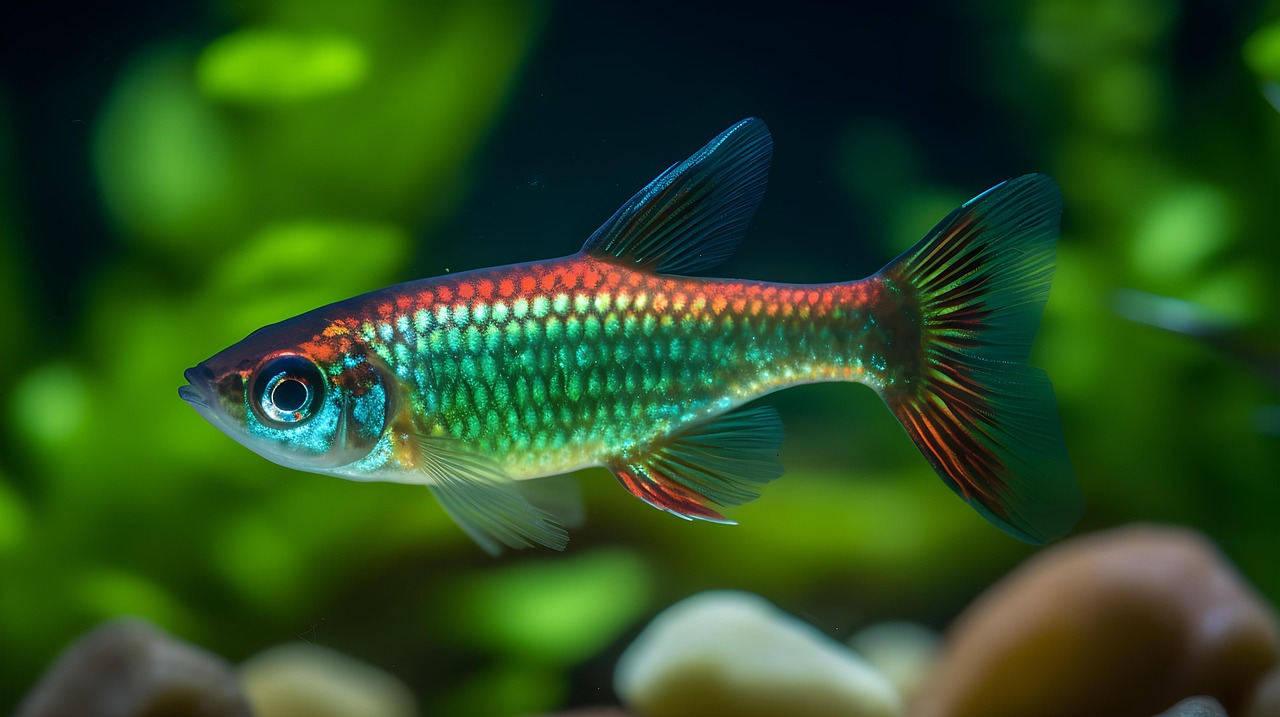
Nano fish enthusiasts searching for a lively, boldly marked micro rasbora should look no further than Boraras urophthalmoides. This exclamation point rasbora care guide from Gensou Aquascaping Singapore, refined through over 20 years of hands-on experience, covers everything hobbyists need for long-term success. The distinctive dark lateral stripe ending in a prominent spot gives this species its punctuation-inspired common name — a marking that makes even a small shoal visually striking in a planted exclamation point rasbora setup.
Origin and Identification
Boraras urophthalmoides is found across Thailand, Vietnam, and Cambodia in shallow, slow-moving blackwater habitats. Adults rarely exceed 2 cm. A bold dark stripe runs from behind the gill cover to the caudal peduncle, terminating in an eye-like spot — the “exclamation point.” Body colour ranges from coppery orange to warm gold depending on diet and water conditions.
They belong to the genus Boraras, which contains six recognised species, all small. Misidentification with Boraras maculatus or Boraras merah occurs occasionally in shops, so examine the lateral marking pattern carefully before purchasing.
Tank Size and Aquascaping
A group of 10–12 fits comfortably in a 20-litre nano tank, though 30–40 litres allows more natural shoaling behaviour. Dense planting with fine-leaved species — Rotala rotundifolia, Eleocharis parvula, and java moss — provides cover and contrasts beautifully against their warm body tones.
Indian almond leaves and driftwood release tannins that tint the water amber, mimicking blackwater conditions and deepening colour. A dark substrate enhances this effect further. For Singapore’s compact HDB apartments, a well-aquascaped nano cube on a desk or shelf becomes a genuine conversation piece.
Water Parameters
Singapore’s PUB tap water is soft and slightly acidic — essentially ideal for Boraras species after proper dechloramination. Target pH 5.5–7.0, GH 1–6 dGH, and temperature 24–28 °C. Our tropical ambient temperatures mean no heater is needed. Avoid temperatures above 30 °C for extended periods; use a small fan across the surface during heat spells.
Weekly water changes of 20 % maintain stability. Match replacement water temperature and treat for chloramine — partial changes are less stressful than large infrequent ones.
Diet and Feeding
Exclamation point rasboras have tiny mouths. Crush standard flake food to a fine powder or use dedicated micro pellets under 0.5 mm. Frozen cyclops, baby brine shrimp, and daphnia provide essential protein and encourage vibrant colouration.
Feed small amounts twice daily. Overfeeding in nano tanks causes rapid water quality decline — if food reaches the substrate uneaten, you are offering too much. Live vinegar eels or microworms make excellent supplemental treats, especially for conditioning breeders.
Shoaling Behaviour and Tank Mates
Groups smaller than eight tend to hide constantly. At 10 or more, they form active, loosely coordinated shoals that drift through the midwater column. Males display to one another with brief fin-flaring — harmless sparring that adds dynamism to the tank.
Pair them with similarly sized, peaceful species: Boraras brigittae, pygmy corydoras (Corydoras pygmaeus), and neocaridina shrimp. Anything over 4 cm may intimidate or predate on them. Avoid bettas and all but the smallest gouramis.
Breeding
Spawning occurs sporadically in well-maintained, mature tanks. Males court females with quivering displays near fine-leaved plants. Eggs are scattered among moss or plant roots — tiny and nearly invisible. Adults will eat eggs and fry if given the opportunity.
A dedicated breeding setup with a mesh bottom or dense moss clump improves fry survival. Eggs hatch in 24–48 hours at 26 °C. Feed fry infusoria for the first five days before introducing baby brine shrimp. Growth is slow; juveniles take three to four months to reach adult size.
Health and Longevity
With stable conditions, exclamation point rasboras live three to four years. Sudden parameter shifts — from erratic water changes or unmonitored CO2 injection — pose the greatest risk. Ich occasionally appears after new fish introductions; raising temperature to 28 °C and using a mild salt treatment usually resolves it.
Quarantine all new arrivals for two weeks. These small fish are fragile during transport, so acclimate slowly using the drip method over 30–45 minutes.
Final Thoughts
Following this exclamation point rasbora care guide sets you up for a thriving, eye-catching nano community. Gensou Aquascaping Singapore considers Boraras urophthalmoides one of the finest micro fish available to local hobbyists — affordable at $1–$2 each, hardy in our water conditions, and endlessly entertaining in a properly planted shoal.
Related Reading
- How to Breed Exclamation Point Rasboras: Tiny Eggs, Big Patience
- Exclamation Point Rasbora Care Guide: Brigittae Nano Gem
- How to Aquascape for Exclamation Point Rasboras: Dense Nano Jungle
- How to Breed Chili Rasboras: Micro Spawners in Soft Water
- Chili Rasbora vs Ember Tetra: Tiny Red Nano Fish Compared



