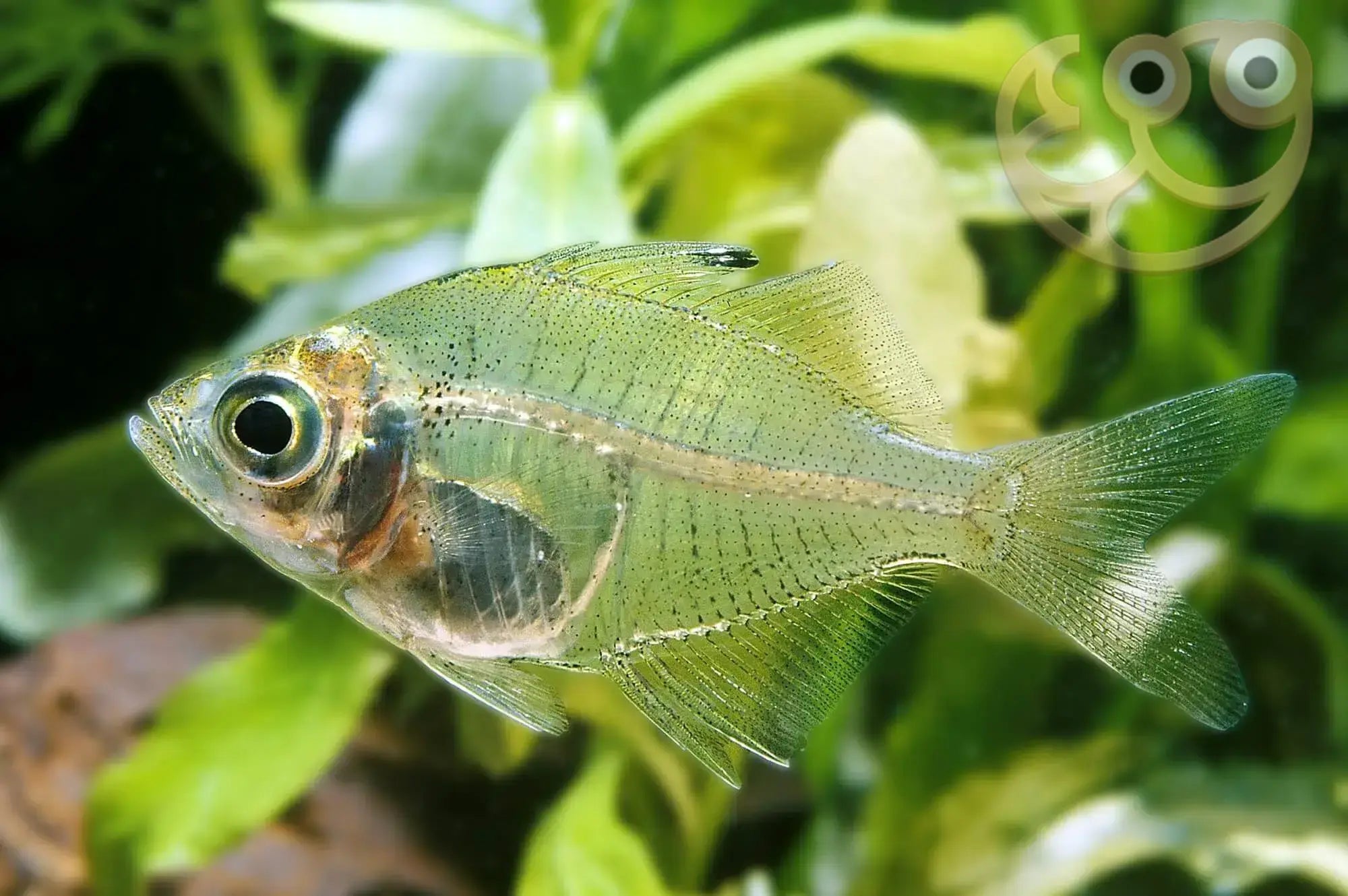
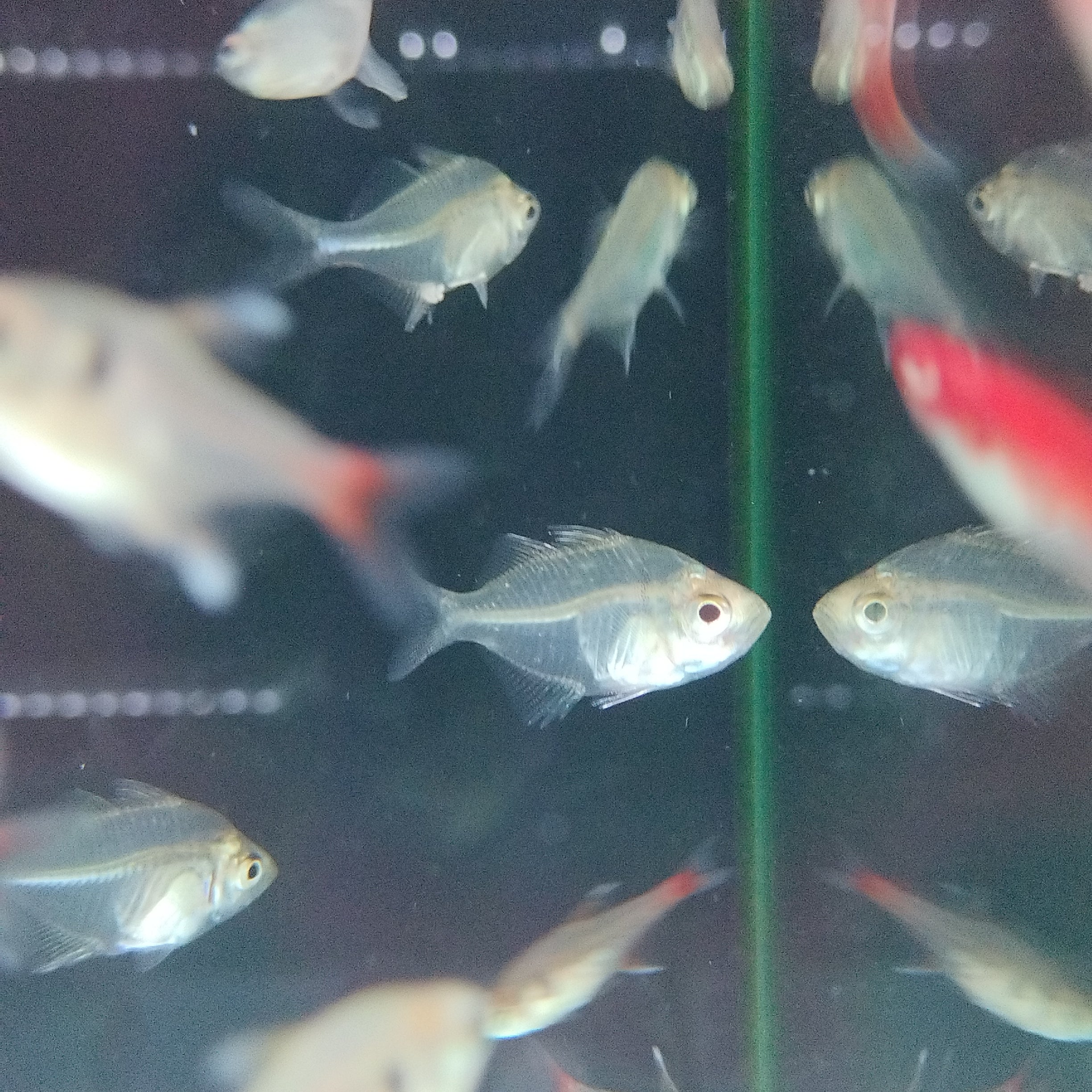
At a glance
Species profile Parambassis ranga
Origin
South and Southeast Asia (India, Myanmar, Thailand)
Family
Ambassidae (Asiatic glassfish family)
Adult size
Up to 6 cm (2.5 in)
Diet
Prefers small live/frozen foods (bloodworm, brine shrimp, daphnia); may ignore dry flake (Carnivore)
Temperament
Peaceful
Swimming level
Middle
Minimum group
6+ (shoaling)
Lifespan
3-4 years
Minimum tank
75 L (20 gal)
Water type
Freshwater
Size to scale
6 cm adult length, shown to scale against an iPhone 15 Pro (14.66 cm).
Natural range
Where it comes from — Southeast Asia
South and Southeast Asia (India, Myanmar, Thailand)
Water
Singapore tap water vs its needs
Hardness: Medium to hard (8-20 dGH).
In the aquarium
How it lives in the tank
Swims in the middle of the tank
Keep in a group of 6+
Sensitivity Index — Moderate
Adaptable, but happiest with stable parameters in a matured tank.
Our own read on how forgiving this species is of water changes — not a formal standard.
Keeping & care
What this fish needs
Family
About the Ambassidae family Asiatic glassfish family
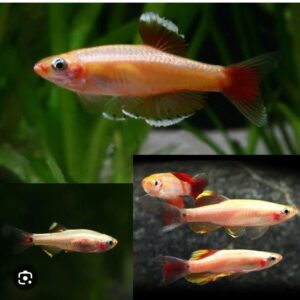
Ambassidae are the Asiatic (Asian and Australian) glassfishes or glass perchlets — small, laterally-compressed perch-like fishes whose bodies are famously semi-transparent, so the spine and internal organs show through. They inhabit fresh and brackish waters from South and Southeast Asia to Australia, with the Indian glassy fish (Parambassis ranga) and various Ambassis and Parambassis species being the ones seen in the hobby. They are peaceful, mildly shoaling micropredators that do best in groups; most are undemanding but some populations favour slightly hard or lightly brackish water.
Keep them in a shoal of six or more in a calm, well-planted tank with subdued lighting and gentle flow, and refuse any "painted"/"disco" specimens — those colours are injected dye that harms the fish and fades.
Breeding
Egg-scatterer (plant-spawning)Glassfishes are open egg-scatterers with no parental care. A large evening water change followed by morning sun typically triggers spawning, and the female scatters many small adhesive eggs among fine-leaved plants or spawning mops for the male to fertilise. Parents readily eat the eggs, so remove the adults after spawning; fry hatch in about a day and need very fine foods such as infusoria followed by newly hatched brine shrimp.
Feeding
Recommended food
Compatibility
Best tankmates

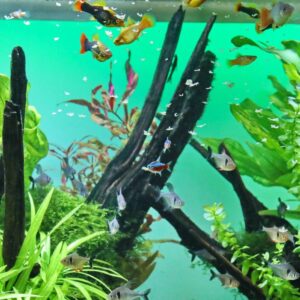
Community