Hong Kong Hill Stream Biotope Aquascape: Subtropical Rapids
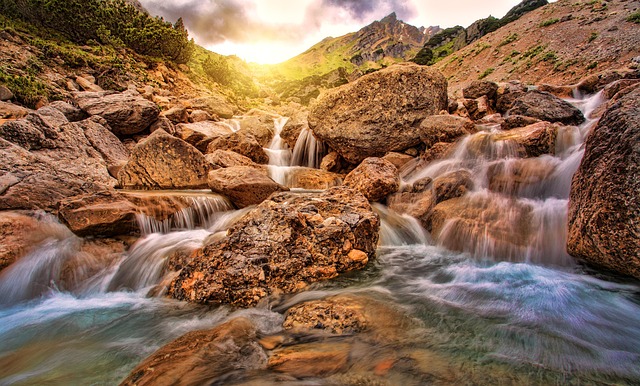
Hong Kong’s hill streams are fast, cold, and oxygen-rich — tumbling over smooth granite boulders in narrow valleys that receive heavy seasonal rainfall. The fish that live there are adapted to near-continuous powerful current, highly oxygenated water, and seasonal temperature drops that Singapore’s tropical aquarists must recreate artificially. A Hong Kong hill stream biotope aquascape is one of the most technically demanding builds in freshwater fishkeeping, but the resulting display — transparent rushing water over polished stones, with loaches clinging to every surface — is genuinely spectacular. Gensou Aquascaping in Everton Park, Singapore has worked with a number of hobbyists on subtropical builds, and the cooling challenge is always the first issue to address.
Temperature: The Critical Challenge in Singapore
Hong Kong hill stream species — primarily Gastromyzon, Pseudogastromyzon, and Beaufortia loaches — require water temperatures of 18–24°C. At Singapore’s ambient 28–32°C, achieving this without a chiller is impossible. Budget for an aquarium chiller rated to at least 1.5x your tank volume, and expect electricity costs of $30–$60 per month depending on ambient conditions and chiller efficiency. This is a non-negotiable cost of keeping these species here, and any hobbyist unwilling to run a chiller should choose a different biotope.
Flow Rate and Oxygenation
Hill stream loaches are adapted to torrential current — their flattened, modified ventral fins act as suction pads, allowing them to cling to rock surfaces in flow rates that would sweep other fish away entirely. Target a turnover rate of 20–40 times the tank volume per hour from combined filtration and powerhead flow. A 60-litre tank should have 1,200–2,400 litres per hour of total flow. This sounds extreme by planted tank standards, but it is authentic to the natural environment and keeps the substrate clean and oxygenated.
Surface agitation should be vigorous enough to see constant rippling — dissolved oxygen levels in a true hill stream approach saturation at 8–10 mg/L. In a warm Singapore room even with a chiller, maintaining high dissolved oxygen requires strong surface movement.
Hardscape: Smooth River Stones and Slate
Hong Kong hill stream substrates are smooth-worn granite pebbles, cobbles, and exposed bedrock — no sand, no planted substrate, no leaf litter. Source smooth river pebbles in varying sizes from aquarium or landscaping suppliers. The arrangement should look like a natural streambed: larger cobbles anchoring the layout, medium pebbles filling gaps, and a thin layer of fine gravel in low-flow pockets. Smooth slate can replicate exposed bedrock on the aquarium rear or sides.
Do not use sharp-edged stones — loaches spend time sliding across substrate surfaces, and angular edges will cause abrasion injuries. All hardscape should be rinsed thoroughly and checked for iron-containing minerals that can leach and affect water chemistry.
Species for an Authentic Hong Kong Build
Gastromyzon ctenocephalus and Pseudogastromyzon cheni are the signature species of Hong Kong hill streams, though availability in Singapore is limited and sporadic — check with specialty shops in the Serangoon North area and Carousell listings from importers who occasionally bring in hillstream loach species. Sewellia lineolata from Vietnam is widely available and adapts to similar conditions, making it a practical species for hobbyists who want the hillstream aesthetic while waiting for authentic Hong Kong species.
Keep groups of at least four to six individuals — hillstream loaches are social and become stressed in small numbers, showing less natural behaviour and reduced feeding drive.
Filtration and Water Chemistry
Canister filtration provides the mechanical and biological capacity needed without adding to surface clutter. The return nozzle should be positioned to maximise horizontal flow across the substrate. Supplementary powerheads — one or two additional units — create the complex, multi-directional current that characterises natural streams rather than the laminar flow of a single pump return.
Hong Kong hill stream water is moderately soft and slightly acidic to neutral: GH 3–8, KH 2–4, pH 6.5–7.5. Singapore’s tap water, after dechlorination with a quality conditioner that neutralises chloramine, sits comfortably within this range and requires minimal adjustment — a practical advantage of this biotope for local hobbyists.
Feeding Hillstream Loaches
In nature, hillstream loaches graze continuously on periphyton — the complex biofilm of algae, diatoms, and bacteria that coats every submerged surface. In the aquarium, established tanks develop their own biofilm that loaches graze contentedly, supplemented by algae wafers, blanched courgette, and spirulina-based foods. Feed in the evening when loaches are most active and reduce to every other day once the tank has a mature biofilm layer. Overfeeding degrades water quality and encourages unwanted algae types that compete with the natural periphyton community.