How to Aquascape Specifically for Betta Fish

If you want to aquascape for betta fish, you need more than a generic planted tank. Bettas are labyrinth breathers with flowing fins, territorial instincts, and specific environmental preferences that demand a thoughtful approach to aquascaping. A well-designed betta aquascape blends aesthetic beauty with functional elements that keep your fish healthy, comfortable, and visually stunning.
At Gensou, our team at 5 Everton Park has spent over 20 years designing aquascapes across Singapore, and betta-specific setups remain one of the most popular requests we receive. In this guide, we walk you through everything from layout principles and plant selection to hardscape techniques and common pitfalls — so your betta tank looks incredible and functions perfectly.
Table of Contents
- Why Bettas Need Specialised Aquascapes
- Design Principles for Betta Aquascapes
- Choosing the Right Tank
- Step-by-Step Aquascaping for Betta Fish
- Best Plants for a Betta Aquascape
- Hardscape Suggestions
- Filtration and Flow Considerations
- Common Mistakes to Avoid
- Frequently Asked Questions
- Final Thoughts
Why Bettas Need Specialised Aquascapes
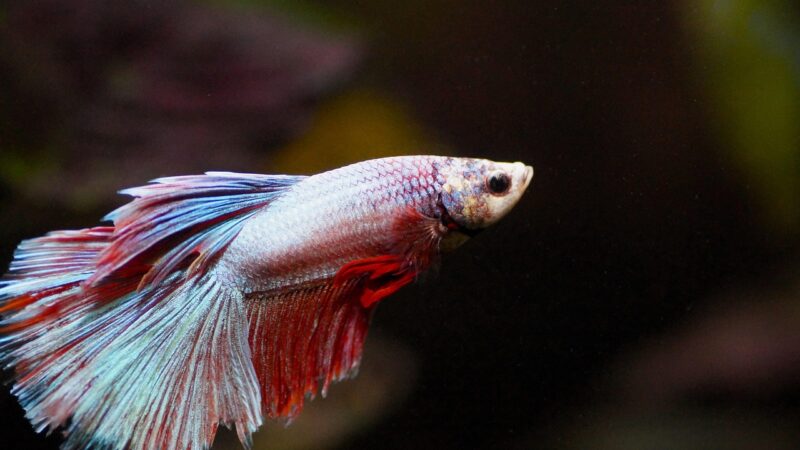
Bettas (Betta splendens) originate from the shallow, slow-moving waters of Southeast Asia — an environment not too different from what we experience here in Singapore. However, their unique physical traits set them apart from most tropical fish when it comes to tank design.
Key Betta Characteristics That Affect Aquascaping
| Characteristic | Impact on Aquascaping |
|---|---|
| Long, flowing fins | Avoid sharp hardscape edges and rough surfaces that can tear delicate finnage |
| Labyrinth breathing | Must have unobstructed access to the water surface at all times |
| Territorial nature | Needs visual barriers and resting spots, but also open swimming areas |
| Preference for still water | Low-flow filtration and minimal current throughout the tank |
| Surface dwelling tendency | Floating plants and surface-level resting spots are highly beneficial |
Understanding these traits is fundamental before you begin any aquascaping work. A layout that looks stunning but ignores betta behaviour will result in a stressed, unhappy fish.
Design Principles for Betta Aquascapes
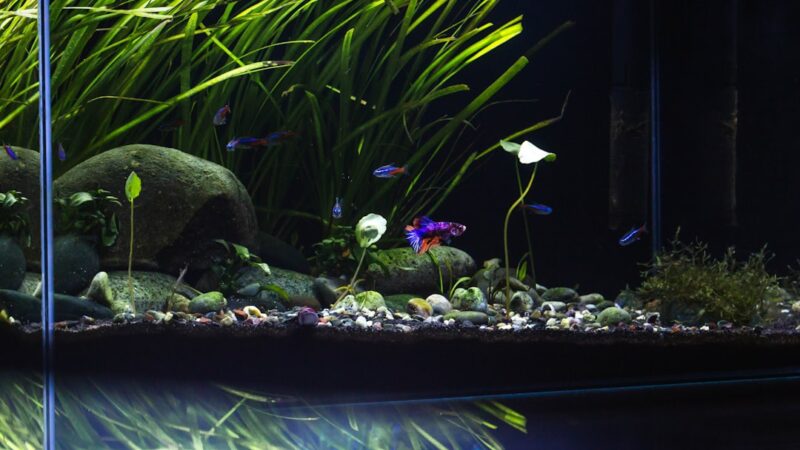
When you aquascape for betta fish, the goal is to create a naturalistic environment that balances open swimming space with sheltered zones. Here are the core principles to follow.
1. Prioritise Horizontal Swimming Space
Bettas are not particularly strong swimmers, especially long-finned varieties. Design your layout to offer clear horizontal pathways rather than forcing the fish to navigate tight vertical gaps. A layout with hardscape concentrated on one side (an island or triangular composition) works well.
2. Create Resting Areas at Multiple Heights
Bettas love to rest on broad leaves near the surface. Incorporate plants like Anubias positioned at mid-level and upper areas. Flat stones or driftwood placed just below the waterline also serve as natural resting platforms.
3. Ensure Surface Access
Never allow floating plants to completely cover the water surface. Bettas must breathe atmospheric air regularly. Aim to keep at least 30–40% of the surface clear at all times.
4. Soft, Rounded Hardscape Only
Jagged dragon stone or sharp-edged rock formations can shred betta fins. Choose smooth river stones, rounded lava rock, or well-weathered driftwood with no protruding splinters.
Choosing the Right Tank
While bettas are often sold in tiny cups — a practice we strongly discourage — a proper betta aquascape should use a tank of at least 15 to 20 litres. For a truly impressive planted betta display, we recommend 20 to 40 litres.
| Tank Size | Suitability | Notes |
|---|---|---|
| 5–10 litres | Minimum (not ideal) | Very limited aquascaping potential; requires frequent water changes |
| 15–20 litres | Good | Enough room for a simple planted layout with one focal point |
| 20–40 litres | Excellent | Ideal canvas for a full aquascape with varied plant species and hardscape |
| 40+ litres | Premium | Allows complex compositions; consider tank mates if desired |
In Singapore’s warm climate, smaller tanks are particularly susceptible to temperature fluctuations. A slightly larger volume provides better thermal stability for your betta, even without a heater in most HDB or condo settings.
Step-by-Step Aquascaping for Betta Fish
Follow these steps to build a betta-friendly aquascape from scratch.
Step 1: Plan Your Layout
Sketch a rough layout before placing anything in the tank. For bettas, a concave or triangular composition works best, as these naturally create open swimming corridors alongside planted or hardscaped zones.
Step 2: Prepare the Substrate
Use a fine-grained aquasoil or inert sand. Avoid coarse gravel with sharp edges. A nutrient-rich substrate like ADA Amazonia supports plant growth, but you can also use an inert base topped with root tabs if you prefer lower maintenance.
Step 3: Place Hardscape Thoughtfully
Position your driftwood or stones to create natural caves and overhangs. Bettas appreciate covered areas where they can retreat. Ensure all hardscape is smooth — run your fingers over every surface and sand down any rough patches.
Step 4: Plant in Zones
Plant taller species at the back and sides, mid-height plants in the centre, and carpeting or low-growing species at the front. Leave the central area relatively open for swimming. Attach epiphyte plants like Anubias and Bucephalandra to hardscape rather than burying their rhizomes.
Step 5: Add Floating Plants Sparingly
Introduce floating plants such as Salvinia or Amazon Frogbit to provide shade and resting spots. Use a feeding ring or airline tubing to corral them into one area, keeping part of the surface clear.
Step 6: Cycle the Tank Before Adding Your Betta
Allow 2–4 weeks for the nitrogen cycle to establish. In Singapore’s warm ambient temperatures (28–32°C), cycling can proceed relatively quickly. Test for zero ammonia and nitrite before introducing your betta.
Best Plants for a Betta Aquascape
| Plant | Placement | Why It Works for Bettas |
|---|---|---|
| Anubias barteri var. nana | Mid-ground, on hardscape | Broad leaves for resting; very hardy |
| Bucephalandra sp. | Foreground to mid-ground, on hardscape | Compact growth with smooth leaves; low maintenance |
| Cryptocoryne wendtii | Mid-ground | Soft, flowing leaves with no sharp edges |
| Java Fern (Microsorum pteropus) | Background, on driftwood | Large leaves provide cover; tolerates low light |
| Salvinia minima | Floating | Provides shade and surface cover; dangling roots offer stimulation |
| Hydrocotyle tripartita | Foreground to mid-ground | Clover-like leaves create a lush carpet; betta-safe |
All of these species thrive in Singapore’s naturally warm water temperatures and do well under moderate lighting — making them practical choices for local hobbyists.
Hardscape Suggestions
Choosing the right hardscape is critical when you aquascape for betta fish. Here are our top recommendations.
Driftwood
Spider wood and Manzanita wood are excellent options. Their branching forms create natural caves and visual interest. Ensure all branches are smoothly worn — sand any sharp tips before placing them in the tank. Driftwood also releases tannins, which bettas appreciate as it mimics their natural blackwater habitat.
Stones
Smooth river pebbles, rounded lava rock, and Hakkai stone are safe choices. Avoid dragon stone (Ohko stone) for long-finned bettas, as its porous, rough texture can damage fins. If you must use textured stone, position it where the betta cannot brush against it.
Coconut Hides and Ceramic Caves
For a functional addition, half coconut shells or smooth ceramic caves give bettas a dedicated hiding spot. These can be partially concealed with moss for a more natural look.
Filtration and Flow Considerations
Strong currents are the enemy of betta aquascapes. Bettas struggle against flow, and long-finned varieties can become exhausted or stressed. Choose a sponge filter for gentle biological filtration, or use a small hang-on-back filter with the output baffled using a piece of sponge or a pre-filter attachment.
In Singapore, many betta keepers successfully run their tanks with just a sponge filter and regular water changes. The warm ambient temperature means you rarely need a heater, simplifying the equipment list further.
Common Mistakes to Avoid
1. Overcrowding the Tank with Plants
While lush planting is visually appealing, bettas need room to swim. Leave at least 40% of the tank volume as open water. Overgrown tanks also trap bettas and make surface access difficult.
2. Using Sharp or Rough Hardscape
This cannot be overstated. A single jagged edge can lead to torn fins and secondary bacterial infections. Always perform the “pantyhose test” — drag a piece of stocking over all surfaces; if it snags, the hardscape is not betta-safe.
3. Allowing Floating Plants to Cover the Entire Surface
Floating plants grow rapidly in Singapore’s climate. Without regular trimming, they can blanket the surface within weeks, cutting off your betta’s access to atmospheric air. Maintain a strict trimming schedule.
4. Ignoring Water Chemistry
Bettas prefer slightly acidic to neutral water (pH 6.5–7.0) and soft to moderately hard conditions. If you are using active substrate, monitor pH carefully during the initial weeks as it can drop significantly. Singapore’s tap water is generally suitable after dechlorination, but always test.
5. Choosing Incompatible Tank Mates
If you are adding shrimp or snails to the betta aquascape, ensure there is ample hiding space. Avoid fin-nipping species entirely. In smaller tanks (under 20 litres), keep the betta as the sole inhabitant.
Frequently Asked Questions
Can I use CO2 injection in a betta aquascape?
Yes, but with caution. Low-level CO2 injection is fine for promoting plant growth, but avoid high concentrations as they can reduce oxygen levels. Since bettas breathe atmospheric air, they are more tolerant than gill-breathing fish, but tank mates like shrimp or snails may suffer. A low-tech setup without CO2 is often the better choice for betta tanks.
What lighting is best for a betta tank in Singapore?
A moderate-intensity LED light on a 6–8 hour timer works well. Bettas do not enjoy extremely bright lighting and may become stressed. If your tank receives ambient sunlight (common in many Singapore homes), reduce the artificial light duration accordingly to prevent algae blooms.
How often should I trim plants in a betta aquascape?
Trim stem plants every 1–2 weeks and floating plants weekly. Slow growers like Anubias and Bucephalandra need minimal maintenance — simply remove dead or yellowing leaves as they appear. Regular trimming keeps swimming pathways clear and ensures adequate surface access.
Is it safe to use aquasoil with bettas?
Absolutely. Aquasoil is safe for bettas and beneficial for plant growth. Just be aware that active substrates like ADA Amazonia can lower pH and release ammonia initially. Cycle the tank fully before introducing your betta, and monitor water parameters closely during the first month.
Final Thoughts
Learning to aquascape for betta fish is about marrying visual artistry with an understanding of your fish’s natural behaviours and needs. When done right, a betta aquascape is one of the most rewarding setups you can create — a living piece of art with a single, charismatic centrepiece fish gliding through a carefully crafted underwater landscape.
At Gensou, we have been helping Singapore’s aquascaping enthusiasts design beautiful, functional setups for over two decades. Whether you need guidance on plant selection, hardscape sourcing, or a fully custom betta aquascape built to your specifications, our team at 5 Everton Park is ready to help.
Ready to create the perfect betta aquascape? Get in touch with our team for personalised advice, browse our online shop for betta-safe plants and hardscape, or explore our custom aquarium service for a professionally designed setup tailored to your space.
Related Reading