How to Aquascape a Hexagonal Tank: Working With Six Sides

Hexagonal tanks are eye-catching conversation starters, but their unusual geometry demands a different design approach. This aquascape hexagonal tank guide helps you work with the shape rather than against it. At Gensou Aquascaping, located at 5 Everton Park in Singapore, we have designed several hexagonal layouts for clients and know the challenges and opportunities these tanks present.
Understanding the Hexagonal Shape
A hexagonal tank has six flat panels arranged in a symmetrical footprint that is wider than it is deep from any single viewing angle. Unlike rectangular tanks with a clear front and back, a hex tank is often viewed from multiple sides or placed as a centrepiece in a room. The equal panel widths mean there is no obvious primary viewing face unless you position the tank against a wall. This multi-angle visibility is both the hex tank’s greatest strength and its biggest design challenge, as the layout needs to look coherent from several perspectives.
Choosing a Focal Point Strategy
There are two main approaches. The first is a central focal point, where a single piece of hardscape or a plant cluster occupies the middle of the tank and draws the eye from every angle. A dramatic piece of driftwood rising from the centre or a tall stone arrangement works well here. The second approach is a wall-backed design, where the tank sits against a wall and one or two panels serve as the back. In this case, you can plant densely along the rear panels and leave the front three panels more open, similar to a conventional rectangular layout but with angled sight lines.
Hardscape Selection and Placement
Vertical hardscape is particularly effective in hex tanks because these tanks are often taller relative to their footprint than standard rectangular aquariums. A single tall piece of driftwood, such as a branching spider wood or a slim piece of Malaysian driftwood, creates height without consuming too much floor space. If using stones, choose one main stone and position it off-centre to avoid a static, symmetrical look. Arrange smaller accent stones radiating outward to guide the eye from the focal point towards the edges. Test your hardscape arrangement dry before filling the tank, rotating around all six panels to check the composition from each angle.
Planting for Multiple Viewing Angles
In a centre-focused hex tank, plant in concentric rings. Place taller species like Vallisneria, Rotala or stem plants around the central hardscape, with progressively shorter plants towards the glass. Low-growing species such as Cryptocoryne parva, Staurogyne repens or a carpet plant near the edges keep sight lines open from every panel. For a wall-backed hex, treat the rear two panels like a conventional background with tall stems or Vallisneria, use mid-height plants like Cryptocoryne wendtii in the middle zone and keep the front panels clear or carpeted. Epiphytes like Anubias and Bucephalandra attached to central hardscape look good from every direction.
Lighting Challenges
Hex tanks are often deeper than wide, which means light needs to penetrate further to reach the substrate. Standard clip-on lights may not cover the full footprint evenly. A pendant-style LED suspended above the centre provides the most uniform coverage. The Chihiros WRGB II or a compact Twinstar pendant covers a hex tank of up to 60 litres effectively. For larger hex tanks, consider two smaller light units positioned to overlap coverage. In Singapore, pendant light kits including hanging cables cost around SGD 80 to SGD 200 depending on the brand and output.
Filtration and Equipment Placement
Internal filters and equipment are more visible in a hex tank because there are fewer places to hide them. A small external canister filter with glass lily pipes keeps the interior clean and uncluttered. If an internal filter is your only option, position it behind the central hardscape or along a rear panel where plants can partially conceal it. Heaters, if needed, can be placed inline with external filters or hidden vertically behind tall driftwood. In Singapore’s warm climate, many hex tank setups run without a heater at all, as room temperature keeps the water between 27 and 30 degrees Celsius.
Stocking Considerations
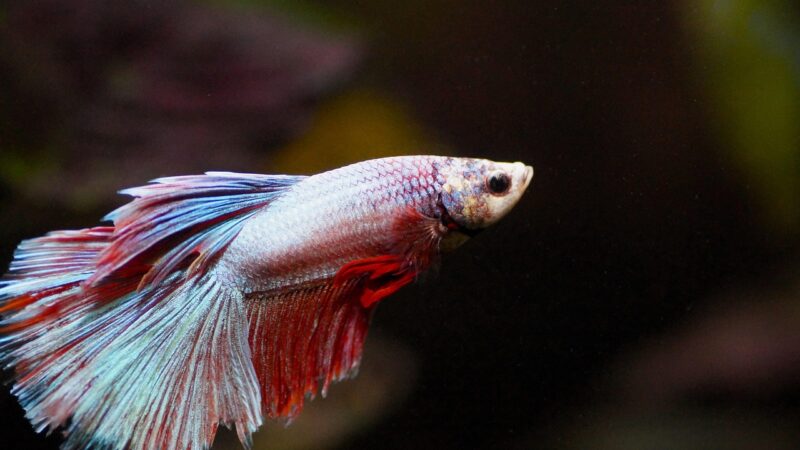
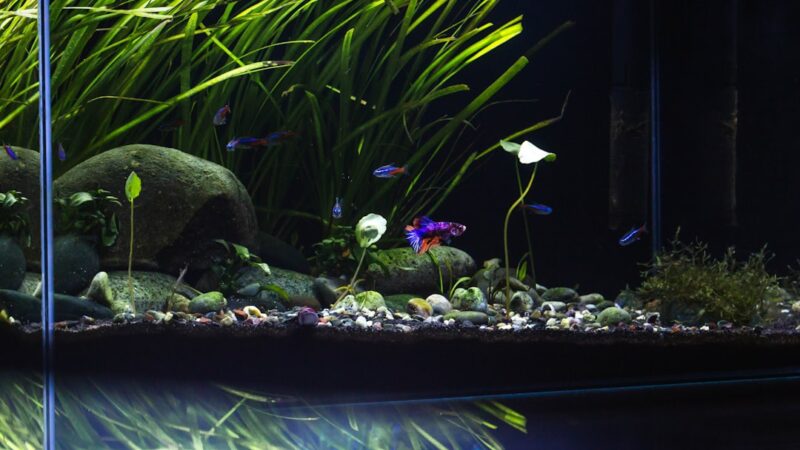
Hex tanks have less horizontal swimming space than rectangular tanks of equivalent volume, so choose fish that do not require long runs. Small shoaling species like ember tetras, chilli rasboras and celestial pearl danios are excellent choices. A single centrepiece fish such as a betta or a pair of dwarf gouramis adds character without overcrowding. Bottom dwellers like pygmy Corydoras or Otocinclus catfish are well suited to the compact footprint. Avoid active swimmers like danios or barbs that need more linear space. Most of these nano fish are available in Singapore for SGD 1 to SGD 5 each.
Making Your Hex Tank Shine
Embrace the unique geometry of the hexagonal tank rather than fighting it. Use the height for dramatic vertical hardscape, plant in layers that look natural from multiple angles and keep equipment discreet. A well-aquascaped hex tank becomes a living sculpture that rewards viewers who walk around it and discover new details from each panel. Visit Gensou Aquascaping at 5 Everton Park for hands-on help with hex tank layouts, hardscape selection and planting plans tailored to this distinctive tank shape.
Related Reading