
How to Aquascape a Tank Under the Staircase

The triangular void beneath a staircase is one of the most underused spaces in a home — and one of the most dramatic locations for an aquarium. An aquascape under the staircase tank transforms dead space into a living feature wall that guests notice the moment they enter. Gensou Aquascaping at 5 Everton Park, Singapore, has installed under-staircase aquariums in landed homes and maisonettes, and this guide covers the practical and creative challenges involved.
Assessing the Space
Staircases vary enormously. Measure the full envelope: width, depth at the tallest point, depth at the shortest point, and the angle of the sloping ceiling. Most under-stair voids in Singapore landed properties offer 120-180 cm of width, 50-70 cm of depth, and a height that tapers from around 150 cm down to 30 cm. Sketch the space carefully and consider which faces will be visible — typically the front and one side panel.
Custom Tank or Standard Tank
A custom-built tank that follows the staircase slope maximises water volume and visual impact. Local tank builders charge around $15-$25 per litre for custom glass work including fabrication and delivery. For a 200-litre trapezoidal tank, expect $3,000-$5,000 before equipment. Alternatively, fit a standard rectangular tank into the tallest section and conceal the remaining space with cabinetry. This approach is cheaper and simplifies equipment access but wastes potential display area.
Structural Considerations
Water weighs 1 kg per litre. A 300-litre setup with hardscape, substrate, and stand easily approaches 400 kg concentrated on a small floor area. Landed homes with reinforced ground floors typically handle this without issue. For upper-storey maisonettes in HDB or condos, consult a structural engineer before proceeding — the cost of an assessment ($300-$500) is trivial compared to the consequences of overloading a floor slab. Distribute weight across the widest possible footprint using a steel stand with levelling feet.
Aquascaping the Tapered Shape
The sloping ceiling — mirrored by the water surface in a filled tank — creates a natural height gradient. Use this to your advantage. Place tall hardscape and background plants at the deep end and transition to low-growing foreground plants at the shallow end. A mountain-to-valley composition feels natural in this shape. Seiryu stone arranged as descending peaks, or a tall piece of driftwood anchoring the deep corner with Bucephalandra trailing down toward the shallow end, exploits the geometry rather than fighting it.
Lighting Challenges and Solutions
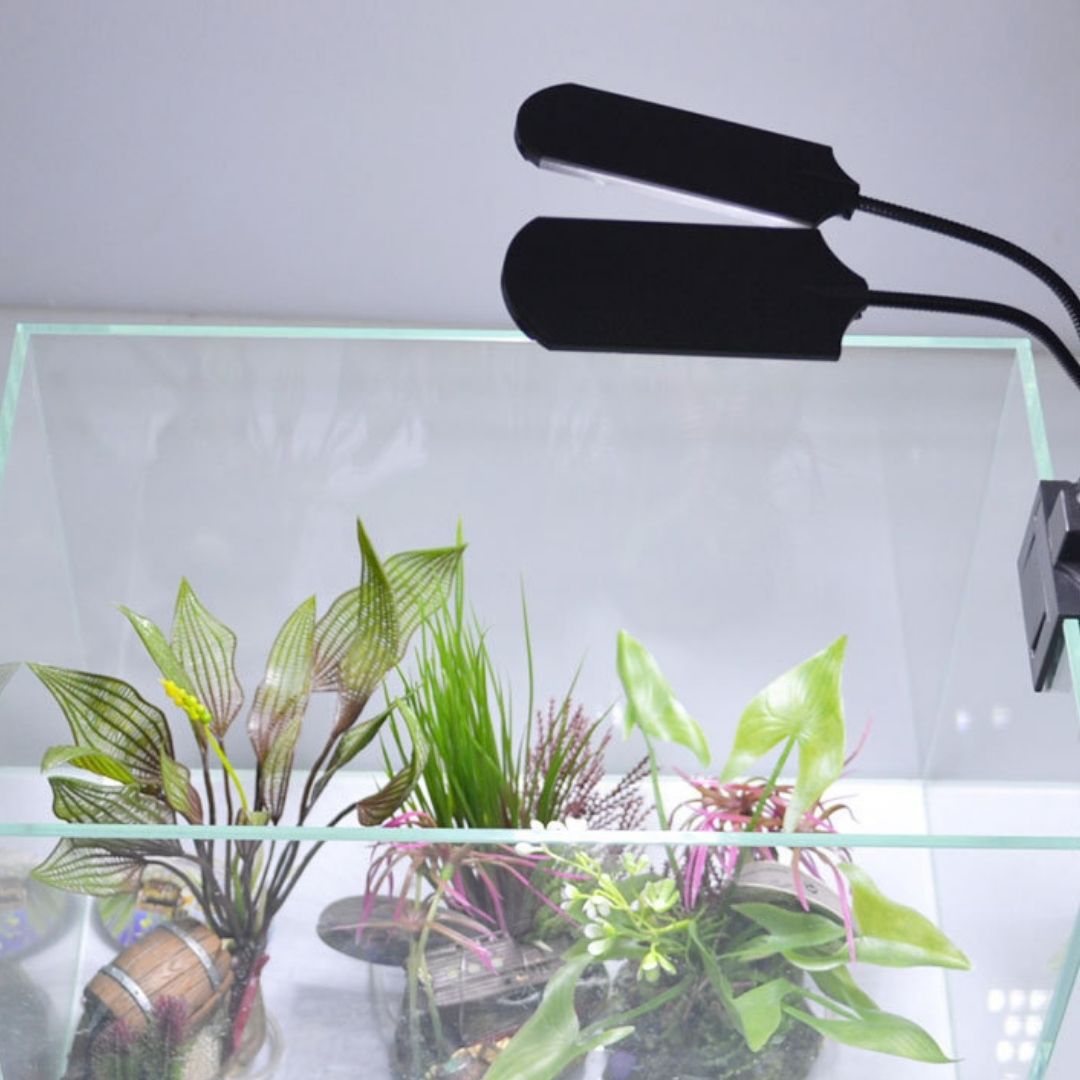
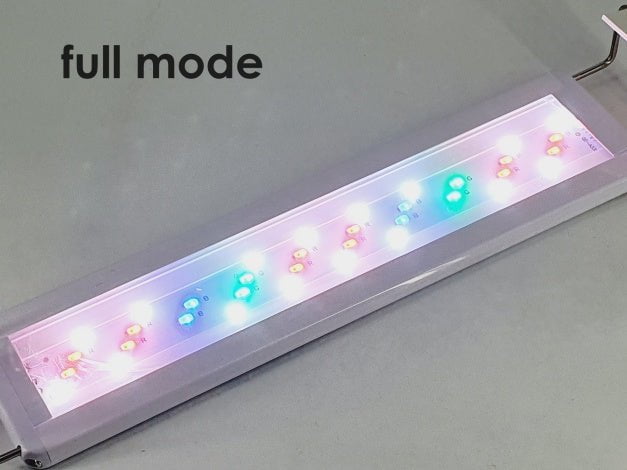
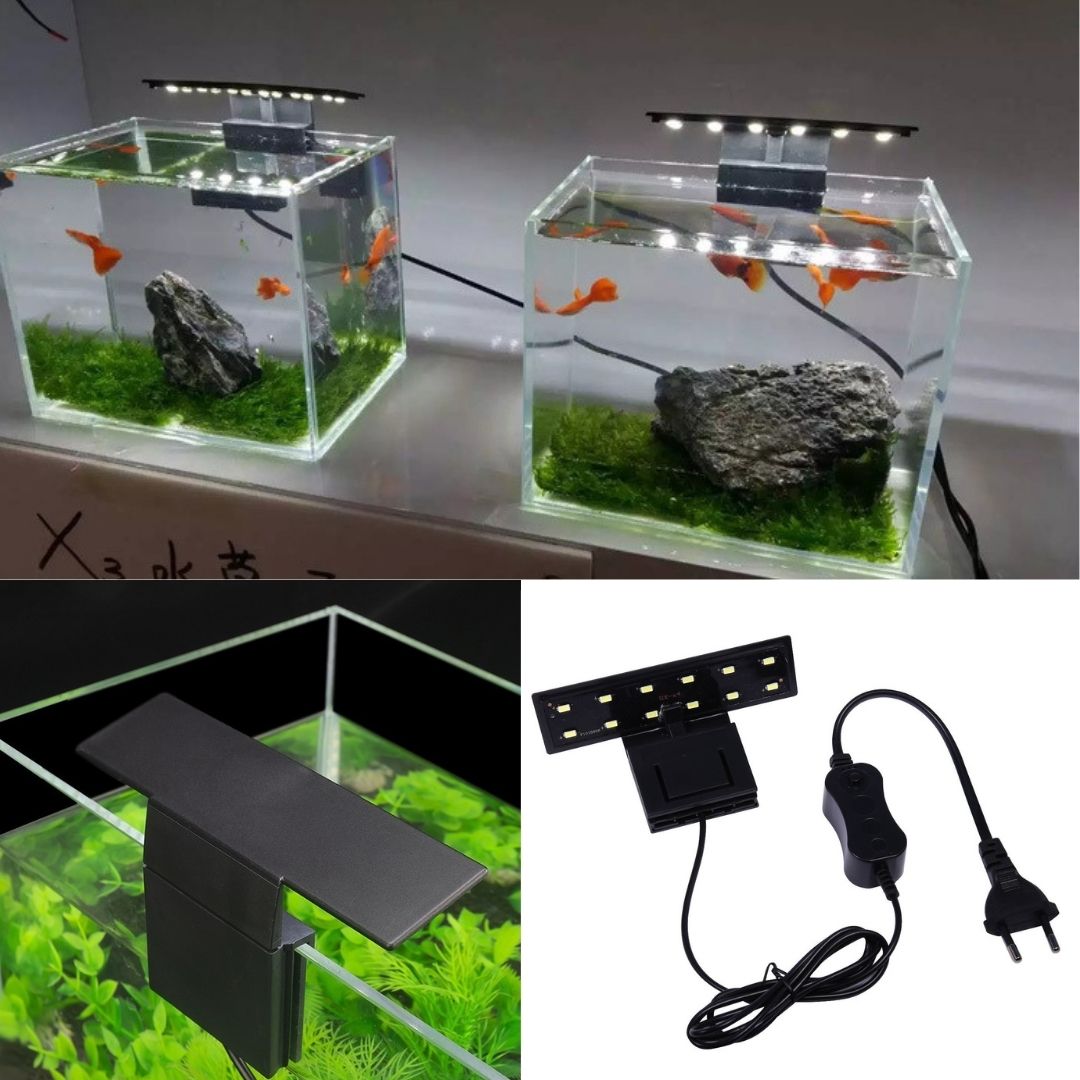
The staircase above blocks ceiling-mounted fixtures, and the tapered shape means a single light bar cannot cover the entire footprint evenly. Use multiple small LED units — compact fixtures like the Chihiros C2 or WRGB Slim — mounted at different heights to match the slope. Waterproof LED strips adhered to the underside of the staircase treads can supplement as accent lighting. Wire all fixtures to a single timer or smart controller for consistency.
Access for Maintenance
This is the challenge that sinks most under-staircase projects. Reaching into the deep end for pruning, cleaning, or rescaping requires thought. Design the stand with a removable top panel or hinge the viewing panel open for front access. Long-handled tools — 50 cm tweezers, extended scrapers, and flexible siphon hoses — become essential. If the tank sits flush against a wall, leave at least 10 cm of clearance behind for filter hoses and cable routing.
Filtration and Equipment Placement
Canister filters are ideal because they sit outside the tank — tuck them into the low-ceiling end of the void where nothing else fits. Run inlet and outlet pipes along the rear glass, hidden by background planting. An inline heater eliminates one more piece of in-tank equipment. For CO2 systems, place the cylinder and regulator in the accessible section of the under-stair space, well away from heat sources.
Making It a Centrepiece
Frame the visible faces with clean trim — timber or aluminium profiles — that integrate the tank into the staircase architecture. Backlight the rear panel for evening drama (see our guide on the backlit silhouette technique). Subtle LED strips along the floor in front of the tank guide the eye and create ambiance. A well-executed under-staircase tank aquascape becomes the defining feature of an entrance hall, turning an awkward void into the most talked-about element in your Singapore home.
Related Reading



