Backlit Silhouette Aquascaping: Drama With Rim Lighting
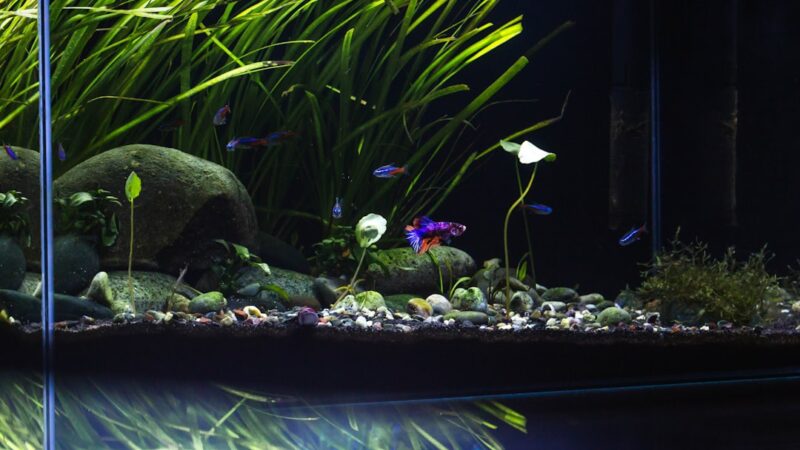
Imagine an aquascape where the hardscape and plants appear as dark silhouettes against a glowing background — like a sunset through a forest canopy, but underwater. The backlit silhouette aquascape technique uses rear-mounted lighting to produce depth, mystery, and cinematic drama that front-lit tanks simply cannot achieve. Gensou Aquascaping at 5 Everton Park, Singapore, has experimented with this approach in client displays and competition entries, and the visual impact never fails to stop people in their tracks.
How Backlighting Creates Silhouettes
Standard aquarium lighting shines from above, illuminating every surface evenly. Backlighting reverses this by placing the primary light source behind the hardscape, aimed toward the viewer. Objects between the light and the viewer become dark outlines — silhouettes — while the background glows. Depth perception intensifies because the eye reads darker objects as closer and lighter areas as farther away. The result is a layered, almost three-dimensional composition.
Light Placement and Equipment
Mount an LED strip or panel vertically on the inside of the rear glass, facing forward. Waterproof LED strips in cool white (6,500K) or slightly warm (5,000K) work well and cost under $15 on Shopee for a metre-length strip. A frosted acrylic diffuser panel placed 1-2 cm in front of the LEDs softens hotspots and produces an even glow. The diffuser can be cut to size at any local acrylic fabricator for about $5-$10.
Run the backlight on a separate timer or dimmer from your overhead light. The silhouette effect is strongest when the backlight is the dominant source — reduce overhead lighting to 10-20% or switch it off entirely during viewing hours.
Hardscape Design for Maximum Impact
Strong, recognisable shapes matter more than surface texture in a silhouette layout. Branch-heavy driftwood with fine twigs creates intricate outlines reminiscent of bare winter trees. Tall, narrow stone formations produce a mountain ridgeline effect. Avoid bulky, featureless rocks — their silhouettes look like dark blobs rather than dramatic forms. Position your tallest elements off-centre following the rule of thirds, and vary heights to create a natural skyline.
Plant Selection for Silhouette Effect
Fine-leaved plants produce the most interesting shadow patterns. Rotala rotundifolia trimmed into rounded bushes, Myriophyllum with feathery whorls, and Pogostemon erectus with needle-like leaves all cast complex, lace-like shadows. Broad-leaved plants like Echinodorus create bold, solid outlines — effective as accent pieces but heavy-handed if overused. Mosses draped over driftwood add organic texture to the silhouette edges. Leave deliberate gaps in the planting where the backlight bleeds through — these bright windows create focal points and prevent the composition from becoming a uniform dark wall.
Background: The Glowing Canvas
The background itself becomes the most important visual element. A clean white or frosted background maximises light transmission. Some aquascapers use a gradient — bright at centre, dimmer at edges — to create a natural vignette. You can achieve this by positioning the LED strip only across the central 60% of the rear glass. Coloured backgrounds are possible but risky; blue can look stunning, but green or red quickly veer into tackiness.
Fish as Moving Shadows
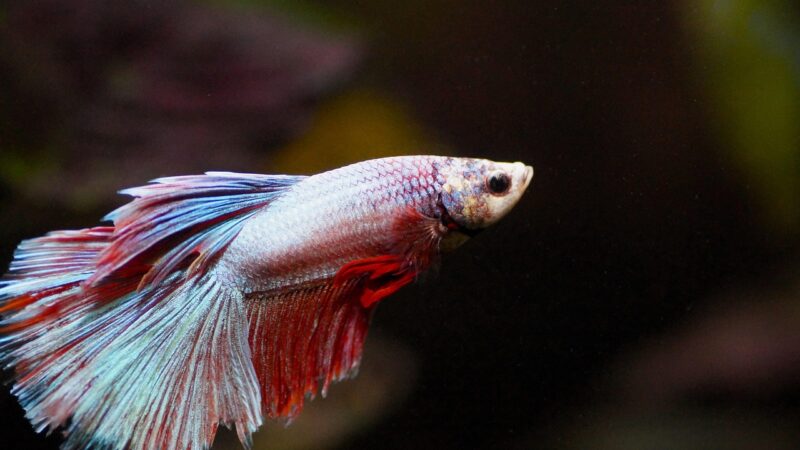
Fish swimming between the backlight and the viewer become living silhouettes — their body shapes, fin outlines, and movement patterns become the focus rather than their colour. Angelfish with their tall, diamond profiles are spectacular in backlit tanks. Long-finned bettas, hatchetfish, and discus also produce memorable silhouettes. Avoid shoals of tiny fish that become indistinct dots; choose species with distinctive body shapes for the strongest effect.
Balancing Light for Plant Health
Plants still need overhead PAR for photosynthesis — backlighting alone is insufficient. Run a moderate overhead light during the day for plant growth, then shift to backlight-dominant mode in the evening for display. Programmable LED controllers from brands like Chihiros or Twinstar can automate this transition, gradually dimming the overhead while ramping up the backlight. This mimics a natural dusk effect and is genuinely beautiful to watch.
Practical Tips From Our Builds
Algae on the rear glass or diffuser panel ruins the effect — keep it spotless with a magnetic cleaner. Tannin-stained water reduces light transmission and dulls the glow, so run activated carbon if you use driftwood. Placement in the room matters: position the tank where viewers approach from the front, not the side, for maximum impact. A backlit silhouette aquascape in a dim hallway or living room corner, where the glowing tank becomes the primary light source, creates an atmosphere that no overhead-lit setup can match.
Related Reading
- Layered Substrate Technique in Aquascaping: Power Sand, Soil and Cap
- Plant Grouping Techniques in Aquascaping: Clusters, Streets and Rows
- How to Create an African River Biotope Aquascape
- Amazon Biotope Aquarium: Blackwater, Tetras and Driftwood
- Amazon Clearwater Biotope Aquascape: Crystal Rivers of Brazil