How to Create Depth Illusion in an Aquascape: Forced Perspective
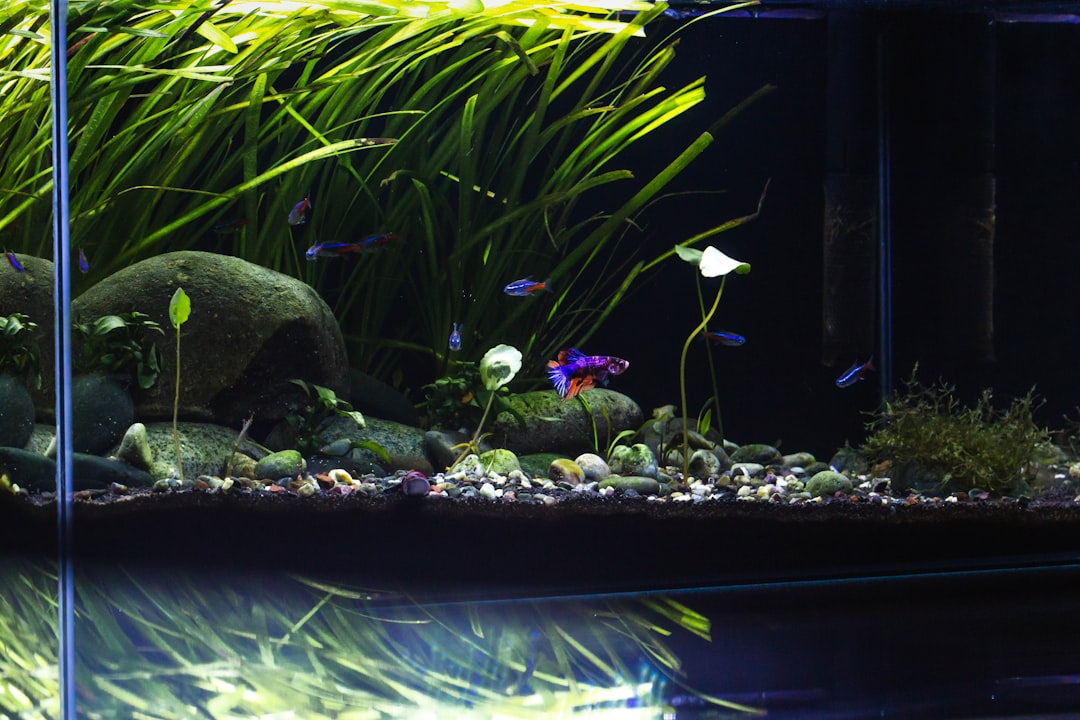
A 60 cm tank can look three times its actual depth with the right techniques. Forced perspective — the art of manipulating scale, colour, and placement to trick the eye — is one of the most powerful tools in competitive and display aquascaping. This guide to creating aquascape depth illusion comes from Gensou Aquascaping at 5 Everton Park, Singapore, where we have applied these principles across hundreds of builds in over 20 years of practice.
The Principle Behind Forced Perspective
In nature, distant objects appear smaller, lighter in colour, and less detailed than nearby ones. Aquascapers exploit this by placing large, dark, textured elements at the front of the tank and progressively smaller, lighter, smoother elements toward the back. The viewer’s brain interprets this gradient as depth — turning a 30 cm front-to-back dimension into what feels like a metre-long vista.
Substrate Slopes and Pathways
Raising the substrate dramatically from front to back is the simplest and most effective depth technique. A front edge of 2–3 cm rising to 12–15 cm at the rear creates a strong perspective line. Sand or soil pathways that narrow as they recede — wide at the foreground, tapering to a vanishing point at the rear — amplify the effect enormously.
Retaining walls hidden behind rocks or mesh prevent the slope from collapsing during water changes and fish activity. Lava rock fragments buried beneath the substrate add volume without weight or cost. In Singapore, pumice from garden suppliers serves the same purpose at under $5 per bag.
Stone Sizing: Large to Small
Place your largest stones in the front third of the tank. Medium stones go in the middle zone. Small stones — even fragments of the same rock type — populate the rear. This graduating scale convinces the eye that the rear stones are full-sized but far away. Using the same rock type throughout maintains geological consistency while the size difference does the perceptual work.
Competition aquascapers take this further by selecting stones with identical texture and colour but grinding them to precise sizes. For home aquascapers, simply sorting your rock collection by size and placing them accordingly achieves a noticeable result with zero extra cost.
Plant Selection for Depth
Foreground plants with larger leaves — Staurogyne repens, Cryptocoryne parva — belong at the front. Mid-ground species like Cryptocoryne wendtii bridge the scale. Background plants should be fine-leaved and dense: Rotala rotundifolia, Myriophyllum, or pearl grass (Hemianthus micranthemoides). The progressively finer leaf texture reinforces the sense of receding distance.
Colour matters too. Warmer, darker greens advance visually; cooler, lighter greens and yellows recede. Placing a deep-red Ludwigia at the front and pale-green stems at the back enhances depth illusion through colour perspective — a subtle technique that separates polished scapes from average ones.
Driftwood and Branching Lines
A single piece of branching driftwood angled from front-low to rear-high draws the eye backward into the scape. Thicker branches at the front and thinner tips disappearing into background planting reinforce perspective. Multiple parallel branches converging toward a single rear point create railroad-track convergence — a classic depth cue borrowed directly from landscape painting and photography.
Lighting and Shadow
Brighter illumination at the front and slightly dimmer conditions toward the back mimic natural atmospheric haze. Some hobbyists achieve this by angling the light fixture forward or using a secondary spot lamp to highlight the foreground focal stone. Shadows cast by overhanging hardscape add three-dimensional relief that flat, even lighting cannot produce.
In a nano tank — 30 cm cubes popular among Singapore apartment dwellers — a single directional LED spotlight creates dramatic shadows that amplify perceived depth far beyond the tank’s physical dimensions.
Background Techniques
A light-coloured or frosted background panel brightens the rear, pushing it visually further away. Black backgrounds absorb light and can flatten depth perception if the rear planting is sparse. Frosted film — available at most hardware stores in Singapore for a few dollars per metre — diffuses room light into a soft glow that serves as an artificial horizon.
Back-lighting through a frosted panel with a strip LED is a technique popularised by ADA gallery tanks. The resulting luminous backdrop makes every element in the scape pop forward, creating striking separation between layers.
Putting It All Together
Effective forced perspective combines multiple techniques simultaneously. Substrate slope alone adds some depth; combined with graduating stone sizes, fine-leaved rear planting, and a bright background, the total effect is transformative. At Gensou Aquascaping, we plan depth illusion into every layout from the very first sketch — it is not an afterthought but a foundational design principle that makes even modest tanks look extraordinary.
Related Reading