How to Create an Iwagumi Aquascape: Step-by-Step Guide

The iwagumi aquascape is widely regarded as the most disciplined and challenging style in the hobby. Rooted in Japanese aesthetics and popularised by the legendary aquascaper Takashi Amano, the iwagumi layout uses carefully arranged stones as the sole hardscape, with low-growing carpet plants providing a lush green foreground. The result, when executed well, is a landscape of striking simplicity and natural beauty. This guide walks you through every step of creating an iwagumi aquascape, from understanding the philosophy behind the style to planting, maintenance and avoiding common pitfalls. This guide sits inside our broader Aquascaping Styles Design Hub reference.
The Philosophy Behind Iwagumi
The word iwagumi translates roughly as “rock formation” in Japanese. The style draws inspiration from traditional Japanese rock gardens (karesansui), Zen Buddhist aesthetics and the natural landscapes of Japan’s mountainous terrain. Takashi Amano adapted these principles for the planted aquarium in the 1980s, and the iwagumi layout became a cornerstone of his Nature Aquarium philosophy.
The key principles are:
- Simplicity. An iwagumi layout uses only stones and carpet plants. There is no driftwood, no tall stem plants, no busy foreground decorations. Every element must earn its place.
- Odd numbers. Stones are traditionally arranged in groups of three, five or seven. Even numbers create visual symmetry that feels artificial and static.
- Tension and balance. The stones should interact with one another, creating a sense of natural tension — as if geological forces placed them there. This is perhaps the hardest aspect to master.
- Negative space. The open areas between stones are just as important as the stones themselves. Negative space gives the eye room to rest and makes the composition feel expansive.
Choosing and Preparing Your Stones
In a true iwagumi, all stones must be of the same type. Mixing different rock types breaks the geological plausibility of the layout and creates visual dissonance. Popular stone choices include:
- Seiryu stone — a blue-grey limestone with dramatic white veining. The most iconic iwagumi stone. Note that Seiryu raises water hardness and pH over time due to its calcium carbonate content.
- Ryuoh stone — similar in appearance to Seiryu but with less impact on water chemistry. A good alternative for softwater setups.
- Manten stone (ADA) — a dark, smooth stone with subtle texture. Creates more subdued, minimalist iwagumi layouts.
- Unzan stone — a lighter grey stone with angular fractures. Less commonly used but effective for certain compositions.
When selecting stones, look for pieces that share the same texture, colour tone and grain direction. The grain (the visible striations and veining in the stone) should flow in a consistent direction across all stones — this is a detail that separates good iwagumi layouts from great ones.
Rinse stones thoroughly before use to remove dust and loose particles. If using Seiryu stone, test your water parameters after setup, as the pH and KH increase may require adjustment, especially if you keep soft-water species.
Stone Roles and Placement
In traditional iwagumi, each stone has a defined role:
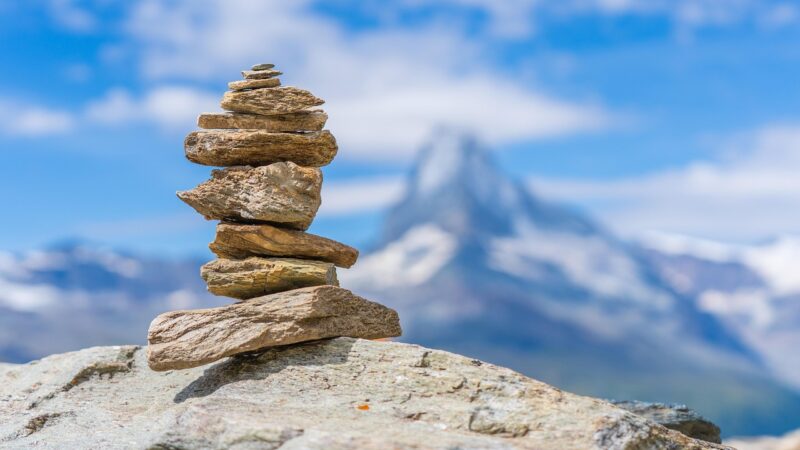
- Oyaishi (main stone): The largest and most visually striking stone. This is the focal point of the entire layout. It should be placed according to the rule of thirds — roughly one-third from either end of the tank, not dead centre. The oyaishi typically leans slightly in one direction, creating a sense of dynamic movement.
- Fukuishi (secondary stone): The second-largest stone, placed near the oyaishi to complement and support it. It should echo the oyaishi’s angle and grain direction but be clearly subordinate in size.
- Soeishi (accent stone): A medium stone placed to create balance and visual flow. It bridges the relationship between the oyaishi and the open space.
- Suteishi (sacrificial stone): The smallest stone or stones, placed subtly to add depth and naturalism. These are “sacrificial” because they may be partially or fully covered by the carpet plants as they grow in — and that is intentional.
The rule of thirds is critical: imagine your tank divided into a 3×3 grid. Place the oyaishi at one of the four intersection points. The other stones should relate to the oyaishi through proximity, angle and visual weight, creating a cohesive group rather than scattered individuals.
Substrate and Mounding
Substrate mounding is essential to creating depth and perspective in an iwagumi. The substrate should be thinner at the front (2-3cm) and deeper at the back (6-10cm), creating a gentle slope that makes the tank appear deeper than it actually is.
For iwagumi layouts, use a nutrient-rich aquasoil such as ADA Amazonia, Tropica Aquarium Soil or UNS Controsoil. These substrates provide the nutrients that carpet plants need for healthy root development and are slightly acidite, helping to buffer the pH increase caused by stones like Seiryu.
Build the mound before placing stones, then embed the stones firmly into the substrate so they look like natural rock formations emerging from the earth rather than objects sitting on top of the surface. Bury the base of each stone at least 2-3cm deep.
Plant Selection
Iwagumi layouts use only low-growing carpet plants. The plant choice is deliberately limited to maintain the minimalist aesthetic:
- Hemianthus callitrichoides (HC Cuba): The classic iwagumi carpet plant. Tiny round leaves create a dense, lawn-like mat. Demands high light, CO2 and good substrate nutrition. Challenging but rewarding.
- Micranthemum Monte Carlo: Slightly larger leaves than HC Cuba, but much easier to grow. Carpets well with moderate to high light and CO2. An excellent choice for your first iwagumi.
- Eleocharis acicularis (dwarf hairgrass): Creates a grass-like carpet. More forgiving than HC Cuba and suits a meadow aesthetic. Works well for iwagumi layouts that aim for a pastoral rather than manicured look.
- Glossostigma elatinoides: Another classic Amano favourite. Grows rapidly under high light and CO2 but requires frequent trimming to maintain a low profile.
- Marsilea hirsuta: The easiest carpet option. Will grow in low to medium light without CO2, though slowly. The clover-shaped leaves create a charming, natural carpet.
For a detailed guide on planting and growing these species, see our article on carpet plants in aquariums.
Step-by-Step Setup
- Plan your layout. Sketch your stone arrangement on paper or use a dry layout outside the tank first. Take photos from the viewing angle and adjust until you are satisfied.
- Prepare the tank. Clean the glass, place any base substrate layer (power sand or lava gravel for drainage, if desired), then add the main aquasoil layer with the front-to-back slope.
- Place the oyaishi first. Position it at your chosen focal point and embed it firmly. Step back and view from the front to check the angle and lean.
- Add secondary stones. Place the fukuishi, soeishi and suteishi in relation to the oyaishi. Ensure all grain directions are consistent. Take your time — stone placement is the single most important step in an iwagumi.
- Adjust the substrate mound. Fill in around the stones, packing soil against their bases for stability. Refine the slope to look natural.
- Plant the carpet. Using fine aquascaping tweezers, plant small portions (1-2cm clumps) of your chosen carpet plant in a grid pattern, spacing them 2-3cm apart. They will grow together over the coming weeks.
- Fill with water gently. Place a plastic bag or plate on the substrate and pour water onto it to avoid disturbing the soil and plants. Fill slowly.
- Start filtration, CO2 and lighting. Begin with a reduced photoperiod (5-6 hours) for the first two weeks, gradually increasing as the carpet establishes.
CO2 and Lighting Requirements
Most iwagumi setups are high-tech — they demand strong lighting and consistent CO2 injection. Carpet plants need high PAR values (80-150 at substrate level) and CO2 concentrations of 20-30 ppm to carpet densely.
For a 60cm iwagumi tank, a light like the Chihiros WRGB II or Twinstar S provides adequate PAR. Pair with a pressurised CO2 system running 2-3 bubbles per second, starting 1-2 hours before lights on. For equipment recommendations, see our guides to the best LED lights and best CO2 systems for planted tanks.
Algae Challenges
Iwagumi layouts are particularly vulnerable to algae during the first 4-8 weeks because the plant mass is initially very low while the nutrient-rich substrate leaches ammonia. This nutrient surplus, combined with strong lighting, creates ideal conditions for algae if not managed carefully.
- Green dust algae (GDA): Common on the glass in new setups. Do not clean it off for the first two weeks — it often resolves on its own. After that, scrape regularly.
- Hair algae / thread algae: Usually a sign of excess light relative to plant mass. Reduce photoperiod to 5-6 hours and increase CO2 slightly. Manual removal with a toothbrush helps.
- Diatoms (brown algae): Normal in new tanks, typically disappearing within 4-6 weeks as the tank matures. Otocinclus catfish are effective at grazing diatoms.
- Blue-green algae (cyanobacteria): Not technically algae. Usually caused by low water circulation or excess organic waste. Increase flow and perform extra water changes.
Frequent water changes (50% every 2-3 days during the first month, tapering to once or twice weekly) are the single most effective algae prevention strategy for a new iwagumi. Use dechlorinated water — remember that Singapore’s PUB tap water contains chloramine, which requires a water conditioner like Seachem Prime rather than simple standing.
Ongoing Maintenance
Once established, an iwagumi requires consistent but straightforward maintenance:
- Weekly water changes: 30-50% to keep nutrient levels balanced and prevent organic waste accumulation.
- Regular trimming: Carpet plants need trimming every 2-4 weeks to maintain a low, dense mat. Use curved aquascaping scissors for an even cut. Trim HC Cuba and Monte Carlo to about 1cm height; dwarf hairgrass to 2-3cm.
- Fertilisation: Dose liquid fertiliser after each water change. Root tabs every 2-3 months supplement substrate nutrition as the aquasoil’s nutrient content depletes over time.
- Algae patrol: Amano shrimp are the best cleanup crew for iwagumi tanks. A team of 10-15 for a 60cm tank will graze algae constantly without disturbing the carpet.
Common Mistakes to Avoid
- Centring the main stone. Placing the oyaishi dead centre creates a static, unnatural composition. Use the rule of thirds.
- Mixing stone types. Different colours, textures or grain patterns between stones destroy the geological cohesion of the layout.
- Using too many stones. More is not better. Three to five well-chosen, well-placed stones are more powerful than seven randomly scattered ones.
- Flat substrate. Without a front-to-back slope, the layout looks two-dimensional and the carpet plant coverage feels monotonous.
- Rushing the plant-in phase. Planting too few portions too far apart results in an agonisingly slow carpet fill. Plant generously from the start — it costs a little more but saves months of waiting.
- Skipping CO2 or lighting. An iwagumi without CO2 and adequate light is almost certainly doomed to fail. This is a high-tech style that rewards commitment to the equipment requirements.
Frequently Asked Questions
How long does an iwagumi take to fully carpet?
With CO2, high light and adequate planting density from the start, expect a full carpet in 6-10 weeks for Monte Carlo and 8-14 weeks for HC Cuba. Without CO2, carpeting may take 4-6 months or may not fully succeed. Dwarf hairgrass is generally the fastest to fill in under ideal conditions.
What fish are suitable for an iwagumi aquascape?
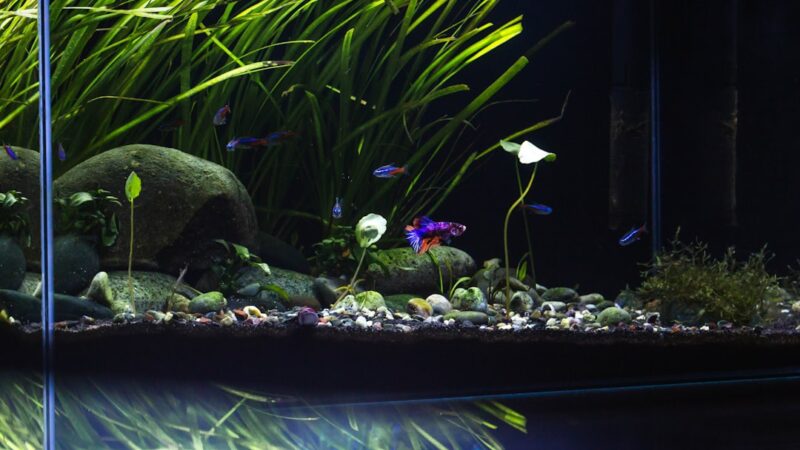
Schooling fish that complement the minimalist aesthetic work best. Classic choices include a single species shoal of Cardinal Tetras, Rummy Nose Tetras, Harlequin Rasboras or Green Neon Tetras. Keep the stocking light — a large school of one species (15-25 fish in a 60cm tank) looks far more impactful than a mixed community. Amano shrimp are essential for algae control.
Can I create an iwagumi in a nano tank?
Yes, iwagumi layouts work beautifully in nano tanks as small as 30cm. The key is scaling your stones appropriately — use smaller pieces that maintain the same proportions as a full-sized layout. Monte Carlo is often easier to manage than HC Cuba in nano volumes, where parameter stability can be challenging.
Do I need to soak Seiryu stone before use?
Soaking is not strictly necessary, but rinsing thoroughly is. Seiryu stone will raise KH and pH in your water over time. If you keep soft-water fish or shrimp, monitor your parameters after setup and consider using RO water mixed with tap water to maintain appropriate hardness levels. The buffering effect of aquasoil partially counteracts the mineral leaching.
Ready to create your own iwagumi masterpiece? Gensou offers professional aquascaping design and installation for homes and offices across Singapore. Whether you want a turnkey iwagumi setup or expert guidance on your DIY project, get in touch with our team.
Related Reading