How to Judge an Aquascape Competition: Scoring Criteria Explained

Learning how to judge aquascape competition guide criteria helps you improve your own designs and appreciate the artistry behind award-winning tanks. At Gensou Aquascaping, located at 5 Everton Park in Singapore, we have both entered and assisted in judging local aquascaping events, giving us insight into what separates a good layout from a truly exceptional one.
Major Aquascaping Competitions and Their Standards
The International Aquatic Plants Layout Contest, organised by ADA, is the most prestigious competition in the hobby. Other notable contests include the Aquatic Gardeners Association contest, the World Ranking by Aqua Design Amano, and regional events across Southeast Asia. Each competition has its own scoring rubric, but the core criteria overlap significantly. Understanding these shared principles gives you a universal framework for evaluating any aquascape.
In Singapore, local contests are occasionally hosted by aquascaping clubs and shops. Participating even once sharpens your eye for detail and teaches you to see your own work more objectively.
Overall Impression and Visual Impact
The first criterion judges typically assess is the immediate visual impression. Does the layout capture attention? Is there a clear sense of atmosphere or mood? A powerful aquascape communicates a feeling, whether it is the tranquillity of a forest stream, the drama of a mountain cliff, or the mystery of an underwater cave. Judges spend only seconds forming this initial impression, so strong visual impact is crucial.
This category rewards bold composition, effective use of negative space, and a cohesive colour palette. Tanks that try to include too many elements or conflicting styles score lower here because they lack a unified visual identity.
Composition and Layout Balance
Composition refers to how hardscape and plants are arranged within the frame. Judges look for adherence to established design principles such as the rule of thirds, the golden ratio, and triangular composition. The focal point should be clear and positioned to draw the viewer’s eye naturally. Supporting elements should guide attention toward the focal point rather than competing with it.
Balance does not mean symmetry. In fact, asymmetrical layouts almost always score higher than symmetrical ones because they feel more natural and dynamic. The key is visual weight distribution: heavier elements on one side should be counterbalanced by lighter elements or open space on the other.
Plant Health and Condition
No amount of clever design compensates for unhealthy plants. Judges examine plant vitality closely, looking for vibrant colour, dense growth, clean leaves free of algae, and species growing in their optimal form. Stem plants should be bushy from regular trimming, carpeting plants should be uniform and thick, and epiphytes should display healthy root systems and new growth.
In Singapore’s warm climate, certain species grow more vigorously, which can work in your favour if you choose plants suited to local conditions. Conversely, species that struggle in warm water may look stressed in competition photographs, costing valuable points.
Creativity and Originality
Judges reward layouts that show creative thinking. A technically perfect but derivative design, one that closely copies a previous winner, will score lower than an original concept executed with slightly less polish. This does not mean you need to invent a new style; rather, bring a personal interpretation to established styles. An iwagumi with an unexpected stone arrangement or a nature aquarium with an unconventional plant palette demonstrates creative confidence.
Storytelling is increasingly valued. Layouts that evoke a specific natural scene, a particular season, or an emotional response stand out in a field of technically competent but emotionally flat entries.
Technical Execution
Technical execution covers the precision of hardscape placement, the cleanliness of planting, and the overall craftsmanship visible in the final photograph. Are the stones placed with intention, or do they look randomly scattered? Are plant groups cleanly defined, or do species bleed into one another untidily? Is the substrate line clean and deliberate?
Attention to detail matters enormously. Visible equipment, cluttered backgrounds, water stains on the glass, and floating debris in the photograph all reduce technical scores. Competition-level aquascapers spend considerable time on presentation, cleaning every surface and timing their photograph to capture the tank at peak condition.
Use of Space and Depth
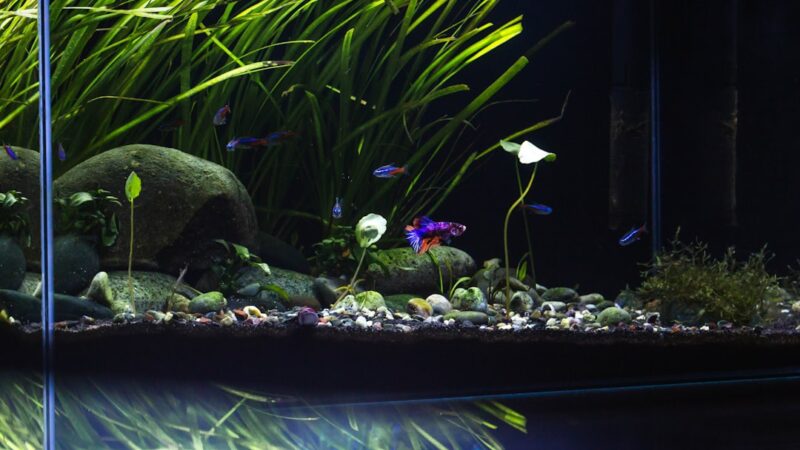
Creating an illusion of depth in a rectangular glass box is one of the greatest challenges in aquascaping. Judges look for effective use of foreground, midground, and background layers. Techniques such as diminishing plant size from front to back, gradually lighter substrate tones, and converging hardscape lines all enhance perceived depth.
Open space is just as important as planted areas. A layout packed edge to edge with plants feels suffocating and flat. Strategic open areas, pathways, and clearings invite the viewer’s eye to travel through the scene, creating a sense of journey and scale.
Applying Competition Criteria to Your Own Tank
You do not need to enter a competition to benefit from understanding how judging works. Evaluate your own aquascape against these criteria regularly. Photograph your tank under consistent lighting and study the image as a judge would. Identify your weakest category and focus your next redesign on improving it. Over time, this structured self-assessment accelerates your growth as an aquascaper. For personalised feedback on your layout, bring a photograph to Gensou Aquascaping at 5 Everton Park and our team will be happy to offer constructive critique.
Related Reading