
Microsorum Pteropus Windelov Care Guide: Lace-Edged Java Fern
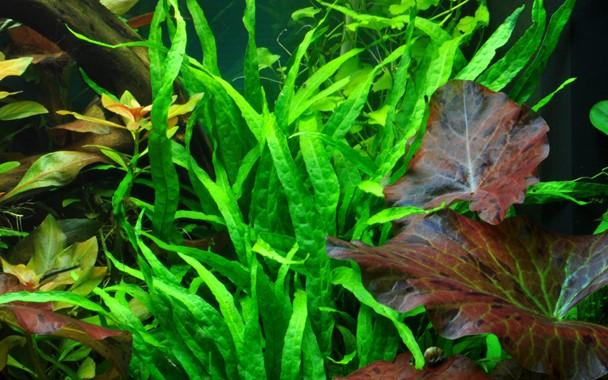
Among the many cultivars of java fern, ‘Windelov’ stands apart — its finely branching, frilled leaf tips catch light in a way that standard Microsorum pteropus never quite manages, and it brings a texture to aquascapes that is genuinely irreplaceable. Yet Microsorum Windelov care is no more demanding than the straight species; the only real differences are aesthetic, not horticultural. This guide from Gensou Aquascaping at 5 Everton Park, Singapore covers attachment, positioning, propagation, and the few conditions that cause this otherwise easygoing plant to struggle.
What Makes Windelov Distinct
Microsorum pteropus ‘Windelov’ is a cultivar developed in Denmark and named after the founder of Tropica Aquarium Plants. Its defining feature is the leaf tip, which divides repeatedly into multiple fine points — giving each leaf a hand-like or antler-like terminal branching that catches and scatters light beautifully. Leaves reach 15–25 cm in maturity. Growth habit is compact and relatively slow, which makes Windelov better suited to midground placement than the taller standard java fern. Unlike some tissue culture varieties that revert to type under certain conditions, Windelov maintains its frilled tips reliably across generations.
Attachment to Hardscape
Like all java ferns, Windelov must never be buried in substrate. The rhizome — the horizontal stem from which both roots and leaves grow — must be exposed to water flow; covering it with gravel or soil causes rot within weeks. Attach the rhizome to driftwood or rock using black thread, fishing line, or cyanoacrylate gel (super glue). Thread and fishing line are forgiving methods for beginners; cyanoacrylate gel bonds almost instantly but requires some practice to position the plant correctly before the glue sets.
Once attached, roots spread across the hardscape surface and anchor firmly within four to six weeks, at which point any thread used can be left to degrade naturally or carefully removed. Java fern forms far stronger attachments to porous surfaces — rough wood and volcanic rock — than to smooth glass or acrylic.
Light Requirements
Low to moderate light is the comfort zone for Windelov. At 20–40 μmol/m²/s, the plant grows steadily and produces healthy, deeply coloured leaves. High light intensity above 60–80 μmol/m²/s is tolerated but tends to cause algae growth on the older, slower-growing leaves — a characteristic of all java fern species in bright conditions. Positioning Windelov in the shade of taller midground or background plants, or under the canopy of floating plants, produces the best results in high-light tanks.
Water Parameters and CO2
One of the genuine pleasures of Windelov is its indifference to CO2. It grows without injection, absorbing ambient dissolved CO2 from the water column and fish respiration. In Singapore’s typical soft tap water — pH 7.0–7.4, GH 2–4 — the plant thrives without any adjustment. Temperature from 22–30°C is the stated range; at Singapore’s ambient 28–30°C it grows at the faster end of its spectrum. This is a genuinely low-maintenance aquarium plant, suitable for non-CO2 setups, low-tech aquariums, and even unheated tanks in cooler-climate countries.
Propagation
Windelov propagates naturally in two ways. Small plantlets — adventitious buds — develop directly on the surface of mature leaves, particularly older leaves that are beginning to yellow. These plantlets can be gently detached once they develop three or four roots at least 1 cm long, then attached to new hardscape individually. The second propagation method is rhizome division: cutting the main rhizome into sections with at least two to three leaves per piece, then reattaching each section. Both methods are reliable and produce plants that maintain the Windelov’s characteristic frilled leaf tips.
Common Problems and Solutions
Black or brown patches on older leaves are the most common complaint. This is nearly always either age-related senescence (older leaves die back naturally — simply remove them) or black beard algae establishing on slow-growing leaf surfaces. BBA on java fern responds well to spot treatment with diluted glutaraldehyde (Excel or equivalent) applied directly to affected areas using a syringe with the tank circulation temporarily paused. If new leaves are also blackening rather than just old ones, check for elevated phosphate or stagnant flow near the plant.
Yellowing across the whole plant — new and old growth — typically signals iron deficiency. Liquid iron supplementation twice weekly usually resolves this within two to three weeks in Singapore’s soft, low-iron tap water.
Related Reading



