
Neon Fish Tank Complete Guide: Blacklight and UV Glow
Neon tanks look spectacular on social media but the photos rarely show the fish that died of stress because a blacklight ran twelve hours a day. This neon fish tank complete guide from Gensou Aquascaping at 5 Everton Park covers blacklight safety, UV-reactive decor, glowing substrate options and which species actually tolerate the aesthetic — and which do not. The short answer: short bursts of blacklight for photos are fine, full-day exposure is not, and normal-spectrum fish deserve a main lighting schedule that matches their biology.
What “Neon” Actually Means in Aquariums
Two different things get lumped together. First, fluorescent decor and substrate that glow under UV-A blacklight (cheap, harmless to fish if lighting is short). Second, genetically modified GloFish (allowed in Singapore, banned in EU and Australia, requires ethical consideration). This guide treats the blacklight aesthetic first, GloFish second. The distinction matters because one is an add-on to any tank, the other changes the livestock entirely.
Blacklight LED Tubes and Strips
UV-A 395-405 nm LED strips (SGD 15-35 on Shopee or Lazada) make fluorescent materials pop. Never use UV-C (germicidal) — it burns eyes and fish. Run blacklight on a separate timer for 30-60 minutes at viewing time, not as primary lighting. The rest of the day, use normal planted or aquarium LEDs from the lighting collection. Short bursts are fine for fish; multi-hour exposure stresses them measurably.
UV-Reactive Substrate and Gravel
Painted-coated glass gravels in pink, green, orange and blue glow under blacklight. Quality matters — cheap Temu imports flake within months and leach dye into acidic Singapore tap water. Branded UV-reactive gravel from Sentosa Pets and similar retailers costs SGD 18-28 per 2 kg bag and holds up for years. Use as a thin accent layer over a stable base substrate, not as a full substrate replacement.
UV-Reactive Ornaments and Plants
Fluorescent resin ornaments, glow-in-the-dark plastic plants, and painted ceramic decor all glow under blacklight. Same material caveat — aquarium-grade paint only, no craft-store imports. Live plants do not fluoresce, so the neon effect comes from decor and substrate only. A mix of real plants and a single glowing hero ornament reads better than an all-synthetic tank.
Fish That Actually Suit Neon Tanks
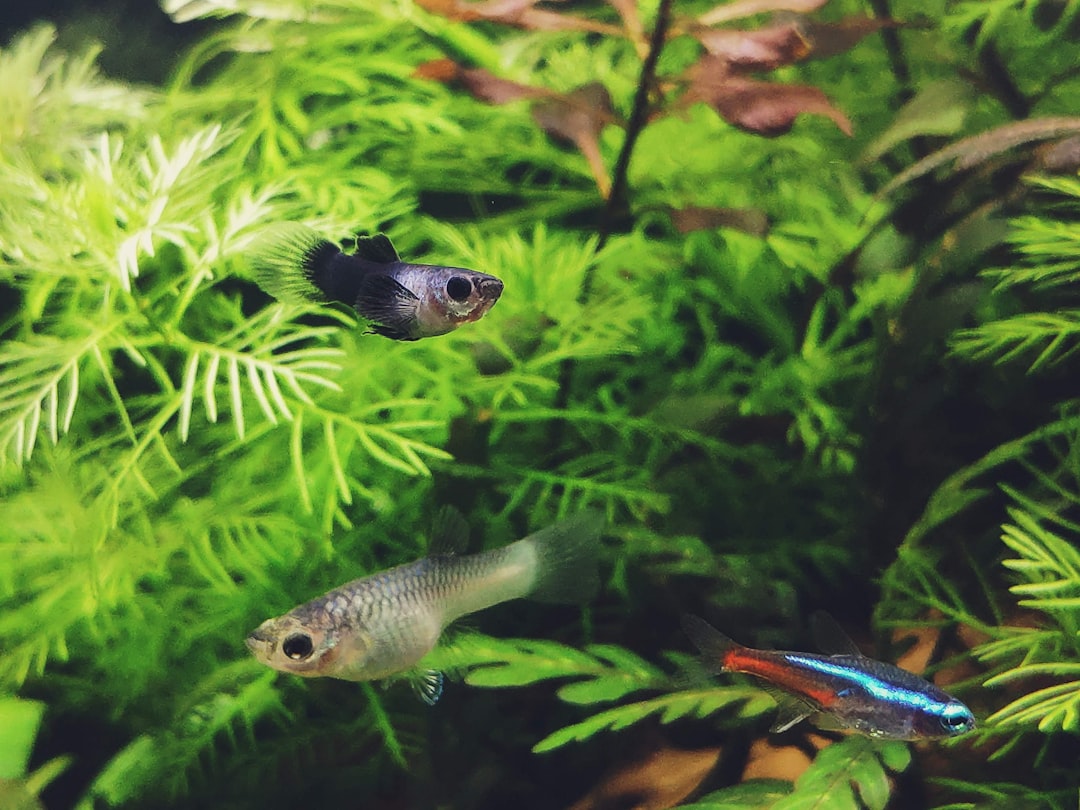
Cardinal tetras, neon tetras, lemon tetras and glowlight tetras have natural fluorescent stripes that pop under blacklight even without GloFish modification. Rummynose tetras and diamond tetras reflect under UV beautifully. Stock densely — 15-20 small fish in a 60 cm tank — to maximise the moving-glow effect. These are the reason “neon tetra” was named neon long before LED bulbs existed.
GloFish: What They Are
GloFish are genetically modified zebra danios, tetras, and barbs carrying jellyfish or coral fluorescent protein genes, permanently glowing red, green, yellow, pink, purple or blue under blue/UV light. Legal in Singapore and USA, banned in EU and Australia on GMO grounds. Ethics are debated — breeders argue the fish are healthy and identical to wild-type in behaviour; critics argue their commodification normalises genetic modification of pets.
GloFish Pricing and Sourcing in Singapore
PetLovers, Qian Hu and several Seletar shops stock GloFish at SGD 8-12 each — roughly three to four times the price of non-modified zebra danios. Care is identical to the base species (zebra danios in 22-26°C, pH 6.5-7.5), but the fish should not be released into local waterways ever — escape into local ecosystems could have unpredictable consequences.
Blacklight Safety for Non-Glowing Fish
Most tropical fish evolved under natural daylight spectrum, not UV-A bursts. Extended blacklight exposure (2+ hours) stresses nocturnal species (plecos, kuhli loaches), affects circadian rhythm, and can cause eye discomfort. The safe schedule is 30-60 minutes at viewing time with the blacklight as an accent, not primary. If the tank holds plecos, corydoras or other light-sensitive species, shorter bursts (20 minutes) are kinder.
Plants and Blacklight
UV-A for short bursts does not meaningfully damage aquarium plants, but it is useless for photosynthesis. Plants still need full-spectrum 6500 K lighting for the main 6-8 hour photoperiod. Run the planted LED on one timer and the blacklight on a separate shorter timer so each does its own job. Combining into a single-spectrum blacklight tank always ends in dying plants within two months.
Neon Scape Example: Black Substrate Contrast
Black substrate from the decoration substrate range, one Zhen De castle painted in aquarium-safe UV paint for one dramatic focal point, cardinal tetras as stocking, and a blacklight on 45-minute evening timer. The rest of the day runs clean 6500 K lighting and the tank looks like a normal planted nano. At evening blacklight time, it becomes the conversation piece of the room.
What to Avoid
Painted plastic plants with flaking paint, non-aquarium-grade UV paint, blacklight as primary lighting, GloFish bought from unverified Temu/AliExpress sellers (legal status uncertain, transport stress high), and overstocking under flashy lighting. The neon aesthetic is supposed to be fun, not a fish welfare problem. A 60 cm tank with 10 healthy cardinal tetras and a 45-minute blacklight timer beats 30 stressed GloFish in a 20 cm cube every time.
Related Reading



