
Platy Colour Genetics Breeding Guide: Mickey Mouse, Sunburst, and Variatus
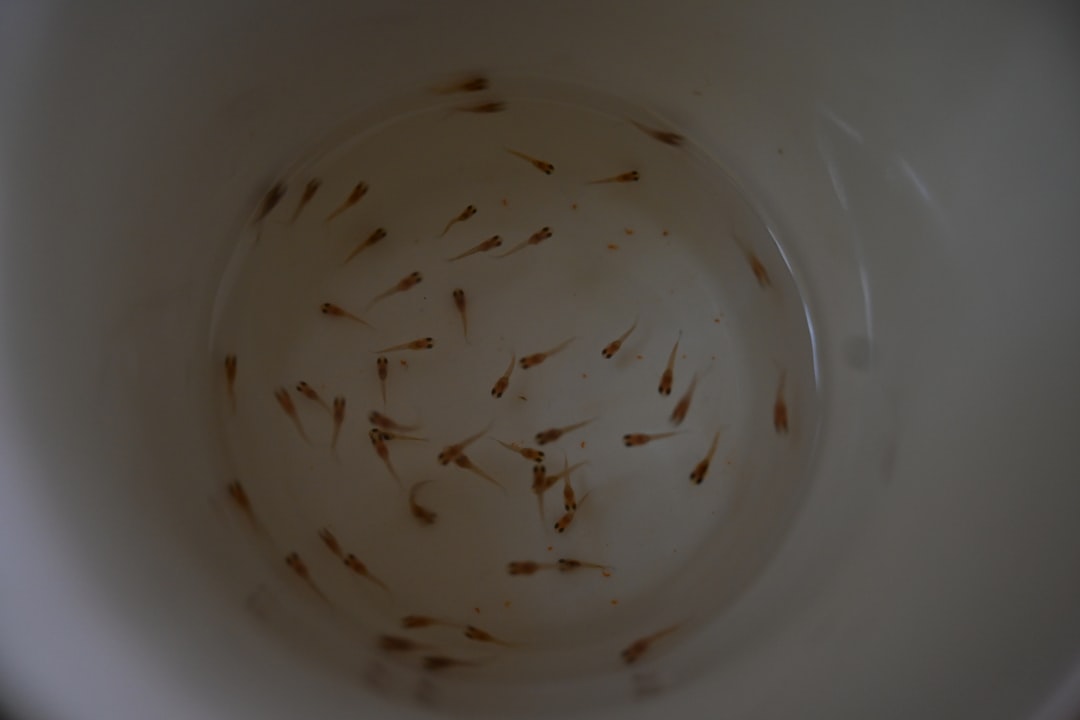
Platies may look like simple entry-level livebearers, but Xiphophorus maculatus and X. variatus carry a textbook palette of interacting colour alleles that rewards focused platy colour genetics breeding. This guide from Gensou Aquascaping at 5 Everton Park, Singapore, unpacks the genetics behind Mickey Mouse, Sunburst, and Variatus morphs using two decades of local breeding records. You will learn how the Mickey pattern actually inherits, why Sunburst shades drift between generations, and how to produce stable show fish in under a year.
The Species Behind the Morphs
Most “platies” sold in Singapore are hybrids between X. maculatus (southern platy) and X. variatus (variatus platy). The two species readily interbreed and produce fertile offspring, which is how commercial strains gained so many colour combinations. Purebred X. variatus tends to be slimmer with longer dorsals and more iridescent blue, while X. maculatus is stouter and shorter-finned. Knowing which species dominates your stock affects body shape selection.
For line-breeding purposes, treat hybrids as their own breeding pool. Crossing back to either parent species tends to re-segregate colours unpredictably.
Key Colour Loci
Tail Pattern (T) controls the Mickey Mouse pattern — three black dots at the caudal peduncle forming the classic silhouette. It behaves as an incomplete dominant: one copy gives a clear Mickey mark, two copies give a darker, larger spot cluster. Body Red (Rb) produces red/orange body colour with dosage effects. Body Yellow (gg) is recessive and produces the Sunburst yellow base. Body Spot (Sp) is sex-linked and shows as black speckling concentrated on males.
The Variatus complex adds Hi-Fin (Hf) — a dominant gene extending dorsal rays — and a salt-and-pepper body pattern controlled by modifier genes not yet fully characterised.
Mickey Mouse Inheritance
Cross two heterozygous Mickey (Tt x Tt) and expect 25 per cent no mark, 50 per cent single Mickey mark, 25 per cent dark double-dose spot. The double-dose phenotype is often mis-sold as “large spot Mickey” but is simply TT homozygous. Breeders aiming for consistent single-mark Mickeys pair heterozygous (Tt) to non-marked (tt) fish, yielding 50 per cent clean Mickey fry and 50 per cent plain — then visual selection is easy.
Pair two TT homozygous parents for fry that all show the double-dose phenotype, useful when selling “extreme Mickey” stock.
Sunburst and Red Body Combinations
Sunburst platies are gg (homozygous gold) with red body overlay (Rb). The red dorsal and caudal sit on a yellow body, giving that flame-fade gradient. The challenge is that Rb is dosage-sensitive — one copy gives patchy orange, two copies give deep red coverage. Pair RR gg x RR gg for stable deep red Sunbursts; pair Rr gg for a 75/25 mix of strong and weak red fry.
Muddy Sunbursts in Singapore shops usually come from Rr Gg parents — neither locus homozygous. Selecting gg RR fish over three generations stabilises the line.
Variatus Morphs and Hi-Fin
Hi-Fin variatus carries the Hf gene as dominant. Pair Hf+ x ++ and 50 per cent of fry carry hi-fin. Pair Hf+ x Hf+ and 75 per cent will be hi-fin — but the homozygous HfHf fish often suffer dorsal deformities. For show-quality stock, keep Hi-Fin heterozygous and cull deformed fry aggressively.
Variatus colour patterns include Rainbow (multiple overlaid iridescents) and Marigold (yellow body with red fins). Both respond well to line breeding over 4-6 generations.
Punnett Square Example: Mickey Sunburst
A heterozygous Mickey Sunburst (Tt Rr gg) paired with another identical fish produces a 4×4 grid. Roughly 56 per cent of fry will be visibly Sunburst (gg), of which a subset carry Mickey (Tt or TT). Only 1 in 16 will be TT RR gg — the ideal double-extreme fish. Raise 100 fry and select the two or three that hit the target phenotype.
Line Breeding Protocol
Separate virgin females at 4 weeks old (before they are sexually mature at 6-8 weeks). Pair best son back to mother for generation 2, best grandson to aunt for generation 3, and introduce an unrelated fish at generation 4. Keep pedigree records on paper or a spreadsheet — livebearers breed so fast that undocumented crosses become untraceable within months.
Select for body depth first, symmetry second, colour third. A flawless Sunburst with a bent spine is not a breeder. Singapore-warm tanks push maturity to 6 weeks, so one year gives you four to five generations of selection.
Sourcing and Local Context
Singapore fish shops carry farm platies at $2-4 SGD each, which suit starter projects. For named strains, check Carousell, the Thomson Road specialist shops, and occasional imports via Pasir Ris wholesalers. Serious Hi-Fin Variatus stock comes from Taiwanese breeders via local importers and costs $12-20 per pair.
Related Reading
- Platy Care Guide for Beginners
- Swordtail Colour Genetics Guide
- Livebearer Breeding Setup Guide
- Beginner Breeding Tank Setup Guide
- Water Hardness Aquarium Guide for Singapore
Conclusion
Focused platy colour genetics breeding turns a bag of fancy livebearers into a named strain worth keeping and sharing. Mickey Mouse, Sunburst, and Variatus morphs each follow predictable rules once you map the loci and draw a Punnett square, and Singapore’s warm climate accelerates generations beyond what temperate breeders enjoy. Pop into Gensou Aquascaping to discuss pedigree livebearer projects or to see current breeding stock.



