
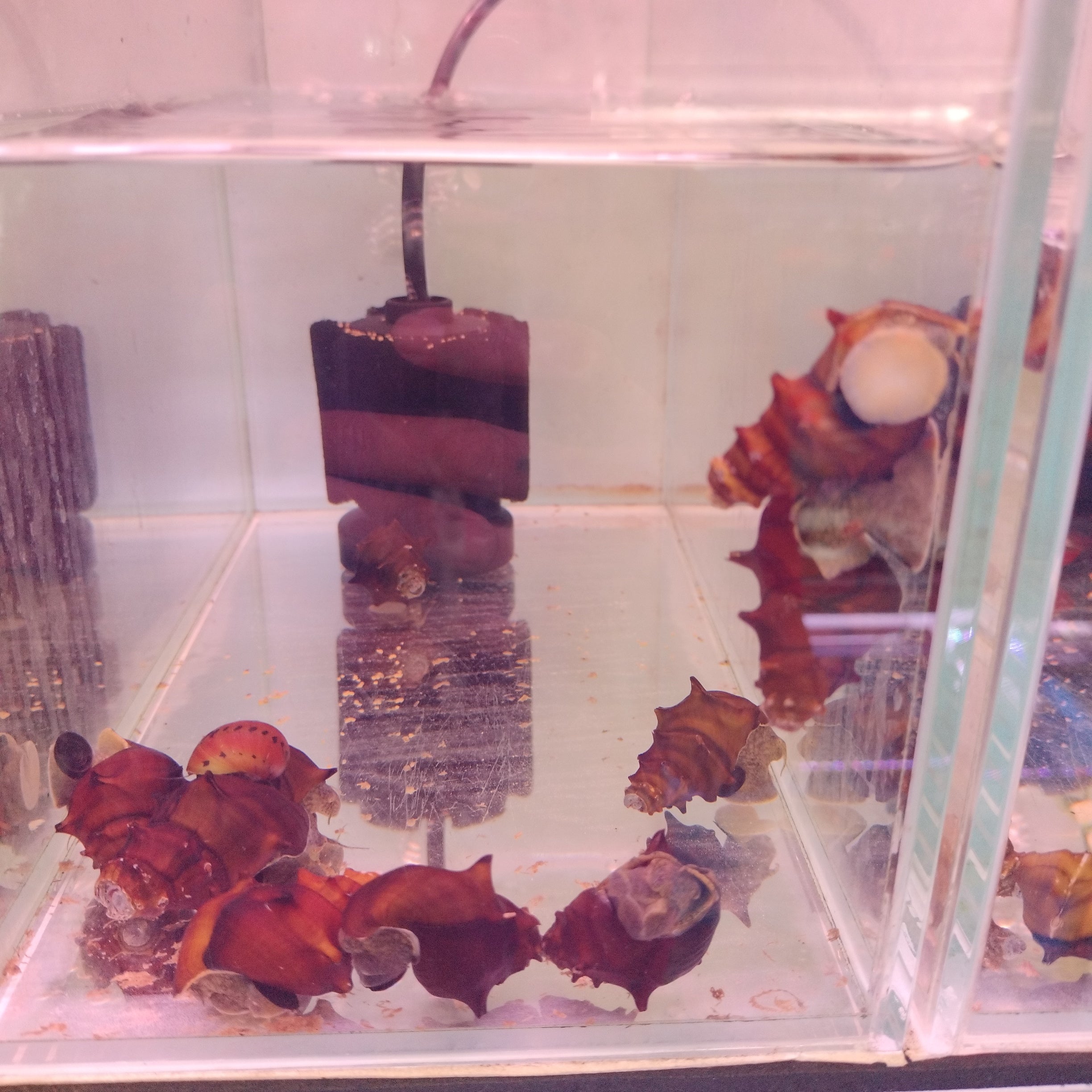
At a glance
Species profile Brotia pagodula
Origin
Rivers of Myanmar and Thailand
Family
Pachychilidae
Adult size
Up to 5 cm (2 in)
Diet
Biofilm, algae, sinking pellets and blanched vegetables (Omnivore)
Temperament
Peaceful
Swimming level
Bottom
Minimum group
1+ (shoaling)
Lifespan
2-4 years
Minimum tank
40 L (10 gal)
Water type
Freshwater
Size to scale
5 cm adult length, shown to scale against an iPhone 15 Pro (14.66 cm).
Natural range
Where it comes from — Southeast Asia
Rivers of Myanmar and Thailand
Water
Singapore tap water vs its needs
Hardness: Medium to hard (8-15 dGH).
In the aquarium
How it lives in the tank
Swims in the bottom of the tank
Sensitivity Index — Moderate
Adaptable, but happiest with stable parameters in a matured tank.
Our own read on how forgiving this species is of water changes — not a formal standard.
Keeping & care
What this fish needs
Family
About the Pachychilidae family
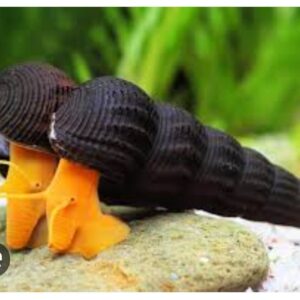
Pachychilidae is a family of tropical freshwater snails (not fish), with an operculum and a moderately heavy, often elongate-conical or turreted shell. The family is pantropical, with genera distributed across Southeast Asia, Central and South America, Africa and Madagascar. In the aquarium hobby the best-known members are the Sulawesi "rabbit" or "elephant" snails of the genus Tylomelania from Indonesia; several Brotia and Faunus species also appear. They are peaceful, mostly algae- and biofilm-grazing detritivores that suit calm, mature planted tanks, though many wild-collected species have fairly specific water requirements.
Best kept in a stable, mature planted tank with steady warmth, gentle current and enough biofilm, algae and sinking foods; they are peaceful grazers that leave healthy plants alone, but sensitive to copper and to swings in water quality.
Breeding
Livebearer (ovoviviparous); many species brood young in a pouch and release fully-formed juveniles.Several pachychilids, including Tylomelania and Faunus, are ovoviviparous and give birth to small numbers of fully-formed crawling juveniles rather than laying visible egg clutches, so they do not overrun a tank the way many other aquarium snails do. Tylomelania in particular reproduce slowly, typically releasing one or a few well-developed young at a time. In home aquaria they generally breed on their own in stable, mature, well-fed tanks without any special trigger, but the low reproductive rate means population growth is gradual.
Feeding
Recommended food

Compatibility
Best tankmates
Community