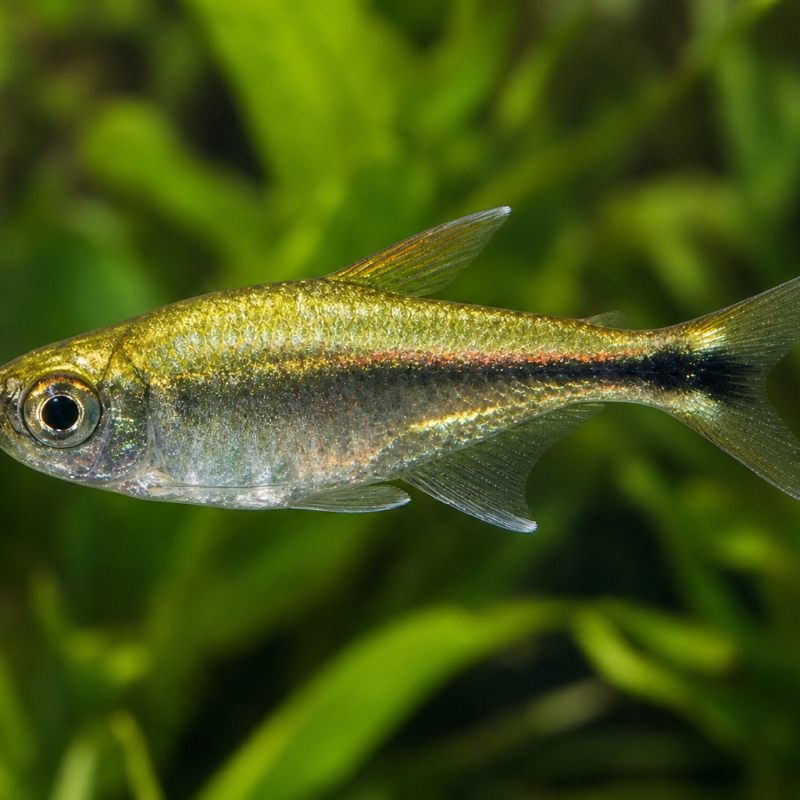
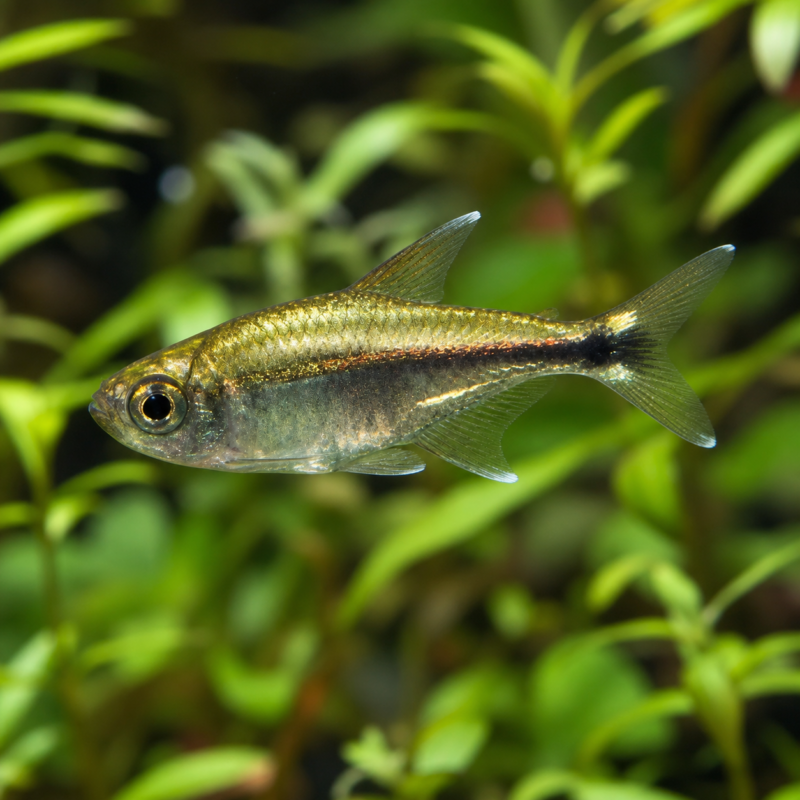
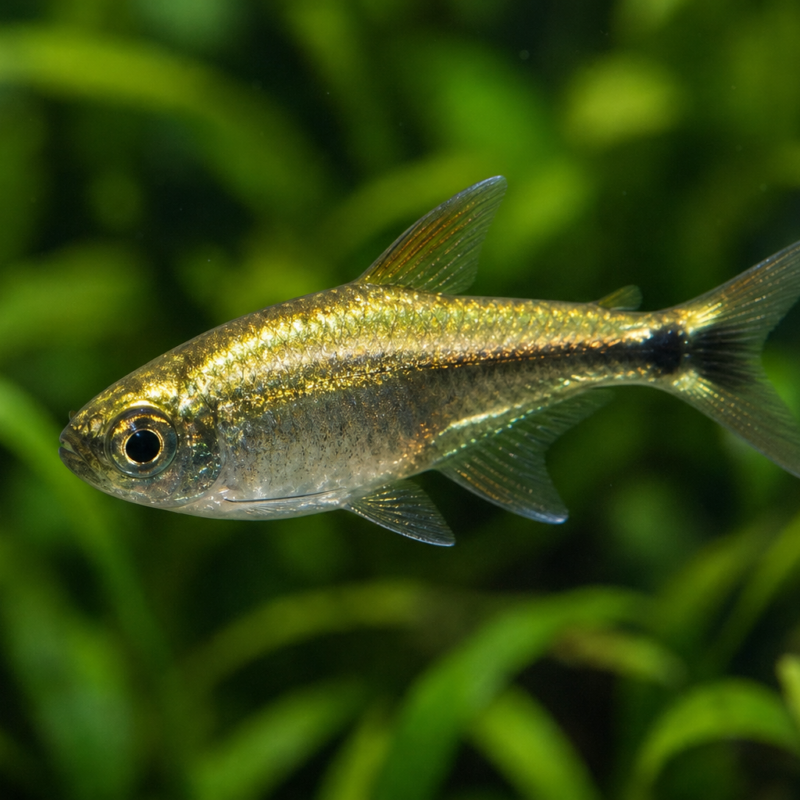
Golden Tetra
Hemigrammus rodwayi · Peaceful · Intermediate care
You save
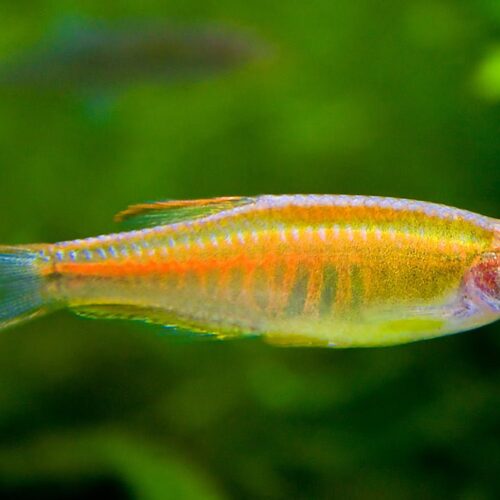
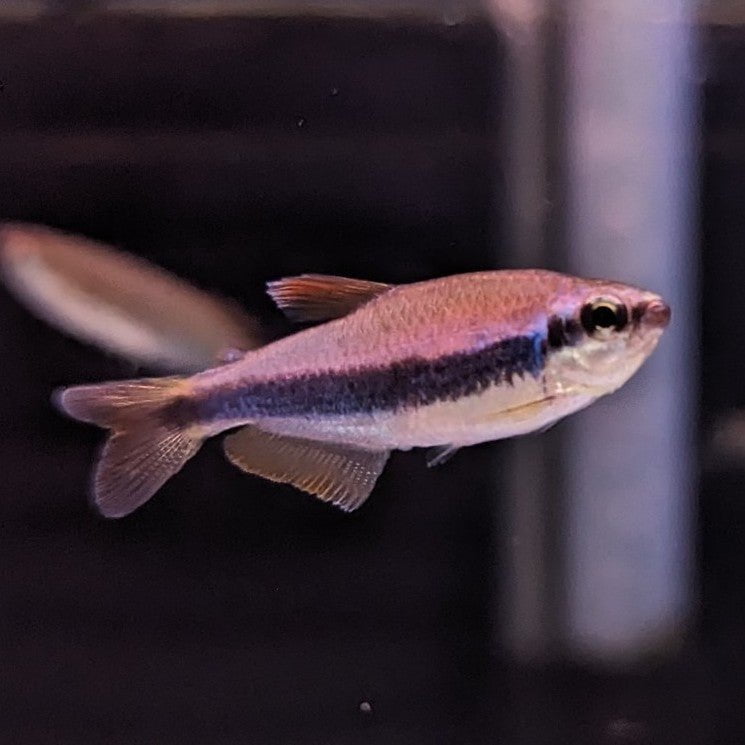
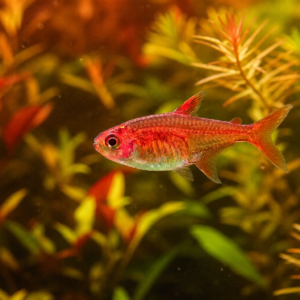
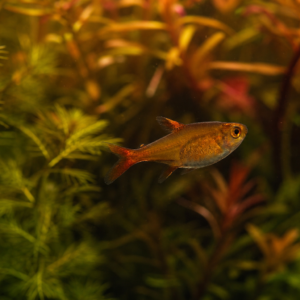
A little tetra dipped in real gold — the metallic sheen comes from a natural guanine coat. Peaceful, easygoing and lovely in a shoal over dark substrate and green plants.
At a glance
Species profile Hemigrammus rodwayi
Origin
Coastal rivers of the Guianas and lower Amazon, South America
Family
Characidae (tetra family)
Adult size
Up to 4 cm (1.6 in)
Diet
Flake, micro pellets and small live/frozen foods (daphnia, baby brine shrimp) (Omnivore)
Temperament
Peaceful
Swimming level
Middle
Minimum group
6+ (shoaling)
Lifespan
3-5 years
Minimum tank
60 L (15 gal)
Water type
Freshwater
Size to scale
4 cm adult length, shown to scale against an iPhone 15 Pro (14.66 cm).
Natural range
Where it comes from — South America
Coastal rivers of the Guianas and lower Amazon, South America
Water
Singapore tap water vs its needs
Hardness: Soft to medium (2-12 dGH).
In the aquarium
How it lives in the tank
Swims in the middle of the tank
Keep in a group of 6+
Sensitivity Index — Moderate
Adaptable, but happiest with stable parameters in a matured tank.
Our own read on how forgiving this species is of water changes — not a formal standard.
Keeping & care
What this fish needs
Family
About the Characidae family tetra family
Characidae (the characins or tetras) is a large, diverse family of small freshwater fishes native to the Americas, with most aquarium species coming from tropical South America (the Amazon and Orinoco basins and surrounding waters). Typical members are small, active, silvery to brightly coloured shoaling fishes with a small adipose fin between the dorsal and tail; well-known examples include the neon and cardinal tetra, black skirt, serpae, and rummy-nose tetras. Most kept species are peaceful, hardy schooling fish that do best in groups and suit soft, slightly acidic to neutral, well-planted tanks, though a few (such as some serpae and skirt tetras) can be fin-nippy.
Keep tetras in a shoal of at least six (more is better) in a mature, planted tank with soft, slightly acidic to neutral water and gentle flow; the group calms them, brings out their colour, and reduces any fin-nipping.
Breeding
Egg-scattererMost aquarium tetras are egg-scattering spawners that give no parental care and readily eat their own eggs. Breeders typically condition a pair or group on live foods, then move them to a dim, soft, slightly acidic spawning tank with fine-leaved plants or a spawning mop and a mesh or marble bottom; spawning is often triggered by the morning light, after which the parents are removed. Eggs are light-sensitive and usually hatch in about a day, with the tiny free-swimming fry needing infusoria or similarly small first foods before graduating to baby brine shrimp.
Feeding
Recommended food

Compatibility
Best tankmates
Community