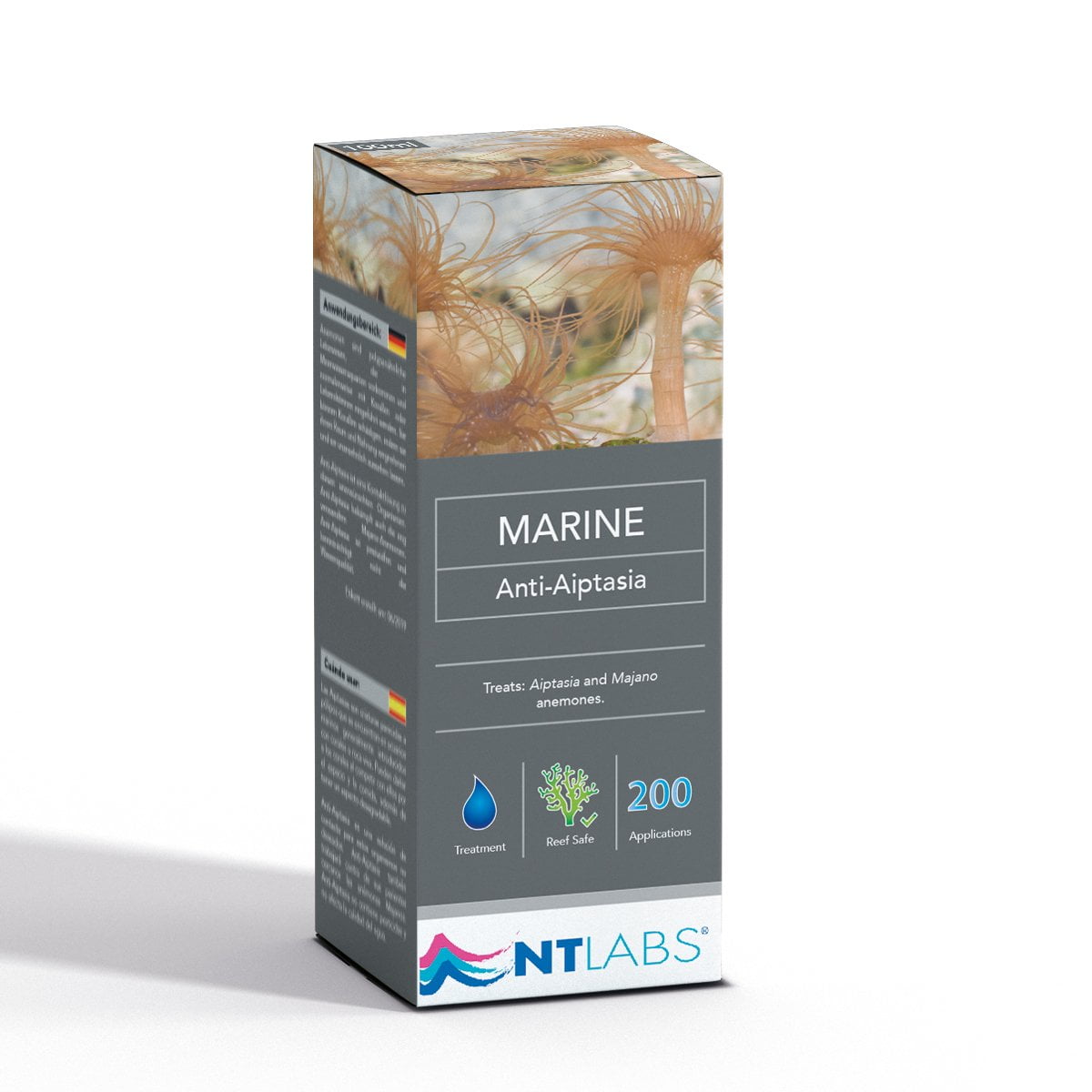
NTLABS Marine – Anti-Aiptasia 100ml
You save
Description
When to use Anti-Aiptasia?
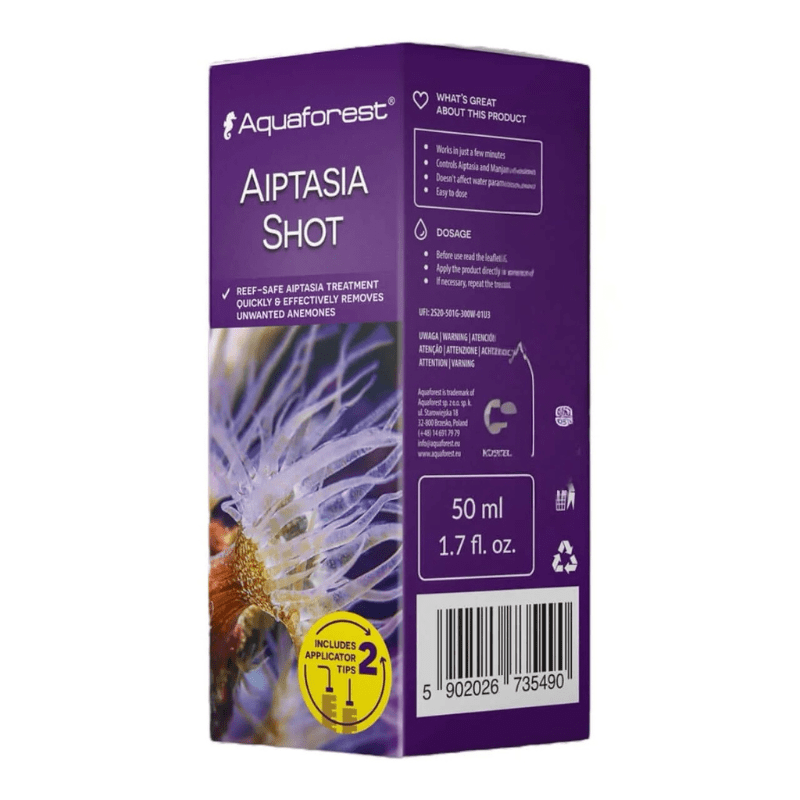
Aiptasia are polyp-like creatures found in marine aquariums usually introduced with corals or live rock. They can harm corals by outcompeting them for space and food as well as looking unsightly.This Aiptasia treatment is a contact solution to these unwanted organisms. Anti-Aiptasia will also work on the closely related Majano anemones. Anti-Aiptasia is pesticide-free and does not adversely affect water quality.To find out more about Aiptasia, click here.How to use Anti-Aiptasia?
Check water quality using Marine Lab Test Kits before use.
SuperCarb and Phopshate Remover can be left in place during use.
Keep skimmers and UV filtration switched on if present.
Shake bottle briefly until Anti-Aiptasia becomes cloudy.
Assemble tip and syringe, and fill syringe with Anti-Aiptasia.
Place tip near Aiptasia and slowly depress plunger – the aiptasia will normally withdraw once treated.
Warning:
Do Not Apply Directly To Corals
Killing many Aiptasia in one treatment may adversely affect water quality – monitor Ammonia using Marine Lab Ammonia Test Kit throughout and after use.FAQs:
Q: I used a competing product, the aiptasia were killed, but they grew back. Will Anti-Aiptasia work in the same way? A: As our Anti-Aiptasia disables adult polyps rapidly, they don’t have a chance to reproduce. Use Anti-Aiptasia to target the largest aiptasia to begin with and then focus on the smallest polyps to break their cycle. There’s enough in the bottle to treat 200 aiptasia and an angled application needle to get the more awkward to reach ones.
NT Labs Anti-Aiptasia for Reef Tanks in Singapore
Aiptasia are the small glass anemones that hitchhike in on live rock and coral frags, then multiply across the rockwork and sting any neighbouring corals competing for space. NT Labs Anti-Aiptasia is a contact gel you inject directly onto each pest, and it also works on the closely related Majano anemones. It is pesticide-free, so it targets the nuisance without poisoning the wider reef system.
In Singapore, where corals and frags are frequently swapped between hobbyists at meet-ups and shop visits, Aiptasia spreads fast and is one of the most common pests we hear about. Treat new arrivals carefully and tackle outbreaks while they are still small. Apply with the pump off so the solution stays on the target, and avoid disturbing the colony, which can release spreading planulae.
Pair chemical spot-treatment with prevention by dipping new corals first. Read our aiptasia application guide and consider berghia biocontrol for heavy infestations. Browse more marine additives.