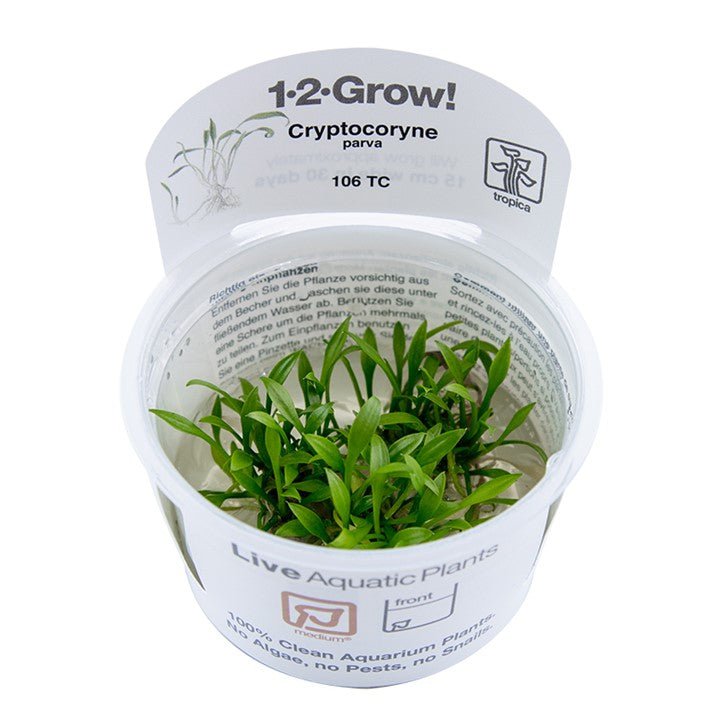
Cryptocoryne parva TROPICA 1-2-GROW!
You save
Out of stock
Ask on WhatsAppDescription
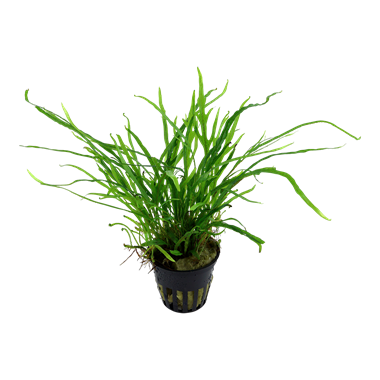
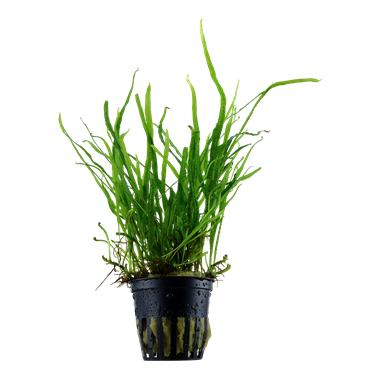
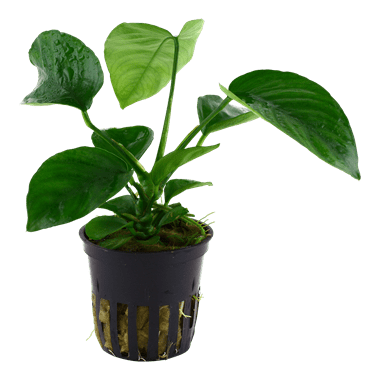
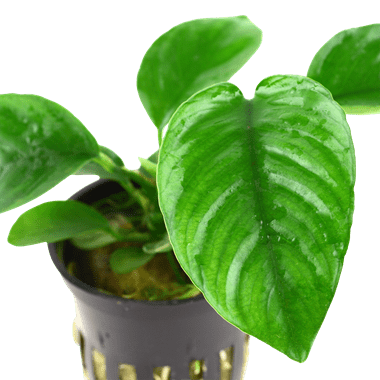
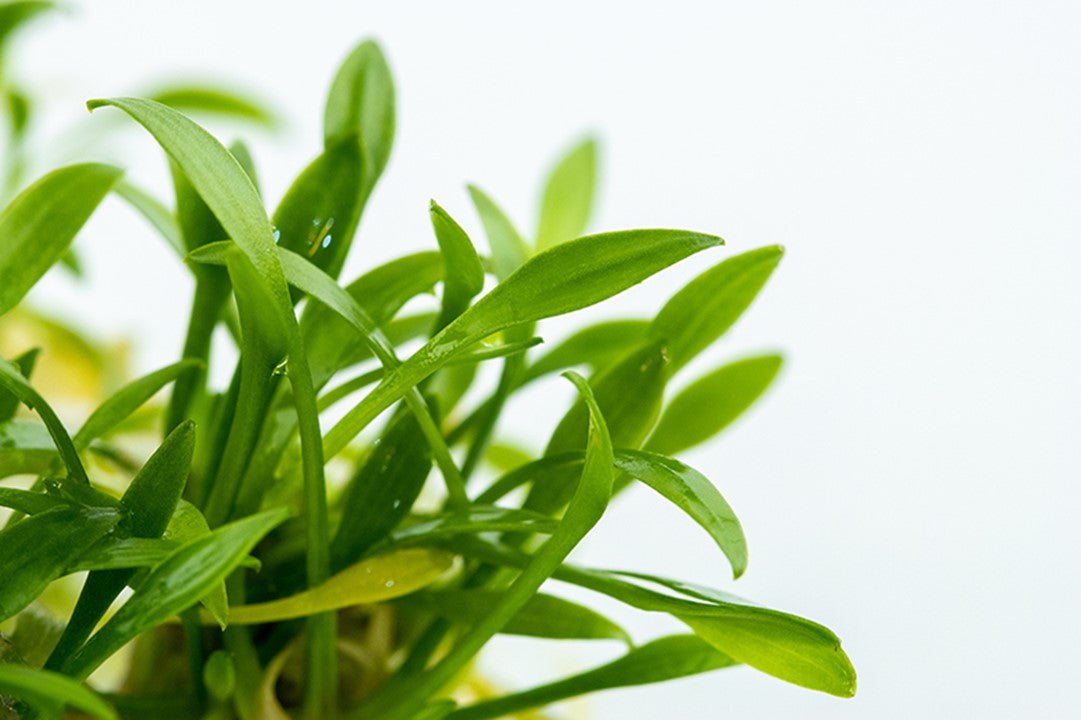
Cryptocoryne parva fromac Sri Lanka is the smallest of all Cryptocorynes (only 3-6 cm tall and a roset less than 5-8 cm wide). It is one of the few species that does not significantly change its leaf shape and colour depending on cultivation conditions. It needs more light than most other Cryptocorynes because it almost loses its leaf plate under water. So, it must never be overshadowed by other plants.
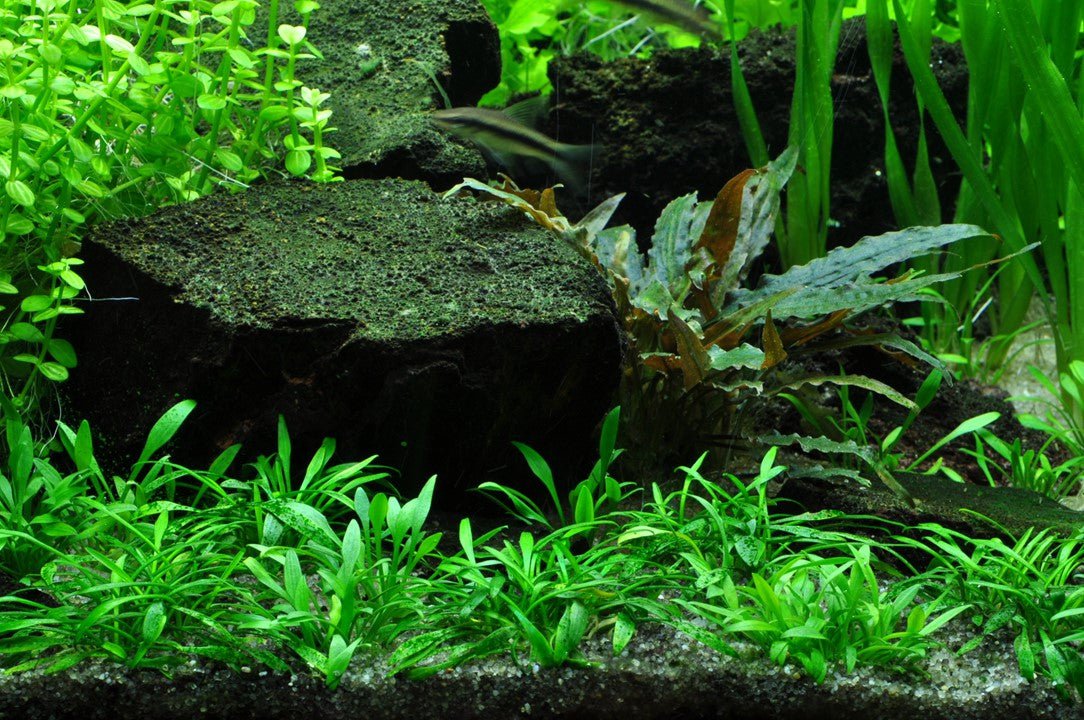
Known for its slow growth, but Nutrition Capsules in the bottom layer will enhance the development. Individual plants should be planted a few centimetres apart, and after about six months they will form a cohesive low group of plants.
Very recommendable foreground plant.
Plant info
Type:
Rosulate
Origin:
Asia
Country or continent where a plant is the most common. Cultivars arise or are bred in cultivation.
Growth rate:
Slow
Growth rate of the plant compared to other aquatic plants.
Height:
5 – 10+
Average height (cm) of the plant after two months in the tank.
Light demand:
Medium
The average or medium light demand of an aquarium plant is 0,5 W/L.
CO2 :
Low
A medium need in CO2 is 6-14 mg/L. A high demand in CO2 is approx. 15-25 mg/L.
Cryptocoryne parva (Tropica 1-2-Grow!) for Nano Foregrounds
Cryptocoryne parva is the smallest crypt in the hobby, topping out around 3-6cm, which makes it a rare member of the genus that works as a true foreground plant. This tissue-culture cup yields many tidy plantlets you can split into small clumps and dot across the front, where they slowly knit into a low, grassy cushion. Unlike most crypts, it holds its leaf shape and colour steadily regardless of conditions.
Because the leaf plate stays so low, parva needs more light than its larger cousins and must never be shaded by taller neighbours. In a Singapore nano on a bright shelf this is easy to provide. Our warm 27-29C water suits it without a chiller, and a nutrient-rich substrate speeds its naturally patient establishment. Plant small portions close together so the carpet fills in evenly over the coming weeks rather than leaving gaps.
Find companion species in our foreground-plants category. Our Cryptocoryne parva care guide and parva propagation guide walk you through building and spreading a dense front carpet.