Freshwater vs Saltwater Aquarium: Which Is Right for You?
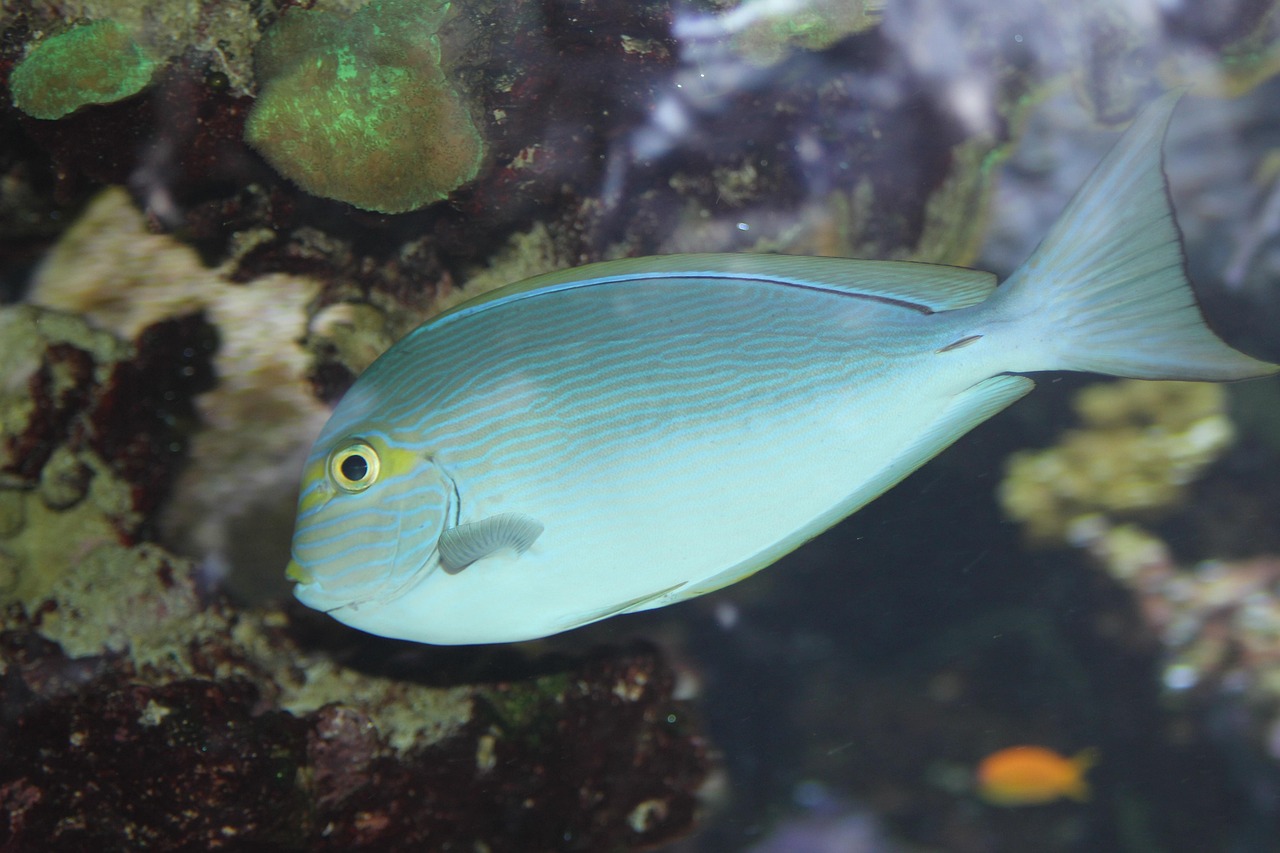
The freshwater versus saltwater debate is one of the first crossroads every aspiring aquarist faces. Both worlds offer stunning livestock, rewarding challenges, and the satisfaction of maintaining a living ecosystem. But they differ significantly in cost, complexity, and daily commitment. This guide sits inside our broader Saltwater Reef Tank Master Guide reference.
This guide offers an honest, side-by-side comparison to help you decide which path suits your budget, lifestyle, and ambitions. We have included real-world costs in Singapore dollars and advice specific to our tropical climate, where both freshwater and saltwater setups face unique challenges.
Quick Comparison Table
| Factor | Freshwater | Saltwater |
|---|---|---|
| Startup cost (90 cm tank) | S$500-1,500 | S$2,000-5,000+ |
| Monthly running cost | S$30-80 | S$100-300+ |
| Difficulty | Beginner-friendly | Intermediate to advanced |
| Maintenance time | 1-2 hours/week | 3-5 hours/week |
| Livestock cost | S$2-30 per fish | S$20-200+ per fish/coral |
| Equipment complexity | Moderate | High |
| Chiller needed in SG? | Only for sensitive species | Almost always |
| Water source | Treated tap water | RO/DI water + salt mix |
| Species variety | Thousands of fish and plants | Thousands of fish, corals, and invertebrates |
| Forgiveness of mistakes | More forgiving | Less forgiving |
Startup Costs in Singapore
Let us break down realistic startup costs for a 90 cm (3-foot) tank in Singapore, a popular size for both freshwater and saltwater beginners:
Freshwater Planted Tank (90 cm)
| Item | Estimated Cost (SGD) |
|---|---|
| Rimless tank (low-iron glass) | $150-300 |
| Cabinet/stand | $150-400 |
| Canister filter | $100-250 |
| LED light (planted) | $80-300 |
| CO2 system (optional) | $100-300 |
| Substrate (aquasoil) | $40-80 |
| Hardscape (stone/wood) | $30-100 |
| Plants | $50-150 |
| Fish | $30-100 |
| Test kit, conditioner, tools | $50-80 |
| Total | $780-2,060 |
Saltwater Reef Tank (90 cm)
| Item | Estimated Cost (SGD) |
|---|---|
| Tank with overflow (drilled) | $300-600 |
| Cabinet/stand | $200-500 |
| Sump | $100-300 |
| Return pump | $80-200 |
| Protein skimmer | $200-600 |
| Wavemaker/powerhead | $80-250 |
| Reef LED light | $300-800 |
| Chiller | $400-1,000 |
| RO/DI unit | $100-300 |
| Salt mix (initial batch) | $40-80 |
| Live rock | $100-300 |
| Sand | $30-60 |
| Test kits (comprehensive) | $80-150 |
| Fish and corals (starter) | $200-500 |
| Total | $2,210-5,640 |
The cost difference is substantial. A basic freshwater planted setup can be achieved for under S$1,000, while a comparable saltwater reef tank rarely starts below S$2,500 even with careful shopping.
Ongoing Monthly Costs
Startup costs are just the beginning. Monthly running costs differ significantly:
| Expense | Freshwater (monthly) | Saltwater (monthly) |
|---|---|---|
| Electricity (filter, light, CO2) | $15-30 | $40-100 (chiller is the main driver) |
| Water (top-ups, changes) | $5-10 | $10-20 (RO/DI waste water) |
| Salt mix | N/A | $20-40 |
| Food | $5-15 | $10-30 |
| Fertilisers/additives | $10-20 | $20-50 (calcium, alk, magnesium) |
| RO/DI membrane replacement | N/A | $5-15 (amortised) |
| Replacement livestock | $0-20 | $0-100+ |
| Total | $35-95 | $105-355 |
The single biggest ongoing cost for saltwater in Singapore is electricity for the chiller. A chiller running 12-16 hours per day in our tropical climate can add S$30-60 to your monthly electricity bill alone.
Equipment Differences
Freshwater and saltwater tanks share some basic equipment but diverge significantly in specialised gear:
Freshwater-Specific Equipment
- CO2 injection system — For planted tanks. Not needed for fish-only setups.
- Aquasoil substrate — Active substrate that buffers pH and feeds plant roots.
- Planted tank lighting — Full spectrum around 6500K.
Saltwater-Specific Equipment
- Protein skimmer — Removes dissolved organic compounds before they break down. Essential for reef tanks.
- RO/DI unit — Produces purified water free of chloramine, phosphates, silicates, and heavy metals. Singapore tap water must be purified before mixing with reef salt.
- Chiller — Maintains water at 25-26°C for corals. Practically mandatory in Singapore unless you run heavy air conditioning 24/7.
- Wavemakers — Create flow patterns that mimic ocean currents. Corals need water movement to feed and expel waste.
- Reef lighting — High-intensity LEDs with strong blue spectrum to drive coral photosynthesis. Significantly more expensive than freshwater lighting.
- Dosing pumps — Automatically add calcium, alkalinity, and magnesium supplements consumed by growing corals.
- Refractometer — Measures salinity precisely. Essential for maintaining stable salt levels.
Difficulty and Learning Curve
Freshwater aquariums, particularly fish-only or low-tech planted setups, are accessible to complete beginners. The nitrogen cycle, basic water chemistry, and feeding are the main concepts to master. Even mistakes are often recoverable with a water change and patience.
Saltwater aquariums demand a broader and deeper knowledge base. Beyond the nitrogen cycle, you need to understand salinity management, calcium/alkalinity balance, protein skimming, coral lighting requirements, and the complex interactions within a reef ecosystem. Mistakes are more costly — both financially (expensive livestock) and biologically (chain reactions can crash a reef tank quickly).
That said, saltwater is not impossibly difficult. Many successful reef keepers started with zero experience. The key is thorough research, patience during cycling and maturation, and a willingness to invest in quality equipment from the start rather than cutting corners.
Maintenance Commitment
Freshwater Weekly Tasks (1-2 hours)
- 25-30% water change with dechlorinated tap water
- Glass cleaning
- Plant trimming
- Filter check
- Water testing (ammonia, nitrite, nitrate, pH)
Saltwater Weekly Tasks (3-5 hours)
- 10-15% water change with freshly mixed saltwater (requires RO/DI water preparation)
- Glass cleaning (coralline algae is stubborn)
- Protein skimmer cup cleaning
- Salinity check
- Calcium, alkalinity, and magnesium testing
- Dosing pump calibration
- Equipment inspection (pumps, wavemakers, chiller)
- Coral feeding (some species)
- Algae management on rocks
Freshwater maintenance is straightforward and can be done in under an hour once you have a routine. Saltwater maintenance requires more time, more testing, and more attention to detail. If your schedule is already packed, this is a genuine factor to consider.
Livestock Options
Freshwater Highlights
- Thousands of fish species: tetras, rasboras, gouramis, cichlids, catfish, livebearers, loaches, bettas
- Hundreds of aquatic plant species for aquascaping
- Shrimp (Neocaridina, Caridina) and snails
- Freshwater crayfish and crabs
- Breeding is generally easier and more accessible
Saltwater Highlights
- Spectacular fish: clownfish, tangs, wrasses, gobies, angelfish, butterflyfish, blennies
- Corals: soft corals, LPS (large polyp stony), SPS (small polyp stony) in extraordinary colours
- Invertebrates: cleaner shrimp, anemones, sea urchins, starfish, hermit crabs
- The sheer visual intensity of a healthy reef tank is unmatched
Both worlds offer incredible diversity. Freshwater tends toward lush, green, planted landscapes. Saltwater leans toward vibrant, colourful reef structures. Neither is objectively “better” — it comes down to which aesthetic and ecosystem captivates you.
Temperature Challenges in Singapore
Singapore’s tropical climate creates temperature management challenges for both types of aquarium, though saltwater is hit harder:
Freshwater
Most tropical freshwater fish are comfortable at 26-30°C, which aligns with Singapore room temperatures. Many freshwater setups run perfectly well without any heating or cooling. Only temperature-sensitive species (like crystal shrimp or celestial pearl danios) require cooling, typically achieved with clip-on aquarium fans.
Saltwater
Corals and many marine fish prefer 24-26°C, which is below typical Singapore room temperature. A chiller is almost always necessary for reef tanks. This adds significant cost (S$400-1,000 for the unit) and substantial electricity consumption. The chiller also generates heat, which must be vented away from the tank — often requiring careful cabinet ventilation or placement near an open window.
This temperature difference is one of the biggest practical considerations for Singapore hobbyists choosing between freshwater and saltwater. If electricity costs and heat management concern you, freshwater has a clear advantage.
Can You Convert One to the Other?
Technically yes, but practically it is rarely straightforward:
- Freshwater to saltwater: You can reuse the tank and cabinet, but you will need to add a sump (or drill the tank for an overflow), purchase a protein skimmer, chiller, reef lighting, wavemakers, and RO/DI unit. The substrate, filter, and freshwater equipment are not transferable. It is essentially a new setup using the same glass box.
- Saltwater to freshwater: Easier in theory. Rinse everything thoroughly to remove salt residue. The tank, cabinet, and some equipment (return pump, potentially the light) can be reused. You will need new substrate, plants, and a suitable filter.
Most hobbyists who switch end up running both types simultaneously rather than converting one to the other. If you think you might want saltwater eventually, consider starting with a freshwater planted tank to build your skills, then adding a separate marine setup when you are ready.
Which Should You Start With?
Our honest recommendation for most Singapore hobbyists:
Start with freshwater. It is more affordable, more forgiving, and teaches you the fundamental skills (water chemistry, cycling, patience, routine maintenance) that transfer directly to saltwater. A well-maintained freshwater planted tank is genuinely beautiful, and many experienced aquarists maintain both types for decades.
Consider saltwater as your first tank only if:
- You have a budget of at least S$3,000-5,000 for initial setup
- You are willing to commit 3-5 hours per week to maintenance
- You have researched extensively and understand the commitment
- You are prepared for higher ongoing costs
- The reef aesthetic genuinely excites you more than any freshwater option
If saltwater is your dream, go for it. Just go in with realistic expectations and a proper budget. Cutting corners on marine equipment leads to livestock losses that quickly exceed the money you “saved.”
For those drawn to the marine world, our marine aquarium service provides complete reef tank design, installation, and maintenance. We handle the technical complexity so you can enjoy the results. For freshwater enthusiasts, our custom aquarium service creates stunning planted displays tailored to your space.
Frequently Asked Questions
Is a saltwater aquarium harder to maintain than freshwater?
Yes, objectively. Saltwater requires more equipment, more parameters to monitor, more expensive livestock, and more time per week. However, “harder” does not mean “impossible.” Thousands of hobbyists in Singapore successfully maintain reef tanks. The key is proper equipment, consistent maintenance, and patience during the maturation period.
Can I keep a saltwater tank without a chiller in Singapore?
It is very difficult. Singapore’s ambient temperatures routinely push uncontrolled tanks above 30°C, which stresses most corals and marine fish. If your room runs 24/7 air conditioning at 23-24°C, you may get away without a chiller, but this is uncommon. For most setups, a chiller is a necessary investment.
How much does a saltwater aquarium cost per month in Singapore?
Expect S$100-300+ per month for a 90 cm reef tank, depending on stocking level and equipment efficiency. Electricity (primarily the chiller) is the biggest ongoing expense, followed by salt mix, additives, and food. Freshwater tanks typically cost S$30-80 per month to run.
Can I keep clownfish in a freshwater tank?
No. Clownfish are exclusively marine fish and cannot survive in freshwater. There is no way to acclimate them to freshwater conditions. If you want clownfish, you need a saltwater setup. The good news is that clownfish are among the hardiest marine species and make an excellent first saltwater fish.
Whether you choose freshwater or saltwater, Gensou is here to help. We design, build, and maintain both types of aquariums across Singapore. Contact us to discuss your project, or visit our shop for equipment and supplies.
Related Reading