Orinoco River Biotope Aquascape: Venezuela’s Wild Waters
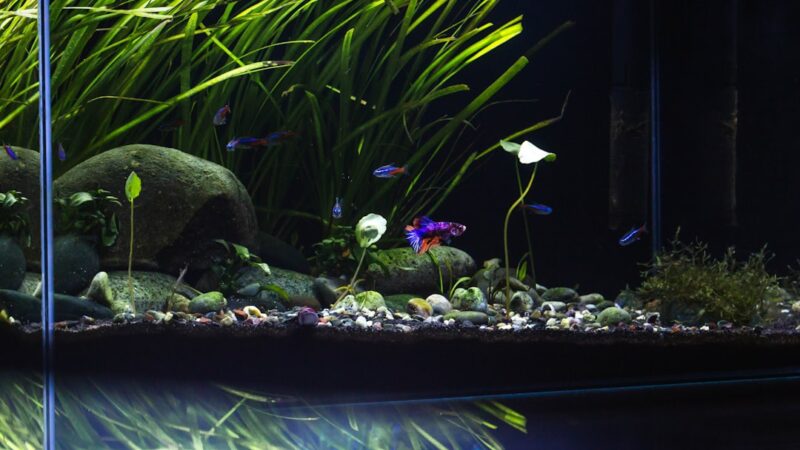
An orinoco river biotope aquascape captures the dramatic diversity of South America’s third-largest river system, where cardinal tetras shoal over white sand and ram cichlids defend territories among submerged branches. At Gensou Aquascaping, located at 5 Everton Park in Singapore, we consider the Orinoco one of the most visually striking biotopes to recreate in a home aquarium.
The Orinoco River System
The Orinoco flows over 2,000 kilometres through Venezuela and Colombia, draining a vast basin of rainforest, savanna and flooded plains known as the llanos. Its tributaries range from blackwater rivers stained dark by humic acids to clearwater streams and silty whitewater channels. The most popular aquarium biotope draws from the blackwater tributaries of the upper Orinoco and the Atabapo River, where the water is extremely soft, acidic and tea-coloured. These waters host some of the most sought-after aquarium species in the hobby.
Tank Size and Dimensions
A 120 to 250-litre tank provides enough room for a convincing Orinoco biotope with a small community of fish. Longer tanks are preferable to tall ones, as most Orinoco species inhabit the lower and mid-water columns. A 90 by 45 by 45 centimetre or 120 by 45 by 45 centimetre setup is ideal. These standard dimensions are widely available from Singapore aquarium retailers at prices ranging from SGD 100 to SGD 300 for rimless glass tanks.
Substrate and Hardscape
White or cream-coloured fine sand replicates the pale riverbeds found in many Orinoco tributaries. Pool filter sand or ADA La Plata Sand are suitable options, costing SGD 8 to SGD 30 depending on brand and quantity. Hardscape should focus on driftwood, specifically tangled root structures and branching pieces that mimic fallen trees. Spider wood and Malaysian driftwood are easy to find in Singapore. Add a generous layer of dried Indian almond leaves and seed pods such as alder cones and casuarina cones to contribute tannins and create a natural forest-floor appearance on the sand bed.
Achieving Blackwater Conditions
Tannins from driftwood and leaves will tint the water naturally, but for a deeper amber colour, add a bag of peat granules or Catappa bark to your filter. Commercial blackwater extracts like Brightwell Aquatics Blackwater or Tannin Aquatics botanicals offer a more controlled approach. Target a pH of 4.5 to 6.5 and a GH of 1 to 4 for the most accurate recreation. Achieving these soft, acidic conditions typically requires RO water remineralised with a minimal GH booster. PUB tap water in Singapore is generally too hard and alkaline for a strict Orinoco biotope without dilution.
Plants for the Orinoco Biotope
Submerged vegetation in Orinoco blackwater tributaries is sparse due to low light penetration through the dark water and dense canopy overhead. Floating plants such as Amazon frogbit and Salvinia provide shade and are geographically appropriate. If you want rooted plants, Echinodorus species like Echinodorus grisebachii and small Helanthium varieties are native to the broader Orinoco basin. Keep planting minimal and concentrated along the back and sides, leaving open sand and leaf litter as the dominant visual elements.
Authentic Livestock Choices
Cardinal tetras are the signature fish of the upper Orinoco and look spectacular in large shoals of 20 or more against a dark background. German blue rams (Mikrogeophagus ramirezi) originate from the Orinoco llanos and add territorial behaviour and vibrant colour. Corydoras habrosus, a dwarf species from Venezuelan waters, works well as a bottom dweller. Other suitable choices include pencilfish (Nannostomus species), hatchetfish and Apistogramma species. Avoid mixing with fish from different continents if biotope accuracy is your goal. Most of these species are available from specialty fish shops in Singapore, with cardinal tetras typically priced at SGD 1 to SGD 2 each.
Filtration and Flow
Orinoco tributary habitats typically have gentle to moderate flow. A canister filter with a spray bar diffusing the return across the tank’s length creates an appropriate current without excessive turbulence. Sponge pre-filters protect small fish and fry from being drawn into the intake. Filtration media should include biological media and Purigen or activated carbon to maintain clarity while preserving the tannin tint at a level you find visually appealing. Avoid over-filtering, as the slight softness and colour of the water is part of the biotope’s character.
Putting It All Together
Start by sloping the sand slightly from back to front and arranging driftwood pieces to create depth and shadow. Scatter botanicals densely in one area to mimic accumulated debris at a river bend. Add floating plants for dappled light effects and let tannins build gradually over the first few weeks. The result is a moody, atmospheric aquascape that showcases fish in conditions close to their wild origins. Visit Gensou Aquascaping at 5 Everton Park for help sourcing authentic Orinoco biotope materials and livestock in Singapore.
Related Reading
- How to Create an African River Biotope Aquascape
- Congo River Rapids Biotope Aquascape: Fast Water and Unique Fish
- Danube River Biotope Aquascape: Central Europe’s Great River
- European River Biotope Aquascape: Temperate Freshwater Realism
- Ganges River Biotope Aquascape: India’s Sacred Waterway
The Orinoco river scape captures the main channel, but the inundated margins deserve their own treatment — explore our Orinoco floodplain biotope aquascape for that flooded-grassland look.