
Blue Phantom Pleco Care Guide: L128 Slate-Blue Beauty
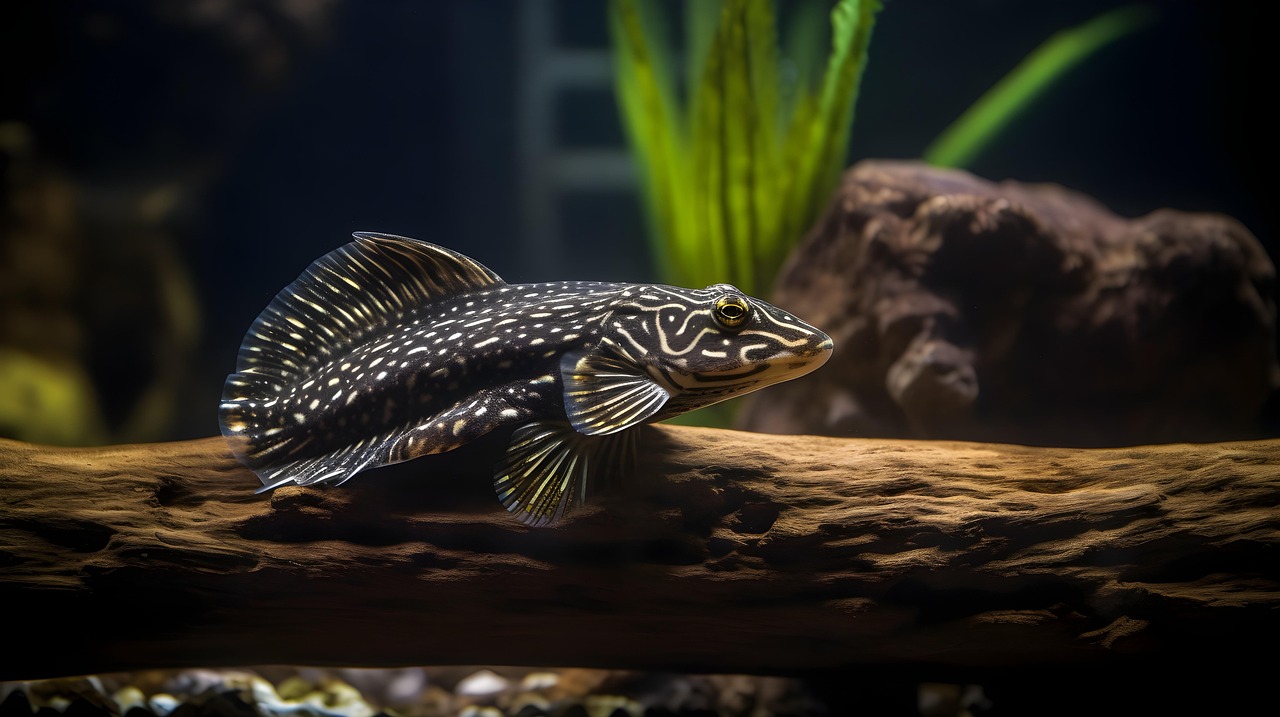
The L-number pleco world is full of stunners, but few match the cool elegance of L128. This blue phantom pleco care guide covers Hemiancistrus sp., a slate-blue catfish adorned with bright white or pale blue spots that create a starfield effect across its entire body. Originating from fast-flowing Venezuelan rivers, the blue phantom demands higher oxygen levels and stronger current than the average pleco. Gensou Aquascaping in Singapore has maintained these fish successfully and shares practical advice for keeping them healthy in our tropical climate.
Origin and Appearance
Hemiancistrus sp. L128 is found in the rapids of the Rio Orinoco system in Venezuela, clinging to rocks in highly oxygenated, fast-moving water. Adults reach 15-18 cm and display a flat, broad body typical of rheophilic plecos. The base colour ranges from deep grey-blue to almost navy, overlaid with uniformly spaced white dots. Males tend to develop slightly broader heads and more prominent odontodes (small bristle-like growths) on the pectoral fins and cheeks. Females are marginally rounder when viewed from above. Colour intensity varies with mood, diet and water quality.
Tank Requirements
A single blue phantom pleco needs at least 200 litres. The tank should prioritise water flow and oxygenation over decoration. Position a powerhead or wavemaker to create a strong current zone along the tank bottom where the pleco resides. Provide flat river rocks, slate caves and driftwood as resting surfaces and territorial boundaries. Sandy substrate or smooth gravel protects the belly and barbels. Avoid sharp-edged rocks that could abrade the ventral area. These plecos appreciate dim lighting, so position caves away from direct light or shade them with overhanging driftwood.
Water Parameters
Blue phantom plecos require cooler, well-oxygenated water compared to many tropical fish. Ideal temperature ranges from 24 °C to 28 °C, with the lower end preferred. In Singapore’s warm climate, a chiller or at least a reliable cooling fan is strongly recommended. Sustained temperatures above 30 °C stress these fish considerably and reduce dissolved oxygen levels. Target pH 6.5-7.2 and GH 3-10. Singapore’s soft, slightly acidic tap water suits them well after dechlorination. Pristine water quality is essential, as L128 is sensitive to elevated nitrates. Keep readings below 20 ppm with weekly 30-40% water changes.
Diet and Feeding
Unlike many plecos, the blue phantom is not a dedicated algae eater. It is an omnivore with a strong carnivorous streak. Offer sinking wafers formulated for carnivorous plecos as the staple. Supplement generously with frozen bloodworms, mysis shrimp, chopped prawns and blanched vegetables like zucchini and cucumber. Drop food in after lights-out when the fish is most active. A varied diet supports colour intensity and overall health. Driftwood should be present in the tank not primarily for grazing but because the rasping of wood fibre aids digestion, a common trait among loricariids.
Behaviour and Compatibility
Blue phantoms are territorial toward other bottom-dwelling plecos, especially males of similar size. Each adult male needs its own cave or defined territory. In a large tank of 350 litres or more, two males can coexist if sight lines are broken by rockwork. They are indifferent to mid-water fish and coexist peacefully with tetras, rasboras, barbs and peaceful cichlids. Corydoras and other small catfish are generally ignored. Avoid housing them with aggressive cichlids that might compete for bottom territory. Neocaridina shrimp are usually safe, though very small juveniles may occasionally be consumed.
Breeding
Breeding L128 in captivity is challenging but documented. Males select and defend a cave, enticing a ripe female to deposit eggs on the ceiling or walls. The male guards and fans the eggs for 7-10 days until hatching. Clutch sizes range from 20 to 50 eggs. Fry absorb their yolk sac over several days before accepting powdered spirulina, blanched courgette and micro worms. Successful breeding requires excellent water quality, consistent temperature around 25-26 °C, and strong current near the cave entrance. Few hobbyists in Singapore breed L128 regularly, making tank-bred specimens uncommon and typically priced at $40-$80 per juvenile.
Health and Longevity
With proper care, blue phantom plecos live 10-15 years. The main risks in Singapore are heat stress during prolonged warm spells and oxygen depletion in poorly circulated tanks. An airstone or surface-breaking filter output provides essential gas exchange. Bacterial infections can develop if the fish sustains abrasions on rough substrate. Ich is uncommon but possible after stressful transport. Quarantine new arrivals in a well-oxygenated tank for two weeks. Wild-caught specimens, which make up the majority available locally at shops and on Carousell, may carry internal parasites, so a prophylactic deworming treatment is worth considering. A healthy blue phantom pleco, with its constellation of pale spots against a dusky blue body, is one of the most visually striking bottom dwellers in the freshwater hobby.
Related Reading



