Aquarium for Airport Lounges: Relaxation Before Departure
Airports rank among the most stressful public environments — delays, security queues, and the anxiety of travel conspire to elevate cortisol levels in even seasoned flyers. An aquarium in a lounge offers a powerful antidote. This aquarium airport lounge guide explores how to design, install, and maintain a display that calms hundreds of travellers daily while meeting the stringent operational demands of an aviation facility. Gensou Aquascaping at 5 Everton Park, Singapore has consulted on commercial installations and shares the principles behind successful public aquariums.
The Science of Aquariums and Stress Reduction
Research published in the journal Environment and Behavior found that viewing aquariums significantly reduced heart rate and blood pressure within five minutes, outperforming digital nature scenes and blank walls. For travellers with flight anxiety, a ten-minute pause in front of a well-designed tank can measurably improve their emotional state before boarding. Airlines and lounge operators investing in passenger experience find that aquariums rank highly in satisfaction surveys — the calming effect translates directly into positive reviews and repeat lounge memberships.
Scale and Placement
Airport lounges demand larger installations than home or office settings. A tank of 500-2,000 litres creates the visual impact needed in a space where guests may view from 3-5 metres away. Position the aquarium where it is visible from seating areas, ideally as a room divider between dining and relaxation zones. In-wall installations with viewing panels on both sides maximise exposure while protecting equipment behind closed access panels. At Changi Airport, where lounges set a global benchmark, the expectation for design quality is exceptionally high.
Structural and Safety Requirements
A 1,000-litre aquarium weighs over 1,200 kg when fully set up. Airport floors are typically rated for high loads, but verify with the building’s structural engineer before installation. The tank must be secured against seismic movement — Singapore is low-risk but aviation safety standards require it. Use a steel or welded aluminium frame bolted to the floor. All electrical connections need to comply with SS 638 (Singapore Standard for electrical installations) and airport-specific fire safety codes. Water leak sensors connected to the building management system provide early warning of any failure.
Livestock for Maximum Impact, Minimum Risk
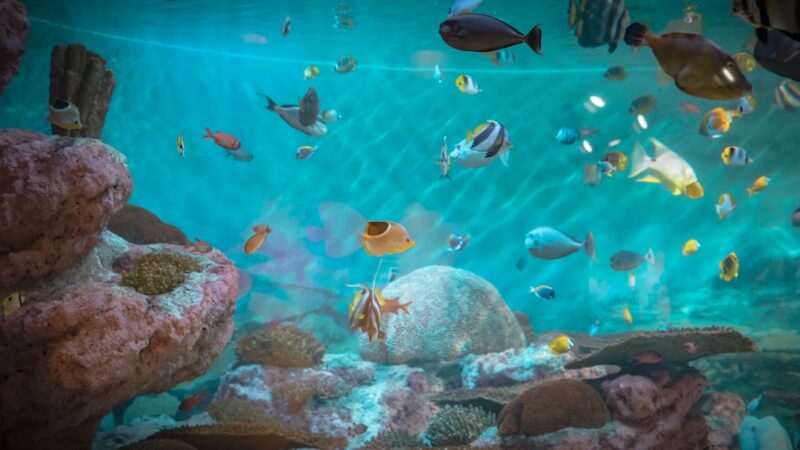
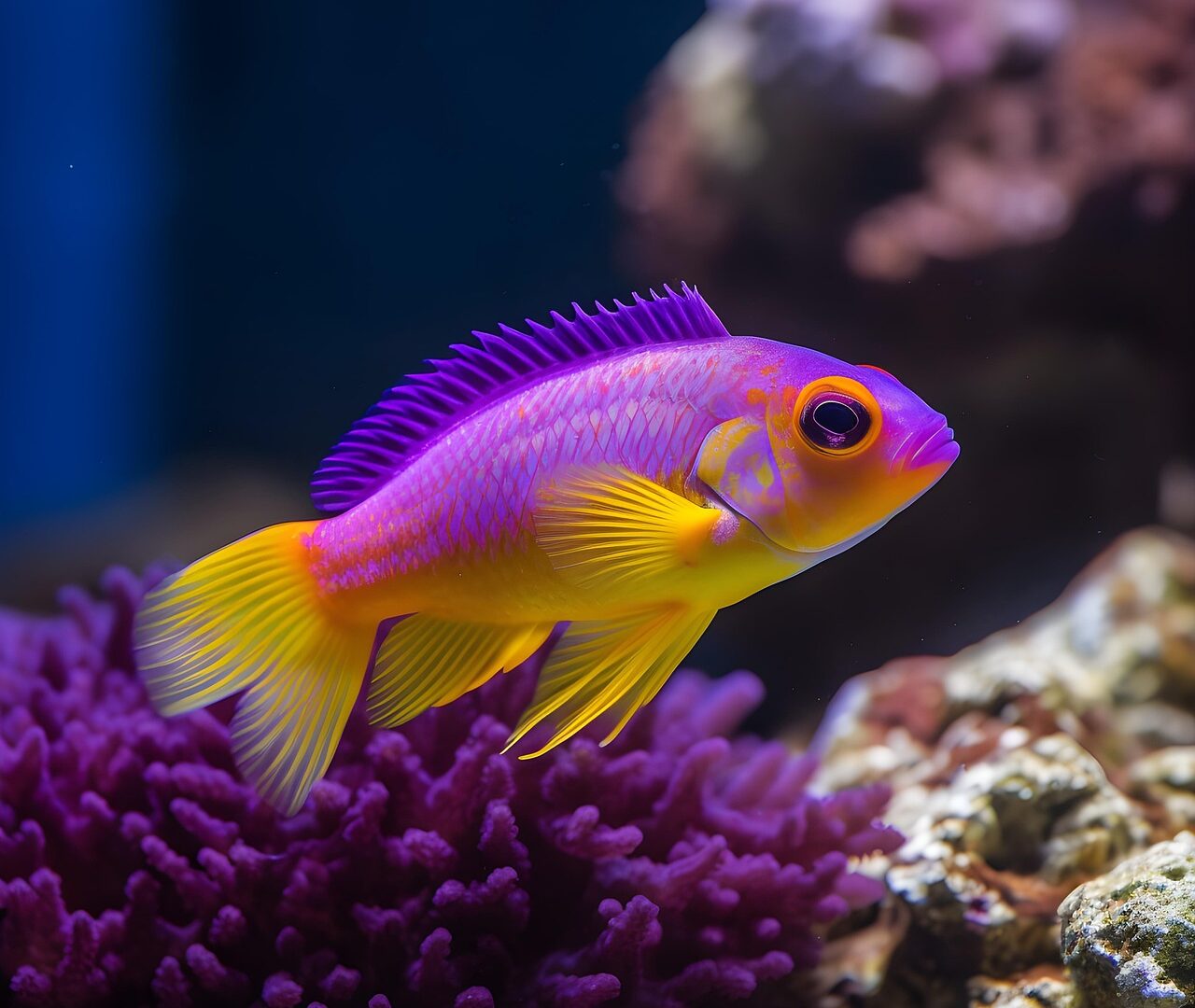
Choose large, colourful species visible from a distance. Freshwater options include schools of Congo tetras, large angelfish groups, or a colony of fancy goldfish in a cooled system. Saltwater tanks offer unmatched colour — clownfish, tangs, and anthias create a reef spectacle that stops travellers mid-stride. However, marine systems demand significantly more maintenance and equipment. For a freshwater display, discus in groups of 10-15 swimming through a planted Amazonian layout offers breathtaking beauty at lower complexity. Stock conservatively — understocking improves water clarity and reduces maintenance frequency.
Filtration and Life Support
Redundancy is critical in a commercial installation where downtime means cloudy water in front of paying guests. Run dual canister filters or a sump system with backup pump, each capable of handling the full bioload independently. UV sterilisation at 2-3 times turnover ensures crystal clarity. An automatic top-off system compensates for evaporation — essential in air-conditioned lounges where evaporation rates are higher due to low humidity. Install a chiller if maintaining tropical freshwater species in a lounge cooled to 22-24°C; the temperature differential between air and water can cause unwanted condensation on glass.
Maintenance Logistics
Airport security protocols complicate routine maintenance. Technicians need passes, tools must clear screening, and work windows align with lounge off-peak hours — typically late at night or early morning. Schedule weekly water changes of 20-25% and biweekly filter servicing. Keep maintenance supplies stored in a locked cabinet adjacent to the tank to minimise the amount of equipment brought through security each visit. A maintenance contract should specify response times for emergencies — a cloudy tank or a dead fish visible to guests requires same-day resolution.
Lighting and Ambiance Design
Lighting transforms an aquarium from functional to spectacular. Programmable LEDs that simulate sunrise, daylight, and moonlight phases create a dynamic display that changes throughout the day. Blue moonlight mode during evening hours complements the dimmed lounge atmosphere beautifully. Backlight the hardscape subtly to add depth. Avoid excessively bright lighting that causes glare on the glass from lounge ceiling fixtures — work with the interior designer to coordinate ambient lighting angles. A well-lit tank in a slightly dimmed room has the strongest visual pull.
Budget Expectations for Commercial Installations
A quality 1,000-litre freshwater display with custom cabinetry, redundant filtration, and professional aquascaping costs $15,000-30,000 in Singapore. Marine reef installations of comparable size run $25,000-50,000 due to additional equipment and livestock costs. Monthly maintenance contracts range from $800-2,000 depending on system complexity and visit frequency. For lounge operators, this is a fraction of interior renovation budgets and delivers years of service. Gensou Aquascaping provides end-to-end commercial installation and ongoing maintenance for hospitality and aviation clients across Singapore.
Related Reading