
Kribensis Care Guide: The Colourful Dwarf Cichlid for Community Tanks
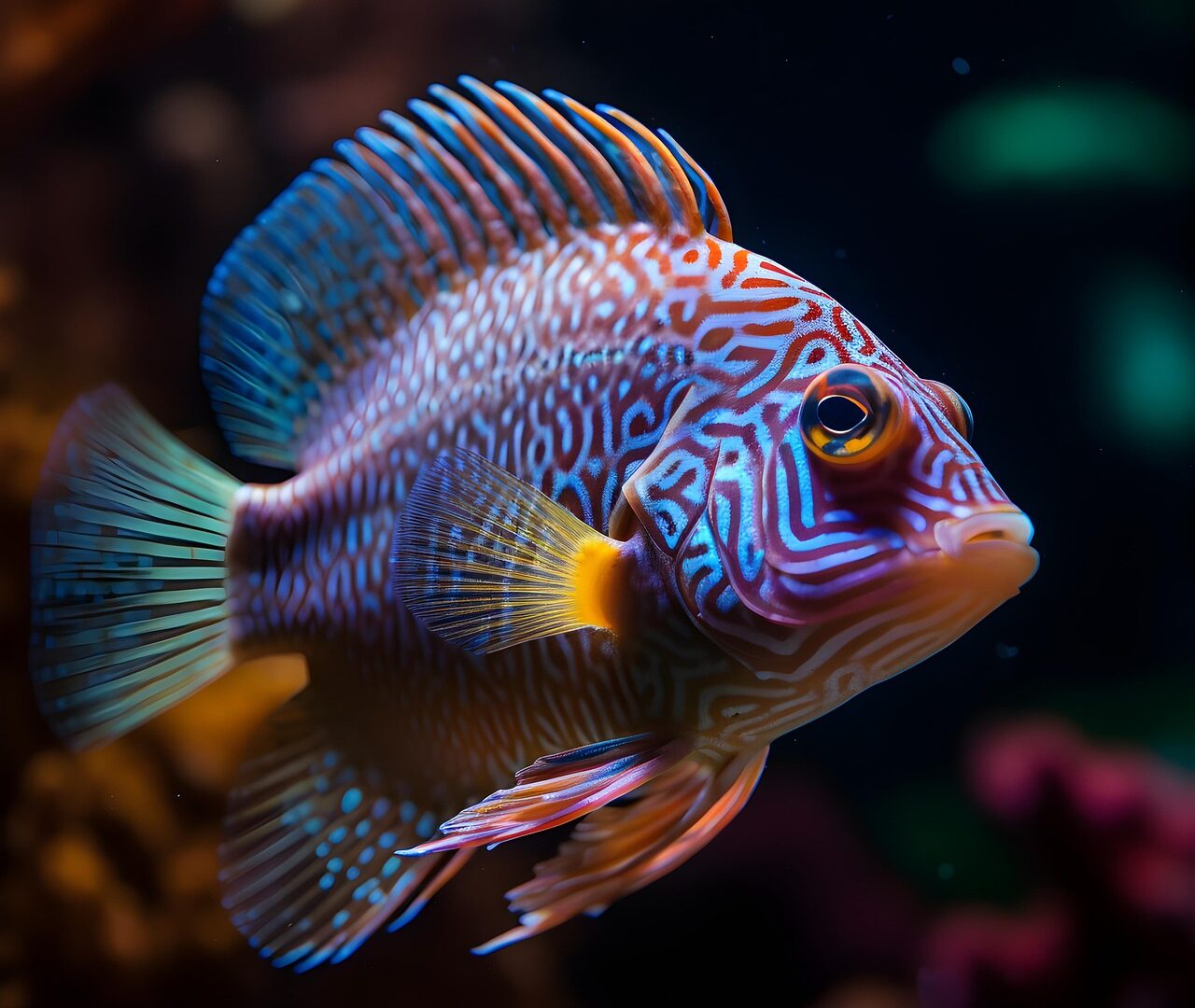
Among dwarf cichlids suited to community aquariums, the Kribensis stands out for its vivid colouration, manageable size, and genuinely interesting breeding behaviour. This kribensis cichlid care guide covers the full picture — from selecting a healthy pair to managing their territorial instincts during spawning. Gensou Aquascaping at 5 Everton Park, Singapore, regularly recommends Kribensis to hobbyists looking for character and colour without the aggression of larger cichlid species.
Species Overview
Pelvicachromis pulcher, commonly called the Kribensis or Krib, originates from rivers in southern Nigeria. Males reach 10 cm; females stay smaller at 6–7 cm and display a more intense purple-red belly, especially during spawning. The species is sexually dimorphic enough that sexing is straightforward once fish mature at around 5–6 months. Captive-bred Kribs are almost universally available in Singapore; wild-caught specimens are occasionally traded but require softer water to acclimatise properly.
Tank Size and Aquascape
A single pair does well in a 60-litre tank. For a community setup with dither fish, aim for 80–120 litres to give everyone space and reduce territorial pressure. Kribs are cave spawners, so providing coconut shell caves, ceramic breeding cones, or clay pots is essential — not just for breeding but for their daily sense of security. The female will claim a cave and defend it vigorously.
Dense planting along the back and sides serves two functions: it breaks line of sight to reduce confrontations, and it gives fry a refuge once they become free-swimming. Java fern, Vallisneria, and Cryptocoryne species are well-suited and tolerate Kribensis’ occasional substrate digging.
Water Parameters
Kribensis are adaptable, but their colouration and breeding behaviour respond noticeably to water chemistry. Target pH 6.5–7.2 and GH 5–10 dGH. Singapore’s PUB tap water at GH 2–4 is on the soft side; while Kribs can breed in it, slightly harder water reduces the skewed sex ratios that soft water tends to produce in their offspring. Adding a small amount of crushed coral or using a remineralising product like Seachem Equilibrium can bring GH into the ideal range.
Temperature 24–27°C is ideal. A small heater set to 26°C provides stability if your room runs cool. Kribs tolerate slightly higher temperatures but sustained heat above 30°C shortens their lifespan and reduces spawn viability.
Feeding
Kribs are unfussy feeders. A quality small cichlid pellet (1.5–2 mm) forms a reliable base. Supplement with frozen or live foods — bloodworm, daphnia, and brine shrimp — two to three times per week. Females in particular benefit from protein-rich feeding before spawning; a well-fed female produces larger, more viable clutches. Feed small amounts twice daily, removing uneaten food promptly to maintain water quality.
Community Compatibility
Outside of spawning periods, Kribensis are peaceful with fish that occupy different water columns. Good community partners include tetras, rasboras, small barbs, and Corydoras catfish. Avoid other bottom-dwelling cichlids or cave-dwelling species, as territory disputes become serious. During spawning and fry-guarding, the pair will defend a radius of 20–30 cm around their cave and chase any fish that approaches — this is normal behaviour, not a sign of aggression problems.
Remove fry to a separate grow-out tank at 3–4 weeks if you intend to raise them, or allow natural predation if your community tank needs population control.
Breeding Kribensis
Conditioning a pair with live or frozen foods for two weeks typically triggers spawning. The female initiates courtship, displaying her swollen purple belly toward the male. Eggs are deposited inside the cave and hatch in 48–72 hours at 26°C; fry become free-swimming after another 5–6 days. Both parents guard fry actively and move them around the substrate — the synchronised parental care is one of the most compelling behaviours in the hobby.
A clutch of 50–200 eggs is typical. Survival rate in a well-planted tank with attentive parents can exceed 80%. Feed fry microworms and baby brine shrimp from the first free-swimming day; commercial fry food works as a supplement but should not be the sole diet.
Long-Term Health
Kribensis are robust and disease-resistant under stable conditions. The main risk is ich during temperature drops — Singapore’s cooler months and air-conditioned rooms can dip tanks below 24°C overnight. A reliable heater eliminates this vulnerability. Given their 5-year lifespan under good conditions, a healthy kribensis cichlid care setup rewards consistent maintenance over any single intervention.
Related Reading



