
How to Aquascape for Chocolate Gouramis: Dark Water Sanctuary
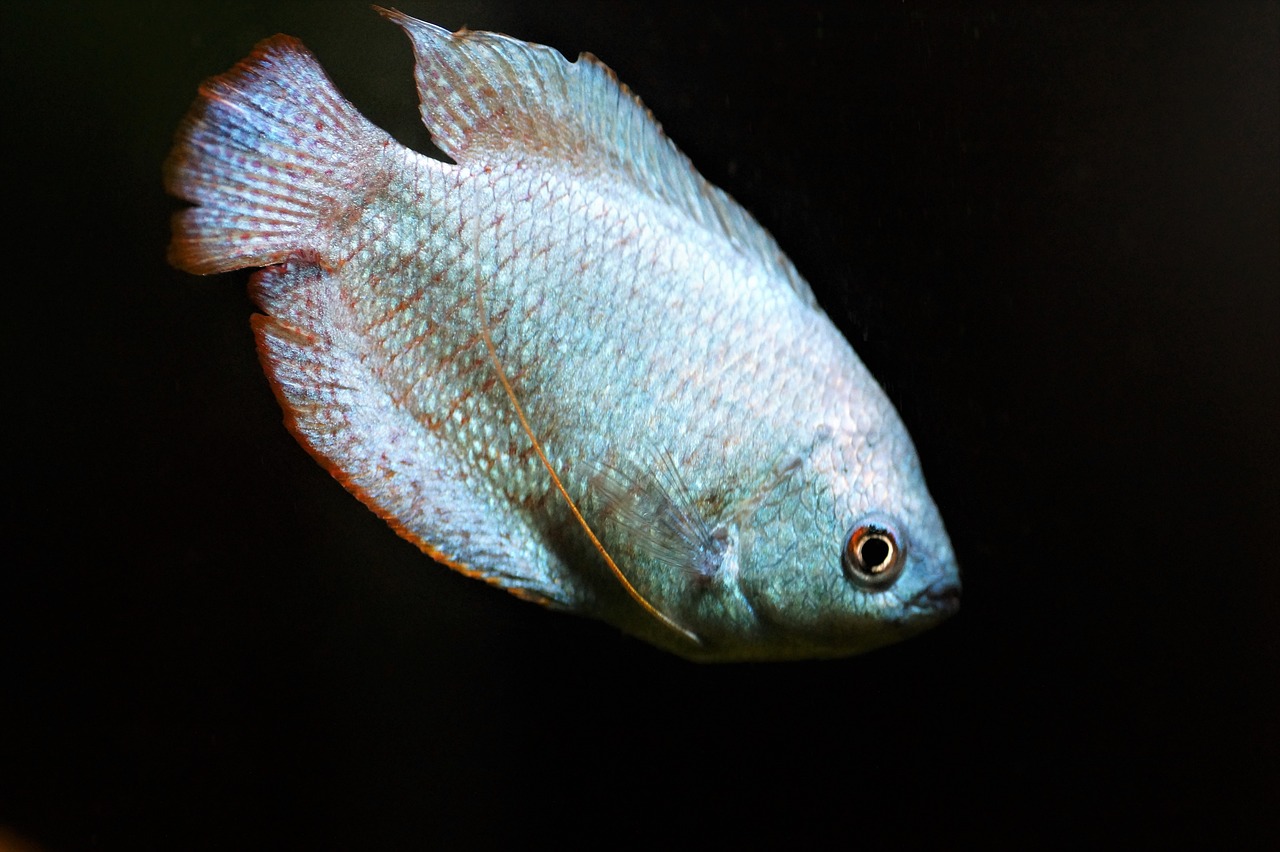
Chocolate gouramis are among the most beautiful and most misunderstood fish in the hobby. Their reputation for being difficult comes almost entirely from being kept in the wrong environment — standard community tank conditions are genuinely unsuitable for this species, and the results predictably disappoint. When you build an aquascape for chocolate gouramis in a blackwater environment, the fish transform. Colours deepen from dull brown to rich amber and mahogany, behaviour becomes confident and exploratory, and the mouthbrooding rituals become observable. Gensou Aquascaping at 5 Everton Park, Singapore, keeps and breeds chocolate gouramis and considers a well-set blackwater biotope one of the most rewarding setups in the hobby.
Why Blackwater Matters for This Species
Sphaerichthys osphromenoides originates from the peat swamp forests of the Malay Peninsula and Borneo — environments with pH as low as 3.5–4.5, near-zero hardness, and heavy tannin staining from decomposing vegetation. These conditions are bacteriostatic: the combination of acidity and tannins suppresses pathogen growth significantly. In contrast, hard, alkaline tap water at neutral pH is a stressful and unsuitable environment. Singapore’s PUB water, while soft, has a pH around 7.0–7.5 after treatment and must be acidified and supplemented with tannins before chocolate gouramis can truly thrive in it.
Water Parameters and Preparation
Target pH 4.5–6.0, GH 0–2, TDS under 80 ppm. To achieve these conditions from Singapore tap water, use a combination of peat filtration, Indian almond leaves, alder cones, and RO water to dilute GH. A 50–70% RO blend with tap water reduces hardness substantially. Peat granules in the filter lower pH slowly and predictably; catappa (Indian almond) leaves supplement tannins and are commonly available at local fish shops and Shopee for $3–$8 per pack of 20. Allow the tank to mature for two to three weeks before introducing fish, checking pH and TDS with a reliable meter.
Hardscape: Roots and Leaf Litter
The visual character of a peat swamp floor is defined by submerged root networks, accumulated leaf litter in various stages of decomposition, and minimal inorganic substrate. Spiderwood and mopani driftwood replicate the root structure. Dark fine sand (0.5–1 mm grain) or ADA aqua soil covers the substrate. Layer Indian almond leaves, banana leaves, and oak leaves directly on the sand — these break down slowly over months, releasing tannins and providing shelter. The leaf litter is not merely decorative; it’s functional habitat that chocolate gouramis actively use for resting and spawning.
Plant Selection for Low-pH, Low-Light Conditions
Most aquarium plants struggle below pH 5.5, but several species are well-adapted. Cryptocoryne species — particularly C. griffithii and C. cordata — are native to similar peat swamp habitats and tolerate high tannin, low-pH conditions naturally. Blyxa japonica and emergent Eleocharis grasses grow adequately at pH 5.5–6.0. Floating plants — Salvinia natans or Ceratopteris thalictroides — provide surface cover and diffuse light, which chocolate gouramis strongly prefer. Avoid stem plants requiring strong light and neutral-to-alkaline conditions; they will languish and rot in blackwater conditions.
Lighting: Dim, Warm, and Dappled
Peat swamp light is filtered through dense canopy to the point of being quite dim at the water surface, and almost absent at depth. In the aquarium, use floating plant coverage of 50–70% to reduce penetration, and choose warm-spectrum LEDs (3,000–4,000K colour temperature) that replicate the amber-filtered quality of forest light. Target just 15–25 PAR at the substrate. Under this level of lighting, the tank’s tannin staining creates an amber glow rather than the murky appearance of a dark tank — the effect is moody and atmospheric rather than dark and uninviting.
Tank Mates: Very Few and Carefully Chosen
Chocolate gouramis are shy and compete poorly for food with faster, more assertive species. Suitable tank mates must tolerate identical water chemistry: very soft, very acidic, tannin-stained water. Parosphromenus species (licorice gouramis) share the peat swamp origin and water requirements. Small, slow Boraras rasboras — B. maculatus, B. brigittae — occupy the water column without competing with the bottom-oriented gouramis. Avoid fast fish, large fish, or any species requiring neutral-to-hard water. The tank mates must match the water, not the other way around.
Feeding in a Blackwater Aquascape
Chocolate gouramis are slow, methodical feeders. They will lose out to faster species even in tanks where food appears abundant. In a species-appropriate setup, feed micro pellets, frozen cyclops, and live or frozen baby brine shrimp in small quantities twice daily. The amber water colour makes food visibility lower than in clear tanks, so watch carefully to confirm each fish is eating. New arrivals often refuse dry food for several days — live brine shrimp nauplii are the most reliable first food for fish transitioning into an established blackwater aquascape.
Related Reading
- How to Aquascape for Licorice Gouramis: Ultra Soft Blackwater Nano
- How to Aquascape for a Honey Gourami Pair
- How to Aquascape for a Pearl Gourami Tank: Surface and Shelter
- How to Aquascape for Sparkling Gouramis: Shallow and Dense
- Rio Negro Blackwater Biotope Aquascape: Dark Water Jewel Box
Chocolate gouramis thrive in the same tannin-stained conditions covered more broadly in our guide on how to aquascape a blackwater tank, handy if you want to scale the concept up.



