Best Fish for a Low Flow Aquarium: Calm Water Species
Not every fish wants to live in a rushing stream. Many of the hobby’s most rewarding species come from still ponds, flooded meadows, and slow forest blackwater — environments where flow is gentle enough that a leaf barely moves. If you are running a tank without a powerful filter return, or deliberately keeping flow low for delicate fins or fry, choosing the best fish for a low flow aquarium is essential. This guide from Gensou Aquascaping at 5 Everton Park, Singapore covers species that genuinely thrive in calm water conditions.
Why Flow Matters for Fish Welfare
Fish from high-flow environments — rainbow fish, most danios, hillstream loaches — need the exercise and oxygenation that current provides. Force a betta or a paradise fish into strong flow and you will see constant stress: battling current, shredded fins, and reduced feeding. Conversely, low-flow species in a powerfully filtered tank exhaust themselves and become prone to disease. Matching flow rate to the natural habitat of your fish is a basic welfare consideration that is often overlooked.
Low-flow tanks typically run turnover rates of 2–4× tank volume per hour, compared to 6–10× in planted high-tech setups. A sponge filter or a small hang-on-back running at reduced flow is often sufficient, providing biological filtration without creating directional current.
Betta splendens and Wild Betta Species
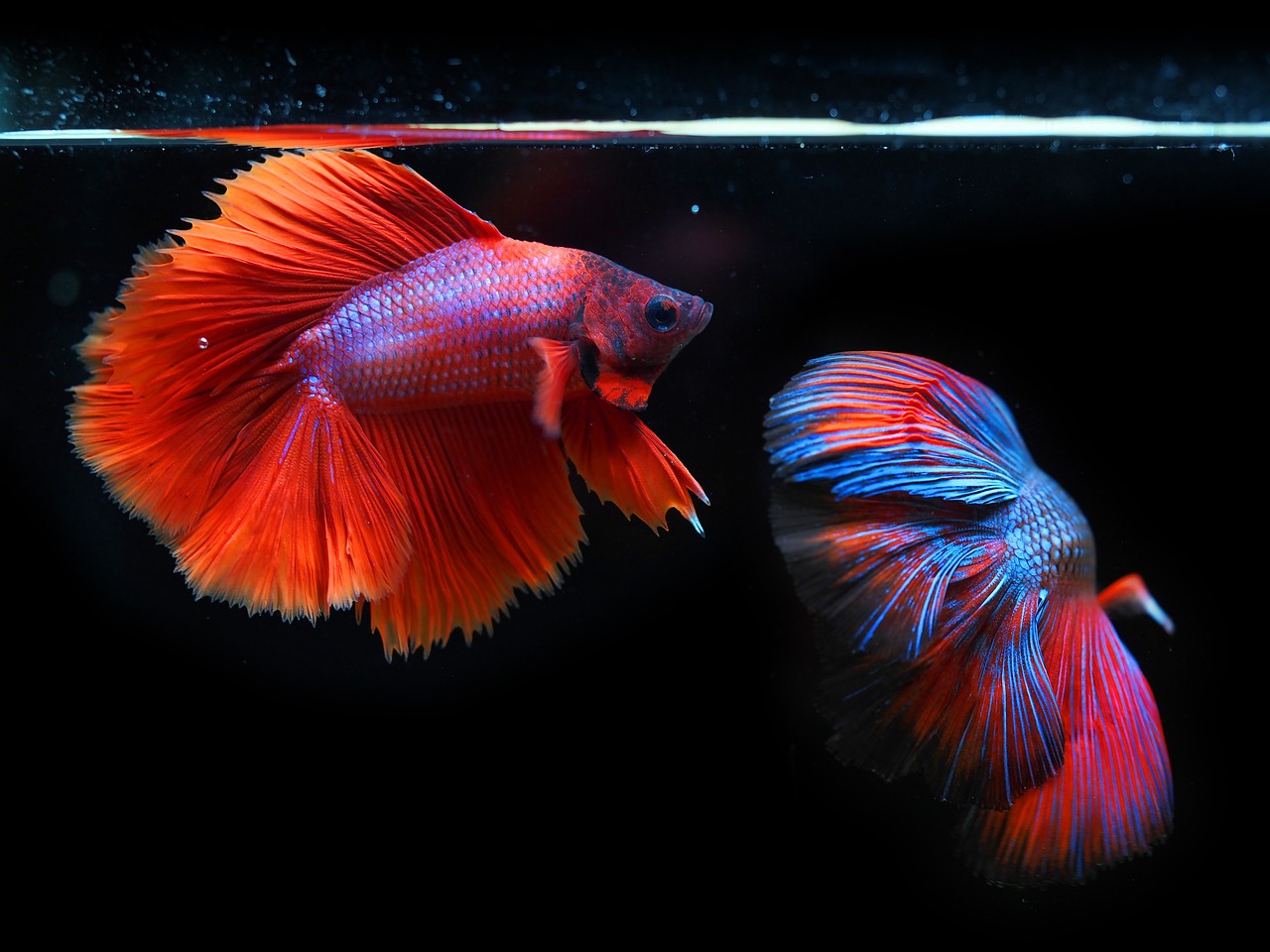
Betta splendens is the obvious example. Wild-type bettas come from rice paddies and roadside ditches in Thailand where water barely moves. Long-finned show bettas are even more vulnerable to flow — those ornate caudal and anal fins function like sails in a headwind, and even moderate current causes torn fins and fin rot over time. Keep bettas in tanks where you can hardly see the water surface moving.
Wild betta species deserve a mention too: Betta imbellis, Betta albimarginata, and the mouthbrooding Betta channoides all come from slow, shallow forest streams and do best in very gentle flow. These species are increasingly available from specialist breeders and are a step up in interest from the common plakat.
Gouramis: Dwarf to Giant
The gourami family (Osphronemidae) evolved the labyrinth organ — a supplementary breathing structure — specifically because many of their native habitats have low dissolved oxygen due to stagnant, warm conditions. Dwarf gouramis (Trichogaster lalius), honey gouramis (Trichogaster chuna), pearl gouramis (Trichopodus leerii), and even the giant gourami (Osphronemus goramy) all prefer minimal flow. In Singapore’s warm climate these fish rarely need heaters and can do well in tanks running at ambient room temperature of 27–30°C.
Killifish and Rice Fish
Nothobranchius killifish come from seasonal African pools that form in the rainy season and dry up completely — there is simply no current in a puddle. Many American killifish genera like Fundulopanchax and Aphyosemion come from slow forest seeps. Japanese rice fish (Oryzias latipes and related species) have become popular in Singapore because they are hardy, beautiful, and perfectly suited to still or slow-moving water.
Killifish are often overlooked by beginners but reward those who explore the group: colour rivalling any marine fish, compact size (most 3–6 cm), and fascinating spawning behaviour. Prices on Carousell for locally bred killifish typically range from $5–20 per pair.
Small Tetras and Rasboras From Blackwater
Several popular nano fish come from slow, heavily tannin-stained blackwater habitats. Cardinal tetras (Paracheirodon axelrodi), ember tetras (Hyphessobrycon amandae), and chilli rasboras (Boraras brigittae) all thrive in minimal flow. These species also appreciate soft, slightly acidic water — Singapore’s PUB tap water (GH 2–4) is a reasonable starting point, requiring only dechlorination and light tannin supplementation from catappa leaves or driftwood.
Sparkling Gouramis and Chocolate Gouramis
Two species worth singling out for low-flow blackwater tanks: the sparkling gourami (Trichopsis pumila) at around 3.5 cm is one of the few fish that produces an audible sound — a croaking call used in courtship that you can hear at night. The chocolate gourami (Sphaerichthys osphromenoides) is challenging to keep but spectacular, requiring very soft, warm, tannin-rich water with near-zero flow. Both species are sensitive to current and will simply refuse to breed or feed in a tank with strong filtration.
Setting Up a Low-Flow Tank
A mature sponge filter driven by a small air pump is ideal for most low-flow setups — it provides biological filtration and gentle surface disruption without directional current. If using a hang-on-back or canister, position the outlet to direct flow against the glass rather than across the tank, and consider a spray bar set just below the surface to diffuse the return. For the best fish for a low flow aquarium experience, pair these calm-water species with matching décor: dried catappa leaves, fine sand, dense surface plants like frogbit or water lettuce, and low branching wood. The result is one of the most aesthetically distinctive and genuinely relaxing aquarium styles you can keep.
Related Reading

emilynakatani
Still Have Questions About Your Tank?
Drop by Gensou Aquascaping — most walk-in questions get answered in under 10 minutes by someone who has set up hundreds of tanks.
5 Everton Park #01-34B, Singapore 080005 · Open daily 11am – 8pm