Aquascaping With Eleocharis Varieties: Hairgrass Collection Tank

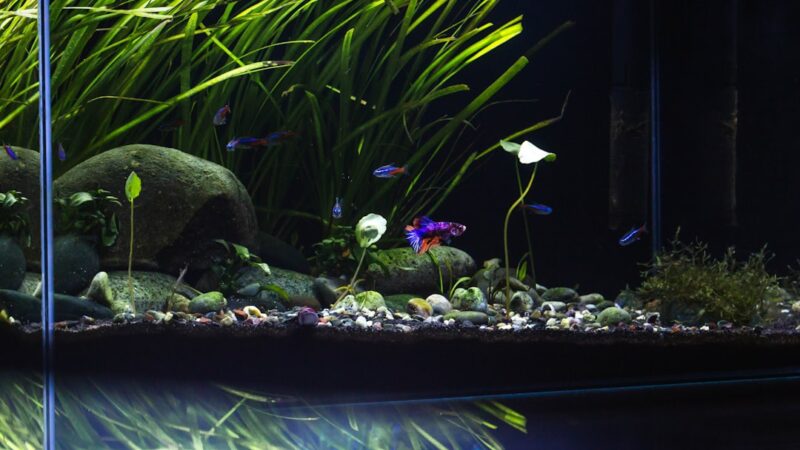
Hairgrass is one of aquascaping’s most versatile plant genera — delicate enough to feel natural, structured enough to define space, and available in a range of sizes that allows a single genus to fill foreground, midground, and background roles within one tank. Aquascaping with Eleocharis varieties creates a cohesive, grass-meadow aesthetic while giving you genuine design flexibility through scale. Gensou Aquascaping at Everton Park, Singapore works with hairgrass regularly in nature-style and Dutch-influenced planted tank commissions, and the species selection decisions are often what define the final character of the aquascape.
Understanding the Eleocharis Species
Eleocharis acicularis is the classic hairgrass — fine, needle-like leaves reaching 10–20 cm under standard conditions, shorter under high light and CO2. Eleocharis parvula is the miniature version, typically staying under 5–8 cm and forming a tighter, denser carpet. Eleocharis sp. ‘Mini’ (often labelled Eleocharis acicularis ‘Mini’ in the trade) grows even smaller — barely 3–5 cm — and is the preferred species for foreground carpet work in aquascapes viewed from the front.
All three prefer similar water conditions: moderate to high light, CO2 supplementation for compact growth, and a nutrient-rich substrate. The difference is scale, and using them together in a single layout creates a natural sense of perspective — taller E. acicularis at the back, medium E. parvula in the midground, mini hairgrass carpeting the foreground.
Carpet Technique With Mini Hairgrass
Achieving a dense foreground carpet with Eleocharis sp. Mini requires splitting purchased tissue culture pots into very small plugs — four to six strands per plug — and planting them in a grid pattern across the substrate at 2–3 cm intervals. This seems tediously dense at planting, but the gaps fill in within four to six weeks as runners spread laterally. Planting larger clumps wider apart produces an uneven carpet with visible bare patches that can take months to close.
A fine-grain substrate like ADA Aqua Soil Amazonia or similar active substrate supports hairgrass carpeting well, providing both nutrient supply and the fine particle size that allows runners to anchor easily. In Singapore’s warm water at 28°C, growth rates are significantly faster than in temperate planted tank literature — adjust expectations for faster spread and more frequent trimming.
Midground Design With Eleocharis Parvula
E. parvula in the midground creates a transitional band between the low carpet and taller background plants. Plant it in natural-looking drifts — irregular oval or teardrop shapes rather than rectangular blocks — to suggest grass growing around rocks or the edges of open sandy areas. Allowed to grow slightly taller by reducing light intensity at the midground level, it provides genuine height variation that catches the eye without overwhelming the foreground carpet.
Background Use of Eleocharis Acicularis
Tall E. acicularis at the back of the aquascape creates a swaying grass curtain reminiscent of flooded meadows — a style associated with the biotope-influenced nature aquariums popular in competition aquascaping. Unlike Vallisneria, hairgrass stays much finer and lighter in texture, giving a softer, more ethereal quality to the background. Allow it to reach its full natural height of 15–20 cm rather than trimming it short, and position the filter return so flow moves through the grass from behind — the movement this creates is exceptional.
CO2, Light, and Fertilisation
Without CO2, Eleocharis varieties grow slowly and produce sparse, upright stems rather than the dense, low carpet that defines their appeal. Injection at 20–30 ppm during the photoperiod, combined with good light (minimum 50 µmol/m²/s PAR at the substrate), unlocks rapid, compact growth. Dose macro and micro fertilisers according to a lean EI or PPS-Pro approach — hairgrass in particular appreciates consistent potassium and iron levels for healthy green colour without yellowing tips.
In Singapore, high ambient temperatures mean CO2 dissolves less readily than in cooler climates, so slightly higher injection rates may be needed to reach target concentrations. Check with a drop checker and adjust accordingly.
Trimming and Long-Term Maintenance
Hairgrass carpet benefits from a hard trim every four to six weeks — use sharp scissors to cut the entire foreground at 2–3 cm height. This removes old growth, encourages new lateral runners, and keeps the carpet dense and even. After trimming, increase water changes temporarily to remove the debris, as decaying trimmings can cloud the water and spike ammonia slightly in heavily planted tanks.
A well-maintained Eleocharis collection tank is one of the most rewarding single-genus aquascapes to keep — evolving and filling in over months into something that resembles a natural freshwater meadow in miniature.
Related Reading
- Aquascaping With Cryptocoryne Wendtii Varieties: Green, Brown and Red
- Aquascaping With Eleocharis Mini Only: Ultra-Short Hairgrass Carpet
- Aquascaping With Java Fern Varieties Only: Windelov, Trident and Narrow
- Aquascaping With Microsorum Varieties: Java Fern Collection Tank
- Aquascaping With Moss Varieties Only: Flame, Weeping and Christmas