How to Aquascape for Forktail Rainbowfish: Pseudomugil Nano Display

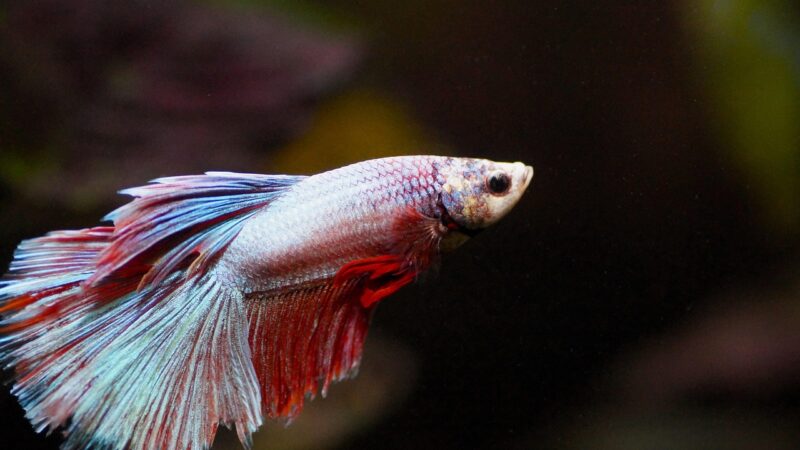
Pseudomugil furcatus, the forktail blue-eye rainbowfish, is among the most beautiful nano fish available to aquarists — the males in full display, with their yellow-tipped fins fanned wide, are a sight that stops people mid-conversation. To show them at their best, the aquascape matters enormously: their natural habitat is shallow, densely vegetated streams in Papua New Guinea, and recreating that structure coaxes out the full behavioural repertoire that makes them so captivating. Aquascaping for forktail rainbowfish in a nano display is a project that rewards careful plant selection and flow management. At Gensou Aquascaping in Everton Park, Singapore, Pseudomugil nano tanks are among the most requested commissions we produce for clients who want a living jewel box on a bookshelf or desk.
Tank Size and Proportions
Forktail rainbowfish are small — 3.5–4 cm at maturity — but they are active, open-water swimmers that need horizontal swimming space more than tank height. A 40–60 cm long tank of 30–45 litres suits a group of eight to twelve fish comfortably, providing enough room for males to display and chase without constant conflict. Taller tanks (more than 30 cm depth) can work but the fish tend to remain in the upper half anyway, so depth beyond 25–30 cm is wasted footprint in a nano display context.
Plant Selection for the Natural Papua New Guinea Look
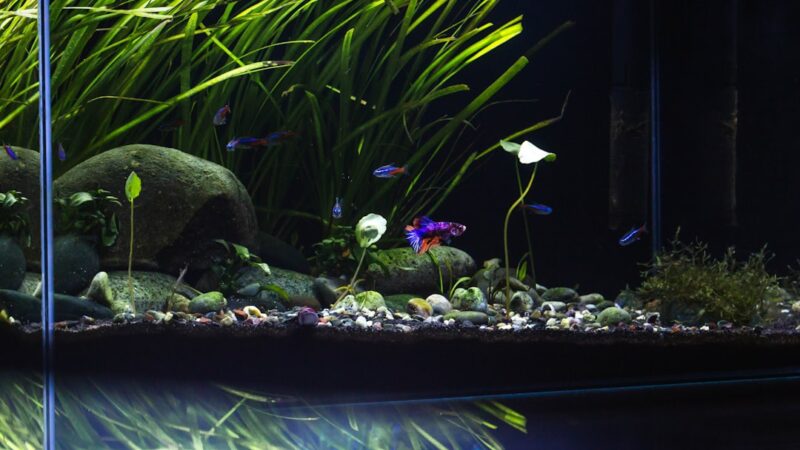
The natural streams of P. furcatus are lush with emergent and submerged vegetation. Recreate this with fine-leaved plants that provide cover without blocking sight lines through the tank. Java moss (Taxiphyllum barbieri) tied to driftwood creates naturalistic hanging clusters that males display in front of. Hydrocotyle tripartita as a midground clump adds rounded leaf texture that contrasts with the thin leaves of moss. Floating plants — Salvinia minima or Ceratopteris — reduce surface brightness and create the dappled light effect characteristic of stream habitats where overhanging vegetation filters direct sunlight.
Avoid extremely fine carpet plants like Monte Carlo or Hemianthus callitrichoides at the foreground — these require high light that can be too intense for Pseudomugil, which prefers moderate, diffused illumination. A fine silica sand foreground left mostly open looks natural and gives the fish space to display and spawn near the substrate surface.
Hardscape: Driftwood and Minimal Stone
Keep hardscape naturalistic and relatively sparse. One or two pieces of thin, branching driftwood — spider wood or thin cholla — positioned toward the back corners allow moss to grow while keeping the midwater open. Heavy rock formations suit cichlid tanks more than the soft, green aesthetic that suits Pseudomugil. If you use stone, choose smooth river pebbles that suggest a stream bottom rather than dramatic Seiryu or dragon stone formations.
Water Conditions and Flow
P. furcatus comes from clear, moderately hard streams — they tolerate a range of water conditions but display best at pH 7.0–7.8 and moderate hardness (GH 6–12). Singapore’s tap water after dechlorination sits well within this range, making water preparation straightforward. Avoid very soft, tannin-heavy blackwater setups — while technically possible, the fish colour and fin display are most vivid in clear, slightly hard water.
Flow should be gentle. These are not hill stream fish — they inhabit slow-moving, vegetation-filled reaches. A small canister or hang-on-back filter with flow directed along the back glass creates light circulation without the strong current that stresses them.
Male-to-Female Ratio and Group Dynamics
Forktail rainbowfish thrive in groups with a slight female majority or near-equal sex ratio — two males to three females is a practical starting point. With more males than females, the dominant male harasses subordinates relentlessly. With too few males, competitive display behaviour diminishes and the tank loses its most compelling visual quality. The ideal group of ten includes four males and six females, allowing multiple simultaneous display events without escalating aggression.
Lighting for Colour and Display Behaviour
Moderate lighting (30–50 µmol/m²/s PAR) for eight to ten hours per day suits this tank. The warm white (4000–5000K) spectrum intensifies the yellow and orange tones in the males’ fins. Avoid very bright, cool-white LED strips that bleach the colour and reduce display frequency. If the tank receives indirect natural light from a nearby window — common in Singapore HDB flats — supplement rather than replace it, keeping total intensity moderate. Males display most actively in the hour after lights-on, making the morning viewing session particularly rewarding.
Related Reading
- How to Aquascape for Celestial Pearl Danios: Galaxy Rasbora Nano
- How to Aquascape for Clown Killifish: Surface Nano Design
- How to Aquascape for Exclamation Point Rasboras: Dense Nano Jungle
- How to Aquascape for Licorice Gouramis: Ultra Soft Blackwater Nano
- How to Aquascape a Nano Paludarium: Land and Water in 20 Litres
If a forktail rainbowfish nano tank has won you over, a slightly larger relative makes a colourful next step — read our praecox rainbowfish care guide.