
Iwagumi Style Aquascape Step by Step: Stone, Sand and Simplicity
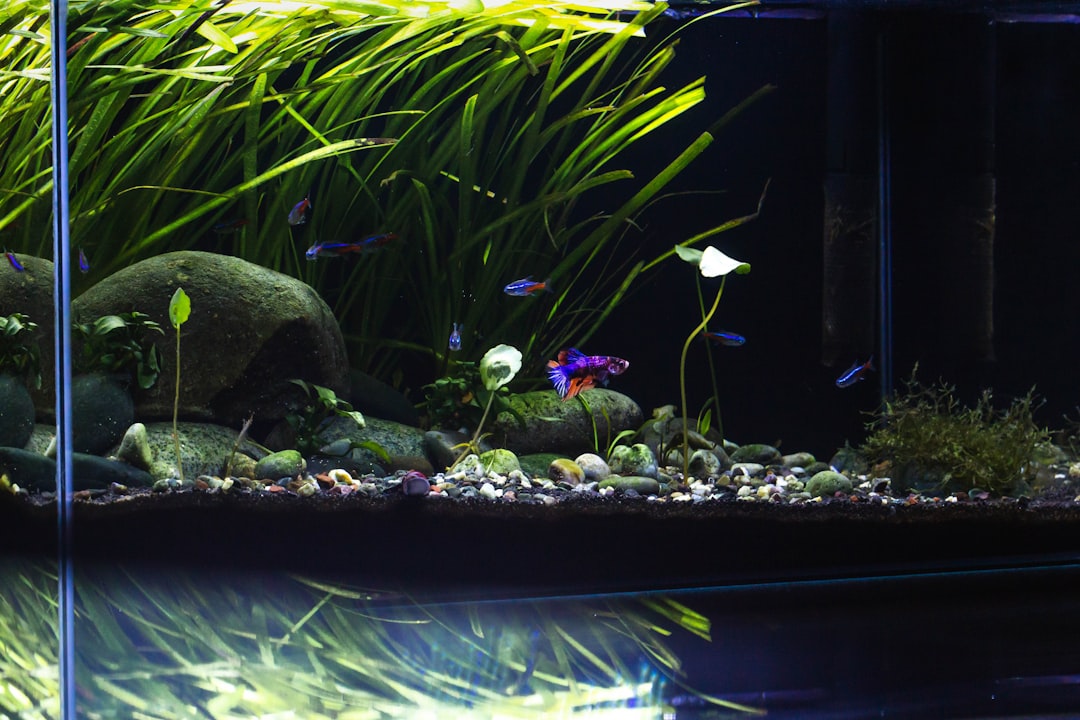
Iwagumi is aquascaping stripped to its essence: a handful of carefully placed stones, a single carpet plant species, and vast open space that demands precision over abundance. Mastering the iwagumi style aquascape step by step teaches composition principles that elevate every other layout you attempt. This guide from Gensou Aquascaping at 5 Everton Park, Singapore walks through the process from empty tank to finished scape, drawing on over 20 years of design experience.
Understanding Iwagumi Principles
Developed by the late Takashi Amano, iwagumi follows a structured stone arrangement rooted in Japanese aesthetics. The layout uses an odd number of stones — typically three, five, or seven — with one dominant main stone (oyaishi), secondary stones (fukuishi and soeishi), and smaller accent stones (suteishi). Every stone must lean slightly in the same direction, suggesting the force of flowing water or wind.
Negative space is as important as the stones themselves. Resist the urge to fill gaps. The emptiness creates visual tension and draws the viewer’s eye along the composition.
Choosing Your Stones
Seiryu stone is the classic iwagumi choice — angular, grey-blue with white calcite veining. It is widely available at Singapore aquarium shops for $3–$8 per kilogram. Note that seiryu raises GH and KH over time due to its calcium carbonate content, so regular water changes or the use of active soil helps counteract this.
Alternatives include Ryuoh stone (similar appearance, less hardness impact) and Manten stone (darker, more subtle veining). Select all stones from the same type and ideally the same batch for consistent colour and texture. A 60 cm iwagumi typically needs 8–15 kg of stone.
Substrate and Hardscape Placement
Start with a nutrient-rich base layer — ADA Power Sand or a thin bed of organic soil — covered by 3–5 cm of active substrate like ADA Amazonia. Build the substrate higher toward the rear, creating a slope that adds depth perception. A ratio of roughly 3 cm at the front to 7 cm at the back works well for standard 60 cm tanks.
Place the oyaishi first, positioned slightly off-centre following the rule of thirds. Bury its base deep enough that it looks rooted rather than balanced on top. Arrange secondary stones next, maintaining a visual relationship with the main stone — they should complement, not compete. Step back frequently and view from the front to assess balance.
Plant Selection and Planting
Classic iwagumi uses a single foreground carpeting species. Hemianthus callitrichoides (HC Cuba) creates a lush, fine-textured carpet but demands high light and CO2. Eleocharis acicularis (dwarf hairgrass) is more forgiving and suits beginners. Glossostigma elatinoides offers a middle ground — moderate difficulty with satisfying horizontal spread.
Plant in small portions using tweezers, spacing plugs about 2 cm apart across the entire substrate surface. Under adequate lighting (50–80 PAR at substrate level) and pressurised CO2 at 1–2 bubbles per second, a full carpet emerges within six to eight weeks. Trim regularly once established to encourage dense horizontal growth.
Lighting and CO2 for Iwagumi
High light is non-negotiable for carpet plants. LED units like the Chihiros WRGB II or Twinstar S Series provide the intensity and spectrum needed. Run the photoperiod at six hours initially, extending to eight hours as the carpet fills in, to keep algae at bay during the vulnerable early weeks.
Pressurised CO2 injection is equally essential. Monitor levels with a drop checker — aim for a lime-green colour indicating approximately 30 ppm. In Singapore’s warm climate, CO2 off-gasses faster from warmer water, so you may need to dial up the bubble rate slightly compared to temperate setups.
Maintenance and Algae Prevention
Iwagumi tanks are notoriously prone to algae because of high light, high CO2, and low plant biomass during the initial growth phase. Daily dosing of liquid carbon (Seachem Excel or equivalent) for the first month suppresses algae while the carpet fills in. Amano shrimp — five to ten in a 60 cm tank — graze thread algae relentlessly and are practically mandatory in this style.
Weekly 50 % water changes during the first two months remove excess nutrients and algae spores. Once the carpet is established and nutrient uptake increases, reduce changes to 30 % weekly. Keep nitrate below 10 ppm and phosphate around 1 ppm for clean, algae-free results.
Common Iwagumi Mistakes
Using stones that are too similar in size creates a flat, uninteresting layout. The oyaishi should be visibly dominant — roughly twice the visual mass of the next largest stone. Placing stones symmetrically or in a straight line kills the natural tension that makes iwagumi compelling. And skipping the cycling period leads to an ammonia spike that melts delicate carpet plants before they root.
An iwagumi style aquascape rewards patience and restraint. At Gensou Aquascaping, it remains one of our most requested styles — proof that simplicity, done well, speaks louder than complexity.
Related Reading



