
Aquascaping With Hardscape Only: Rocks and Wood Without Plants
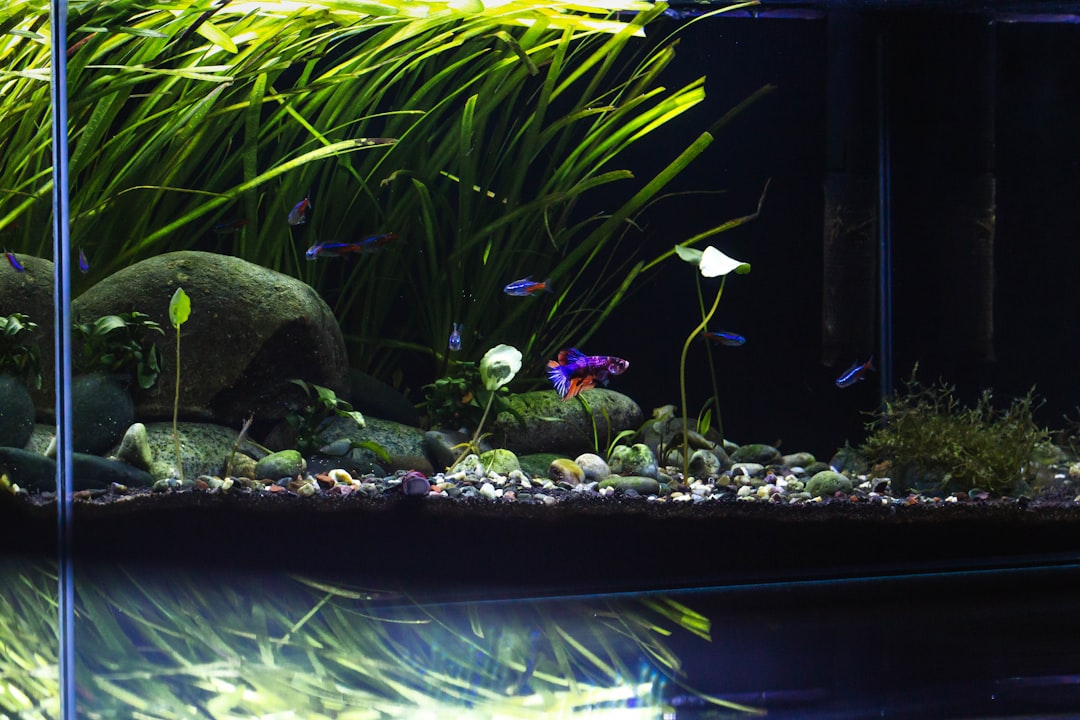
Not every stunning aquascape needs a single live plant. An aquascape built with hardscape only — rocks, driftwood, and sand — can be just as captivating as a lush planted tank, with far less ongoing maintenance. This approach suits fish that destroy plants, minimalist aesthetics, and hobbyists who prefer sculptural design over gardening. At Gensou Aquascaping, 5 Everton Park, Singapore, we have designed plant-free displays for homes and businesses across the island for over 20 years.
Why Go Plantless?
Some of the most iconic aquascaping styles celebrate stone and wood above all else. Iwagumi purists focus on rock placement as an art form; biotope recreations of rocky lake shores and river rapids rarely feature plants prominently. Certain fish — mbuna cichlids, goldfish, large plecos — tear through vegetation relentlessly, making planted tanks an exercise in frustration.
Maintenance drops significantly without plants. No fertiliser dosing, no CO2 system, no trimming schedule, and no algae-on-leaves battles. For commercial clients in Singapore — restaurants, offices, dental clinics — a hardscape-only tank delivers visual impact with a fraction of the upkeep cost.
Rock Selection and Composition
Choose one primary rock type for visual coherence. Seiryu stone offers dramatic grey tones with white calcite veining. Dragon stone (Ohko stone) provides warm, pitted textures resembling weathered cliff faces. Lava rock adds a rugged, volcanic character. Mixing rock types within a single scape almost always looks disjointed — commit to one material and vary only the individual piece sizes.
Odd numbers create more natural-looking arrangements. Three or five main stones, each at a different height and angle, mimic geological formations far more convincingly than symmetrical pairs. Place the largest stone off-centre, roughly at the one-third line — this golden ratio principle anchors the composition.
Driftwood as a Focal Element
Spider wood, Manzanita, and Malaysian driftwood each bring a distinct character. Spider wood’s fine branching creates ethereal, tree-like silhouettes when positioned upright. Manzanita’s smooth curves suit minimalist layouts. Malaysian driftwood sinks readily and offers dense, gnarled forms that pair well with rock.
New driftwood leaches tannins that tint water yellow-brown. Some hobbyists welcome the blackwater look; others find it muddy. Pre-soaking in a bucket for one to two weeks, or running activated carbon in the filter, reduces tannin staining effectively.
Substrate Design Without Plants
With no root systems to consider, substrate choice is purely aesthetic and functional. Fine white silica sand creates high contrast against dark stone — a classic hardscape-only look. Cosmetic sand in natural cream or brown tones suits warmer driftwood compositions. Black sand or ADA La Plata sand adds drama beneath pale stone.
Create substrate contours by building higher mounds toward the back and sides, sloping down to the front glass. This forced perspective technique adds visual depth even in shallow tanks. Use rock fragments or mesh barriers hidden behind larger stones to hold slopes in place — without plant roots, gravity and fish activity flatten substrate over time.
Lighting a Plantless Tank
Without plant growth requirements dictating intensity and spectrum, lighting becomes a purely aesthetic tool. Cooler white LEDs (8,000–10,000 K) emphasise the grey tones in Seiryu stone and create crisp shadow definition. Warmer tones (4,000–6,000 K) complement driftwood and earth-coloured rock. Dimmer control lets you shift the mood throughout the day.
Lower light levels also discourage algae growth on rock surfaces, a common nuisance in brightly lit plantless tanks. Running lights for just six to eight hours daily, combined with moderate stocking, keeps algae minimal without chemical intervention.
Fish and Invertebrate Choices
Hardscape tanks showcase fish beautifully against a clean backdrop. Schooling species like rummy-nose tetras, harlequin rasboras, and ember tetras create living movement against the static stone. Bottom dwellers like Corydoras species animate the sand bed. For a Singapore-themed biotope, native halfbeaks or wild-type bettas over a leaf-litter and driftwood floor make a compelling display.
Nerite snails are valuable additions — they graze algae from rock surfaces without reproducing in freshwater, keeping the scape clean without risking a population explosion.
Maintenance Routine
Weekly 20–30 % water changes, glass cleaning, and occasional sand raking are the extent of routine maintenance. Without plants consuming nitrates, you may need slightly larger or more frequent water changes to keep nitrate below 40 ppm. A gravel vacuum run lightly over sand surfaces lifts accumulated mulm without disturbing the contour.
At Gensou Aquascaping, some of our longest-running client installations are plantless tanks that still look as striking as the day they were installed. Simplicity, when executed with intention, creates enduring beauty. The absence of plants is not a limitation — it is a design choice that demands skill in composition and restraint.
Related Reading



