
Rosy Barb Breeding Guide: Pethia Conchonius Spawning in Planted Tanks
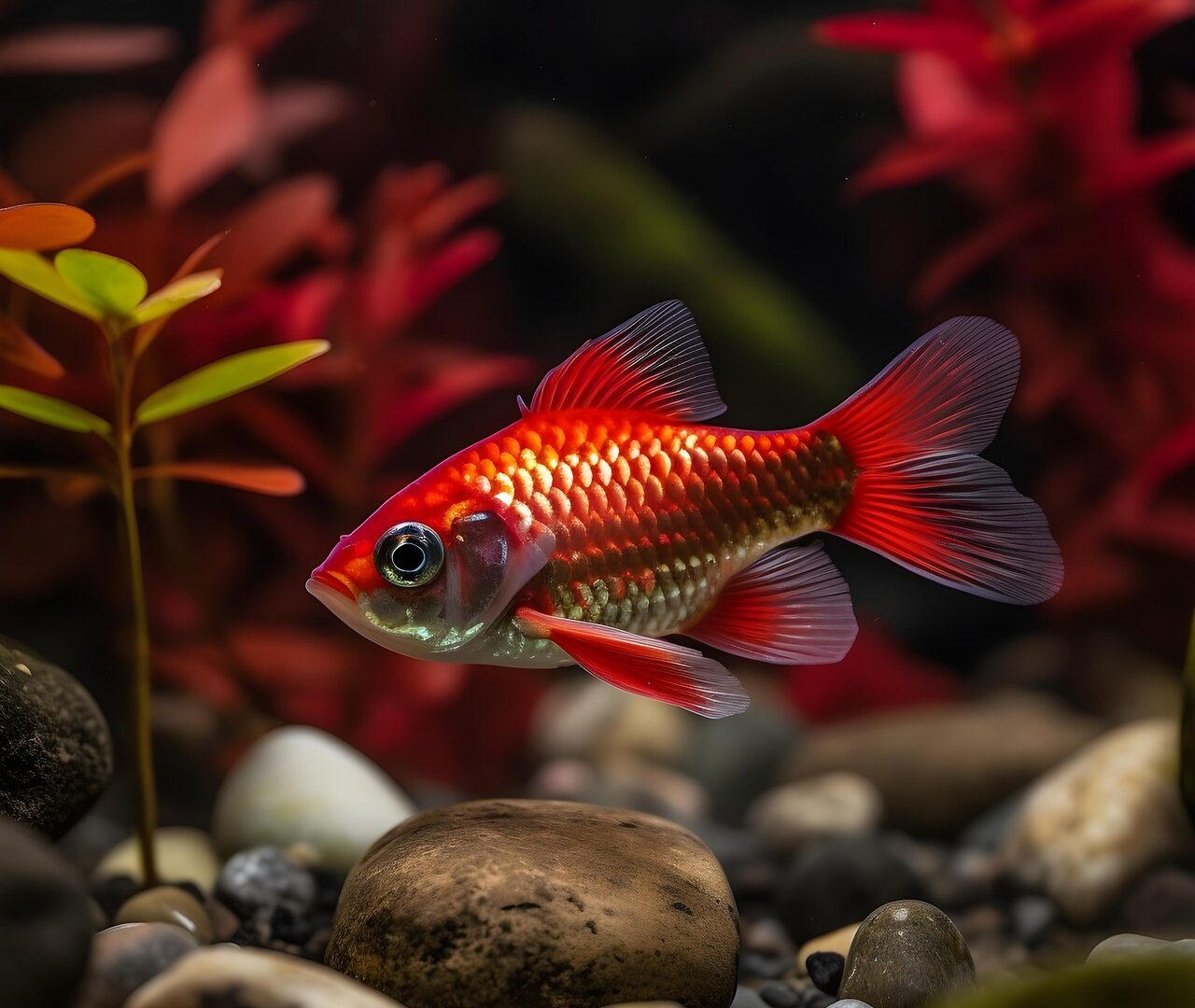
Hardy, colourful, and prolific, Pethia conchonius is one of the easiest egg-scattering species to breed at home. This rosy barb breeding guide from Gensou Aquascaping, 5 Everton Park, Singapore, walks you through every stage from selecting breeders to raising healthy fry. With over 20 years of fishkeeping experience, we consider rosy barbs an excellent first breeding project for hobbyists ready to move beyond livebearers.
Getting to Know Rosy Barbs
Native to subtropical streams in northern India and Nepal, rosy barbs are robust fish that tolerate a wide range of conditions. Males develop intense rosy-red flanks during breeding condition, while females remain more golden with olive tones. Adults reach 8-10 cm and live 4-6 years. They are active, fast-swimming fish that do best in groups of six or more.
Several colour variants exist, including long-finned and neon-red selectively bred forms. All breed using the same methods described here.
Selecting Breeding Stock
Choose mature adults aged 8-12 months. Males in breeding condition show deep red colouration and actively chase females. Gravid females appear noticeably plump when viewed from above, with a rounded belly full of eggs. Select the most vibrant male and the two plumpest females for your breeding trio.
Avoid fish from the same batch if possible to maintain genetic diversity. Mix stock from different local shops, which typically sell rosy barbs for $2-4 each along Serangoon North Avenue 1.
Conditioning Period
Separate males and females for 10-14 days before the breeding attempt. Feed generously with high-protein foods: frozen bloodworms, daphnia, and brine shrimp alongside quality flake or pellet food. Three small meals daily work better than one large feeding. During conditioning, you should see the female’s belly swell visibly as eggs develop.
Maintain pristine water quality during this period. Daily 15% water changes keep ammonia and nitrite at zero while gently stimulating metabolic activity.
The Breeding Tank
Set up a 40-60 litre tank with a bare bottom or a layer of marbles. The marbles serve a critical function: eggs fall between them and become inaccessible to the hungry parents. Without this barrier, rosy barbs devour their own eggs within minutes of spawning.
Alternatively, cover the bottom with dense clumps of Java moss or spawning mops. Fine-leaved plants trap eggs effectively and provide some natural cover. A sponge filter, heater set to 24-26°C, and a secure lid complete the setup. Rosy barbs are strong jumpers, especially during spawning excitement.
Triggering Spawning
Introduce the conditioned female in the evening, followed by the male the next morning. A 20% water change with slightly cooler water (2-3°C below tank temperature) often triggers spawning within 24-48 hours. In Singapore’s warm climate, simply using air-conditioned room temperature water for the change provides sufficient contrast.
Spawning is vigorous and unmistakable. The male drives the female into plant thickets or over the marble substrate, pressing against her flank. She releases batches of adhesive eggs while the male fertilises them simultaneously. A single spawning produces 200-400 eggs over 2-3 hours.
Egg Care
Remove the adults immediately after spawning concludes. Add a few drops of methylene blue to prevent fungal growth on the eggs. Infertile eggs turn opaque white within 12 hours; remove them promptly with a pipette.
Fertile eggs hatch in 36-48 hours at 25°C. The fry are tiny and cling to surfaces for 2-3 days while absorbing their yolk sacs. Resist the urge to feed during this stage.
Raising Fry
Once free-swimming, fry need microscopic first foods. Infusoria cultured from blanched lettuce in a jar of tank water provides an easy initial food source. After five days, graduate to freshly hatched brine shrimp nauplii, which accelerate growth dramatically.
By two weeks, fry accept crushed flake food alongside brine shrimp. Growth is rapid compared to many tropical species. Expect juveniles to reach 2 cm by six weeks and begin showing faint colour by eight weeks. Males develop their characteristic rosy flush around three months of age.
What to Do With the Fry
A successful spawn produces hundreds of fish, far more than any single hobbyist needs. Plan ahead. Local fish shops sometimes accept healthy juveniles in exchange for store credit, and platforms like Carousell connect you with fellow hobbyists looking for home-bred stock. Home-bred rosy barbs are hardier and more vividly coloured than mass-produced imports, making them popular with knowledgeable buyers.
Related Reading
- Amano Shrimp Breeding Challenges: Larval Stages and Saltwater Phase
- Amano Shrimp Breeding: Why It Is So Difficult and How to Try
- Bristlenose Pleco Breeding Guide: Caves, Fry and Colony Management
- Celestial Pearl Danio Breeding Guide: Spawning Galaxy Rasboras at Home
- How to Breed Cherry Barbs: From Courtship to Free-Swimming Fry
If you enjoy keeping rosy barbs, the tiny rosy loach is a charming peaceful tankmate worth exploring — our rosy loach Petruichthys care guide walks through housing and diet for this micro species.



