
Amano Shrimp Breeding: Why It Is So Difficult and How to Try
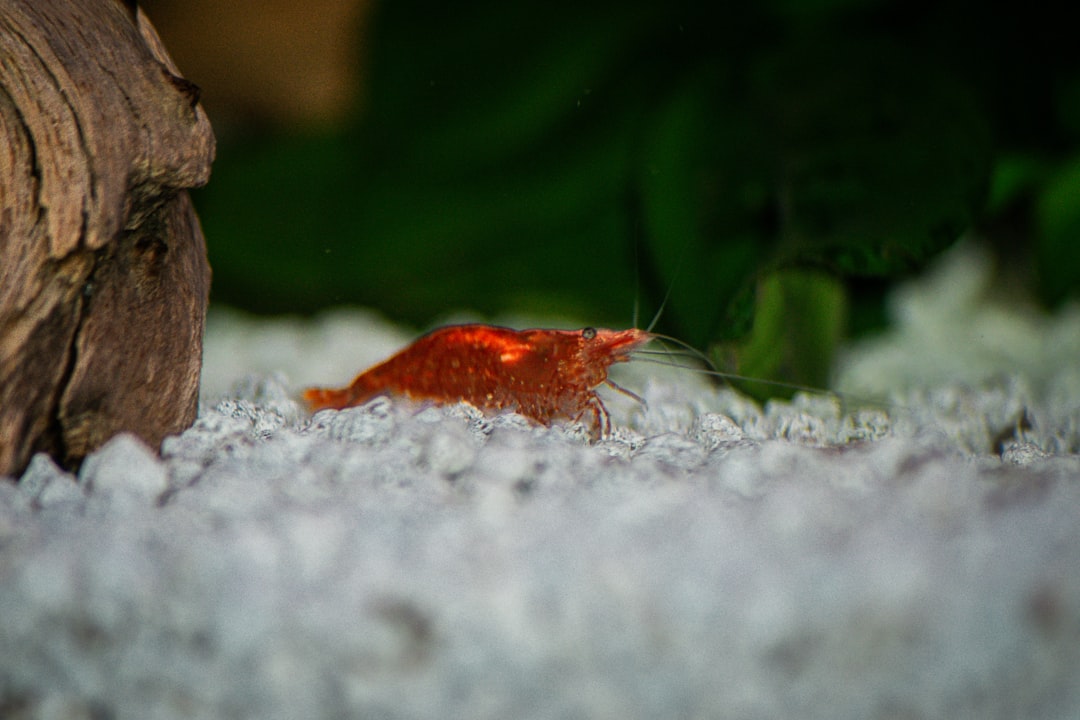
Every planted tank enthusiast knows the Amano shrimp as the ultimate algae crew, yet almost nobody breeds them successfully at home. The reason is deceptively simple: Caridina multidentata larvae require brackish to full marine water to survive — a lifecycle strategy that makes amano shrimp breeding difficult compared to neocaridina species. This guide from Gensou Aquascaping at 5 Everton Park, Singapore, explains the biology behind the challenge and walks through the method for those determined to try, drawing on over 20 years of hands-on aquarium experience.
Why Amano Shrimp Cannot Breed in Freshwater
In the wild, female Amano shrimp carry eggs in freshwater streams across Japan and Taiwan. Upon hatching, the tiny larvae — called zoeae — are swept downstream to estuarine or coastal waters. They spend four to six weeks drifting in brackish-to-marine conditions, passing through multiple larval moult stages before metamorphosing into miniature shrimp that migrate back upstream. Without saltwater, the zoeae starve and die within days.
This catadromous lifecycle is why berried females in your planted tank produce hundreds of eggs that never result in baby shrimp. The larvae hatch, drift to the bottom, and perish — often so small you never notice.
Recognising a Berried Female
Females carry dark green to brownish eggs under their pleopods (swimmerets) for roughly four to five weeks before releasing larvae. You can often spot egg-fanning behaviour — the female rhythmically waving her pleopods to oxygenate the clutch. A single female carries 1,000–3,000 eggs per brood, which sounds abundant until you learn the survival rate even under ideal rearing conditions rarely exceeds 10–20 %.
Setting Up the Larval Rearing Tank
Prepare a 10–20 litre container with marine salt mixed to a specific gravity of 1.014–1.017 (roughly 17–20 g of marine salt per litre). Use an air-driven sponge filter on its lowest setting — larvae are fragile and strong flow kills them. Maintain temperature at 24–26 °C, which is easy in Singapore’s climate without a heater. Keep the container dimly lit; zoeae are positively phototactic (attracted to light), and a small desk lamp at one end helps concentrate them for feeding.
Cleanliness is critical. Siphon debris from the bottom daily with airline tubing, replacing removed water with pre-mixed saltwater of the same salinity. A TDS meter helps you stay consistent between batches.
Feeding Zoeae
Larvae feed on microscopic particles — phytoplankton and suspended organic matter. The most reliable food is live or preserved marine phytoplankton (Nannochloropsis or Isochrysis), available from marine aquarium suppliers on Shopee or Lazada. Dose small amounts twice daily, just enough to tint the water faintly green. Spirulina powder ground to a fine dust also works as a supplement.
Overfeeding crashes water quality fast in such a small volume. If the water turns cloudy or smells off, perform an immediate 50 % water change. Bacterial blooms are the leading cause of total larval wipeout.
Larval Development Stages
Zoeae moult through six to eight stages over roughly 30–45 days. Early stages are free-swimming, nearly invisible specks. By stage four or five, you can see developing legs and a shrimp-like body shape under magnification. Metamorphosis into post-larvae — recognisable miniature shrimp — marks the transition point. Once they settle to the bottom and start walking rather than swimming, gradually reduce salinity over one to two weeks by replacing saltwater with treated freshwater at each water change.
Transition to Freshwater
Post-larvae tolerate freshwater once fully metamorphosed, but the transition must be gradual. Drop specific gravity by 0.002–0.003 per day. Rushing this step causes osmotic shock and mass die-offs. Once at freshwater parameters matching your main tank — Singapore’s soft, slightly acidic PUB tap water works well — the juvenile Amano shrimp can be moved to a planted grow-out tank with gentle filtration and plenty of biofilm-covered surfaces.
Is It Worth the Effort?
Honestly, for most hobbyists, no. Amano shrimp cost $2–$4 each in Singapore, and a colony of six to ten is affordable. The amano shrimp breeding difficult guide process demands daily attention for over a month, specialised supplies, and yields modest numbers. But for the dedicated breeder who enjoys a challenge, successfully raising Amano shrimp larvae is one of the most satisfying achievements in the freshwater hobby — proof that patience and precision can replicate even the most demanding natural lifecycles.
Related Reading



