Beginner Community Tank Stocking Guide: Compatible Fish for Your First Setup
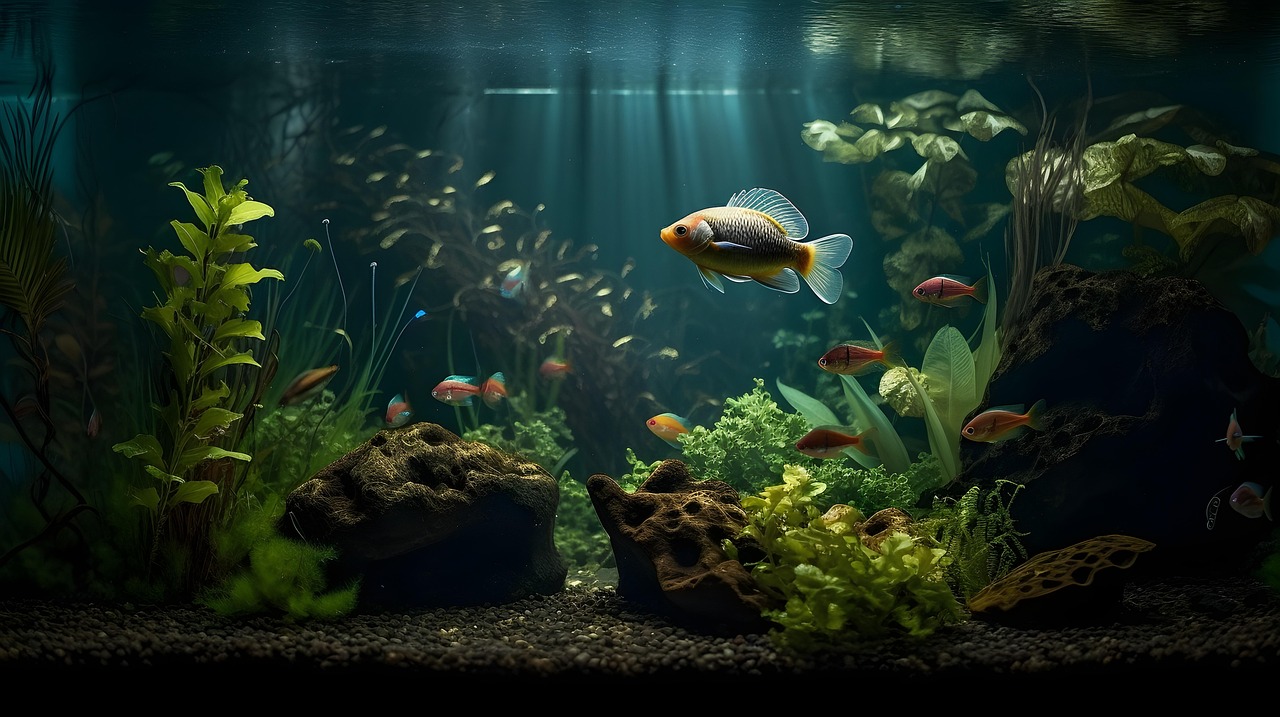
Stocking a community tank for the first time feels like walking into a buffet with no portion control — everything looks tempting, but putting the wrong things together ends badly. A reliable beginner community tank stocking guide helps you choose species that share water parameters, temperament and space requirements so the tank stays peaceful long-term. Gensou Aquascaping at 5 Everton Park, Singapore, has helped countless first-time fishkeepers get this right over the past two decades.
Start With Your Tank Size
The tank volume you have dictates everything. A 60-litre tank supports a modest community; a 100–120 litre setup opens up far more options. The common “one centimetre of fish per litre” rule is a rough starting point, but it falls apart quickly — a 10 cm pleco produces far more waste than ten 1 cm ember tetras. Think in terms of bioload, territorial needs and swimming space rather than simple length calculations. For most beginners, we recommend a 90 × 30 × 36 cm tank (roughly 95 litres) as the minimum for a satisfying community.
Water Parameters in Singapore
PUB tap water is soft (GH 2–4), pH neutral around 7.0, and treated with chloramine. This suits the majority of popular tropical community fish — tetras, rasboras, corydoras, gouramis and small catfish all thrive in soft, slightly acidic to neutral water. Always condition tap water before adding it to the tank. If you plan to keep livebearers like guppies, endlers or mollies, supplement with mineral salts to raise GH to 6–8, as these fish prefer slightly harder water. Room temperature in Singapore (28–32 °C) matches the upper range of most tropical species, so a heater is usually unnecessary unless you run air-conditioning constantly.
Choose Fish by Water Layer
A well-stocked community occupies three layers. Top-dwellers include hatchetfish and surface-feeding killifish. Mid-water schooling fish — tetras, rasboras, danios — form the visual centrepiece. Bottom-dwellers like corydoras catfish, kuhli loaches and otocinclus clean the substrate and add movement to the lower zone. Selecting at least one species per layer fills the tank visually and reduces territorial overlap.
Reliable Starter Species
These species tolerate Singapore’s warm, soft water and coexist peacefully:
Trigonostigma heteromorpha (harlequin rasbora) — school of eight to ten, mid-water, extremely peaceful. Paracheirodon innesi (neon tetra) — school of ten or more, striking colour, prefers slightly cooler water so keep in a shaded spot. Corydoras habrosus or C. pygmaeus — school of six to eight, bottom-dwelling, stays small. Otocinclus vittatus — group of four to six, best algae eater for a planted community. Trichopsis pumila (sparkling gourami) — trio, mid to top, peaceful and fascinating. These five species together comfortably fit a 90-litre planted tank without overstocking.
Species to Avoid as a Beginner
Common plecos (Pterygoplichthys) grow to 30–45 cm and will outgrow any beginner tank. Chinese algae eaters become aggressive with age. Tiger barbs nip fins relentlessly. Oscars and other large cichlids are not community fish despite sometimes being sold as such. Red-tailed black sharks need at least 150 litres of floor space and bully slower tankmates. Bala sharks reach 25 cm and are too active for anything under 200 litres. Research maximum adult size before purchasing — fish shops sometimes sell juveniles without mentioning final dimensions.
Stocking Order and Timing
Add fish gradually after the nitrogen cycle is complete. Start with the hardiest species — corydoras or rasboras — and wait two weeks before introducing the next group. This gives the biological filter time to adjust to the increasing bioload. Introduce the most territorial or visually dominant species last so they cannot claim the entire tank before others settle in. Never add all your fish on the same day; a sudden bioload spike can crash water quality even in a cycled tank.
How Many Is Too Many?
A practical formula for a planted, filtered tank: stock to about 60–70% of the theoretical maximum and leave room for growth. If your filter is rated for 100 litres, your tank is 95 litres and well-planted, a total of 25–30 small fish (under 4 cm adult size) is a reasonable ceiling. Test nitrate weekly — if it consistently exceeds 20 ppm before your water change day, you are either overstocked or underfiltered. A beginner community tank stocking guide should always err on the conservative side; you can add more fish later, but you cannot easily remove an ammonia spike.
Feeding a Mixed Community
Different species eat at different levels. Use a quality flake or micro-pellet for mid-water fish, sinking wafers or pellets for bottom-dwellers, and occasional frozen bloodworms or daphnia as a treat. Feed once or twice daily, only as much as the fish consume within two minutes. Overfeeding is the fastest path to poor water quality and algae blooms in a new community tank.
Observation and Adjustment
Watch your fish daily during the first month. Fin-nipping, colour fading, hiding and gasping at the surface are warning signs. Some combinations that look compatible on paper fail in practice because of individual temperament. Be prepared to rehome a problem fish. Having a spare 20-litre tank on hand gives you flexibility to quarantine or separate when needed.
Building a community tank is one of the most enjoyable parts of the hobby, provided you plan the stocking before you shop. Visit Gensou Aquascaping for personalised stocking recommendations based on your exact tank size and water conditions.
Related Reading