
Harlequin Rasbora Care Guide: Schooling Beauty for Community Tanks
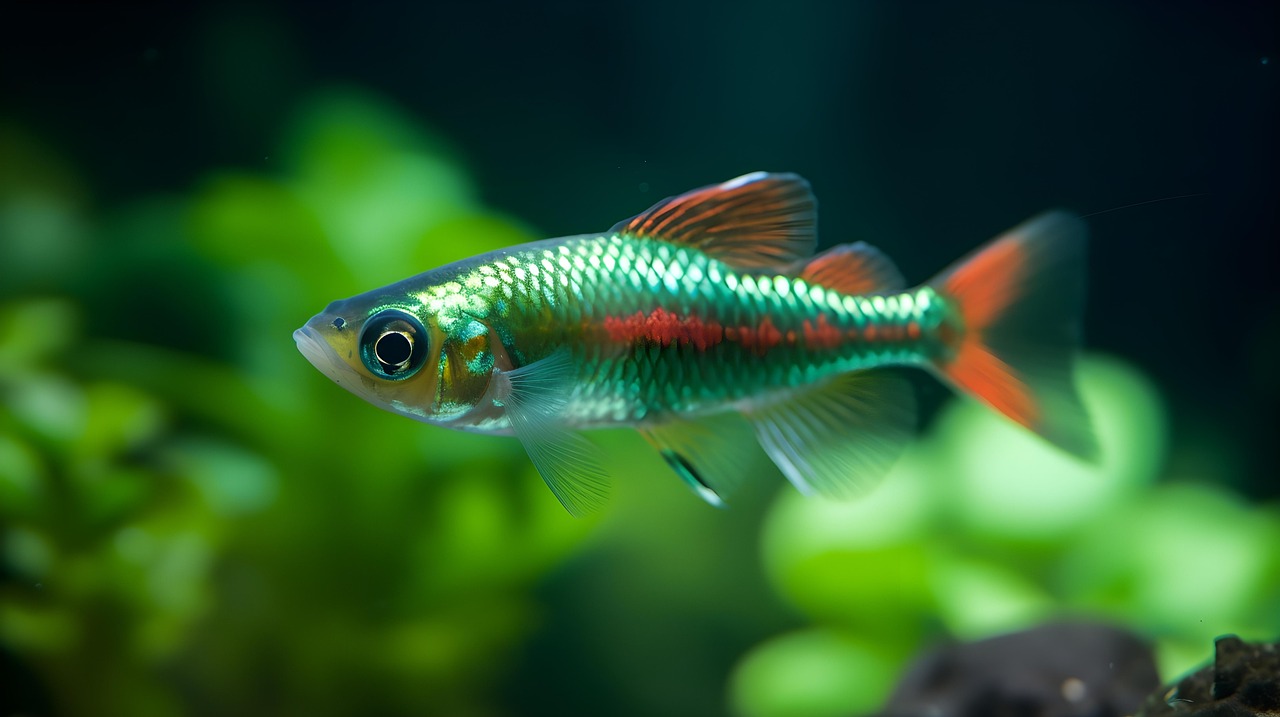
The harlequin rasbora (Trigonostigma heteromorpha) is one of the most recognisable and beloved fish in the freshwater hobby. Its coppery-orange body marked with a distinctive black triangular patch has graced community aquariums for over a century. For Singapore aquarists, harlequin rasboras hold a special appeal — these fish are native to Southeast Asia, thriving naturally in the warm, soft waters of Malaysia, Singapore’s own forests (historically), Thailand and Sumatra. This familiarity with our regional conditions makes them an excellent choice for local hobbyists. This guide sits inside our broader Freshwater Aquarium Complete Beginner Hub reference.
Appearance
The harlequin rasbora’s appearance is instantly recognisable. The body is a warm coppery-pink to orange colour, with a bold, roughly triangular black marking (sometimes described as a pork-chop shape) on the rear half of the body, extending from beneath the dorsal fin to the base of the caudal fin. The fins are translucent with a faint pinkish tinge.
Adults reach 4 to 5 centimetres in length, making them a medium-sized community fish — large enough to hold their own in a mixed tank but small enough for moderate-sized aquariums. Their body is laterally compressed (flattened side to side), giving them an elegant profile when viewed from the front. Males tend to be slightly slimmer with a more defined black patch that has a sharper lower edge, while females are rounder-bodied, particularly when carrying eggs.
Origin and Natural Habitat
Harlequin rasboras are native to the Malay Peninsula, Sumatra and parts of southern Thailand. They inhabit slow-moving forest streams and swamp forests where the water is soft, acidic and stained brown by humic substances from decomposing plant matter. The peat swamp forests of Peninsular Malaysia are classic harlequin rasbora habitat.
This Southeast Asian origin is significant for Singapore aquarists. These fish evolved in conditions very similar to what we experience locally — warm, humid tropical environments with soft, acidic water. While our PUB tap water is treated and somewhat harder than their natural habitat, the temperature alignment is near perfect.
Historically, harlequin rasboras could be found in the freshwater streams and swamp forests of Singapore itself, though habitat loss has largely eliminated wild populations on the island. The fish available in local shops are almost entirely captive-bred, making them hardier and more adaptable than their wild counterparts.
Water Parameters
Captive-bred harlequin rasboras are adaptable fish, but they show their best colours and behaviour in conditions that reflect their natural habitat.
| Parameter | Ideal Range | Notes |
|---|---|---|
| Temperature | 23 – 28 °C | Comfortable at Singapore ambient temps |
| pH | 5.5 – 7.5 | Slightly acidic to neutral preferred |
| GH | 2 – 12 dGH | Soft to moderately hard |
| KH | 1 – 8 dKH | Adaptable |
| Ammonia / Nitrite | 0 ppm | Standard requirement |
| Nitrate | Below 20 ppm | Regular water changes essential |
In Singapore, harlequin rasboras do well with dechlorinated PUB tap water. For optimal colouration, adding Indian almond leaves or a piece of Malaysian driftwood provides beneficial tannins that soften the water and mimic their natural peat swamp conditions. This is one species where tannin-stained water genuinely enhances both health and appearance.
Tank Requirements
Harlequin rasboras are active swimmers that need adequate horizontal space. They occupy the middle water column primarily, with occasional excursions to the top and bottom.
Tank Size
- Minimum: 60 litres for a school of 8 to 10
- Ideal: 80 to 120 litres for a school of 12 to 20
- Community setup: 100 litres or more when keeping with other species
Setup Elements
- Substrate: Dark substrates enhance their coppery colour. Aquasoil works well if you are also growing plants
- Plants: A mix of open swimming areas and densely planted zones. Harlequins appreciate cover but also need room to swim as a group. Broad-leaved plants like Cryptocoryne are historically associated with harlequin rasbora habitats and serve as spawning sites
- Hardscape: Driftwood creates a natural Southeast Asian biotope. Roots, branches and leaf litter all contribute to an authentic environment
- Lighting: Moderate — bright enough for plant growth but with shaded areas provided by floating plants or tall background stems
- Flow: Low to moderate. These fish come from slow-moving waters and do not appreciate strong currents
Schooling Behaviour
Harlequin rasboras are one of the better schooling species available to freshwater aquarists. While not as tightly disciplined as rummy nose tetras, they form a more cohesive group than many other small community fish.
In a proper school of 10 or more, harlequins swim together in loose formation, frequently changing direction as a group. The effect of a dozen or more coppery fish moving in unison through a planted aquascape is genuinely impressive. Smaller groups tend to scatter, with individual fish losing confidence and hiding among plants.
Recommended School Sizes
- Minimum: 8 (below this, they become nervous and reclusive)
- Good: 12 to 15
- Stunning: 20 or more — a large school in a well-designed aquascape is a centrepiece display
Male harlequins occasionally engage in brief, harmless sparring displays where they flare at each other and circle — this is normal social behaviour and does not require intervention.
Feeding
Harlequin rasboras are undemanding omnivores that accept virtually any appropriately sized food. They feed primarily in the mid-water column, catching food as it drifts past.
Recommended Diet
- Staple: Quality tropical flakes or small pellets
- Protein supplements (2-3 times weekly): Frozen brine shrimp, daphnia, bloodworms
- Live foods: Baby brine shrimp, daphnia, mosquito larvae — particularly beneficial for conditioning breeders
- Plant matter: Spirulina-based flakes or blanched vegetables occasionally
Feed twice daily in small amounts. Harlequins are enthusiastic eaters and will readily consume whatever is offered, so moderation is important to prevent overfeeding and maintain water quality.
Tank Mates
Harlequin rasboras are peaceful, well-mannered community fish that mix well with a wide range of species.
Excellent Companions
- Corydoras catfish — a classic pairing of mid-water and bottom-dwelling fish
- Neon tetras and cardinal tetras — similar size and temperament
- Otocinclus catfish — peaceful algae eaters
- Honey gouramis — gentle Southeast Asian centrepiece fish
- Kuhli loaches — another Southeast Asian native, excellent bottom-dwelling companion
- Cherry shrimp and Amano shrimp — compatible and useful
- Nerite snails — algae control without bothering fish
Avoid
- Large or aggressive cichlids
- Tiger barbs and other habitual fin nippers
- Very large fish that could view harlequins as food
A Southeast Asian biotope community featuring harlequin rasboras, kuhli loaches, honey gouramis and Cryptocoryne plants is one of the most natural and visually cohesive setups you can create. For help designing a biotope aquarium, explore Gensou’s custom aquarium services.
Breeding
Breeding harlequin rasboras in captivity is achievable but requires patience and specific conditions. Unlike many egg-scattering tetras and rasboras, harlequins deposit their eggs on the undersides of broad-leaved plants — a distinctive breeding behaviour.
Breeding Setup
- Water: Very soft (GH 1-3), acidic water (pH 5.5-6.0). Use a high proportion of RO water with peat extract
- Temperature: 26 to 28 °C
- Spawning plants: Broad-leaved Cryptocoryne or Anubias — the female deposits eggs on the underside of leaves
- Lighting: Dim
- Tank: 20 to 30 litres, with a mature sponge filter
The Spawning Process
Condition a pair (or a small group of one male to two females) with live foods for two weeks. When ready, the male performs a courtship dance, circling and displaying to the female. The female selects a suitable leaf — typically a Cryptocoryne — and turns upside down to deposit a few adhesive eggs on its underside. The male immediately fertilises them. This process is repeated over several hours, with a total of 50 to 100 eggs deposited across multiple leaves.
Remove the adults after spawning. Eggs hatch in 24 to 36 hours. The fry are tiny and should be fed infusoria for the first week, then newly hatched baby brine shrimp. Breeding success rates are often low, which is why captive-bred harlequin rasboras command a higher price than mass-bred species.
Related Species and Colour Variations
The genus Trigonostigma contains several species that are closely related to the harlequin rasbora, each with its own distinct appearance:
| Species | Common Name | Key Difference |
|---|---|---|
| T. heteromorpha | Harlequin rasbora | Classic — coppery body, large triangular patch |
| T. espei | Lambchop rasbora | Slimmer body, narrower marking, more orange |
| T. hengeli | Glowlight rasbora | Brighter neon orange outline to the marking |
| T. somphongsi | Somphong’s rasbora | Critically endangered, virtually absent from trade |
The lambchop rasbora (T. espei) is increasingly popular and arguably even more attractive than the classic harlequin. Its slimmer body and warm orange tones give it a more refined appearance, and it has identical care requirements. If you find them available at your local shop, they are well worth considering as an alternative.
Frequently Asked Questions
Do harlequin rasboras need a chiller in Singapore?
In most cases, no. Harlequin rasboras tolerate up to 28 °C comfortably, which aligns well with Singapore’s typical indoor temperatures. In an air-conditioned room or during cooler monsoon months (November to January), they are perfectly comfortable. During the hottest periods, a clip-on cooling fan is useful insurance, but a chiller is generally unnecessary for this species.
How long do harlequin rasboras live?
With proper care, harlequin rasboras typically live 5 to 8 years, with some individuals reaching 10 years. Factors that promote longevity include stable water quality, a balanced diet, appropriate temperature, a large enough school for social comfort, and a stress-free environment with compatible tank mates.
Can I keep harlequin rasboras with bettas?
This combination can work but depends entirely on the individual betta’s temperament. Some bettas coexist peacefully with harlequins, while others chase and harass them. If attempting this pairing, use a tank of at least 40 litres with dense planting to break sight lines, introduce the rasboras first, and observe the betta’s behaviour closely after introduction. Be prepared to separate them if the betta is aggressive.
Why are my harlequin rasboras hiding?
Hiding usually indicates stress. The most common causes are an insufficient school size (keep at least 8), aggressive tank mates, overly bright lighting without shaded areas, recent introduction to a new tank (give them a few days to settle), or poor water quality. Ensuring a large enough group is the single most effective way to bring shy harlequin rasboras out into the open.
Whether you are planning a Southeast Asian biotope or a lush planted community tank, harlequin rasboras are a superb choice. Gensou provides end-to-end aquarium design and maintenance services to help Singapore hobbyists create and sustain beautiful aquatic displays. Get in touch to discuss your project.
Related Reading



