
Flame Anthias Care Guide: Keeping Pseudanthias ignitus in Cooler Reefs
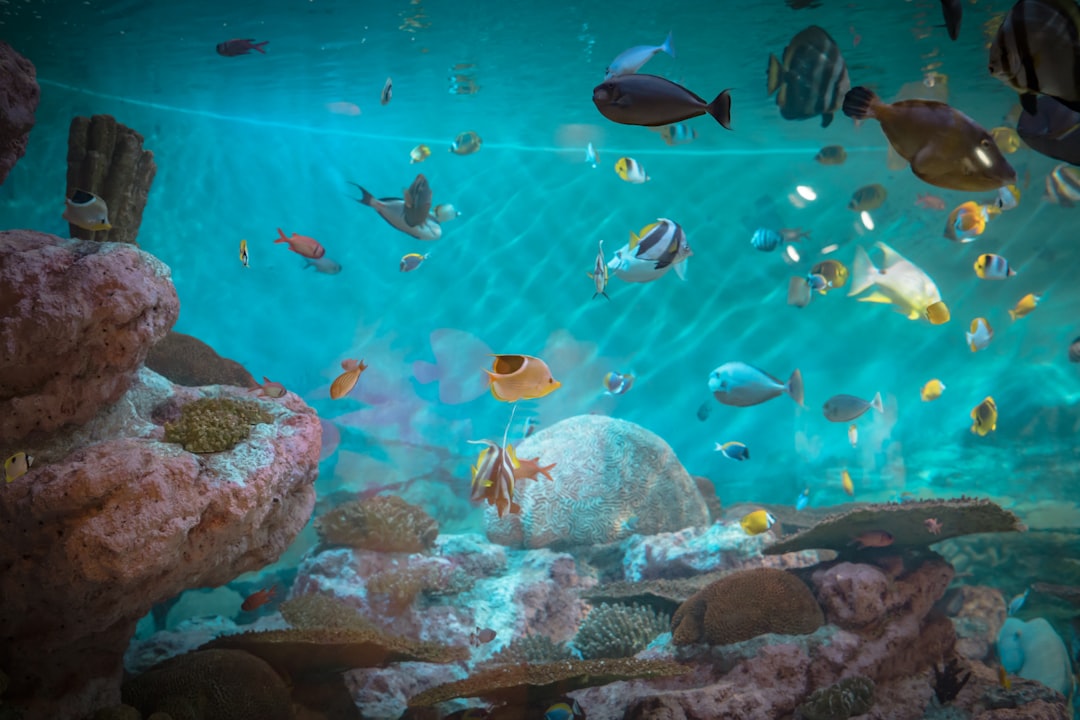
Few reef fish bring colour to a display like a shoal of Pseudanthias ignitus streaming through Acropora branches. This flame anthias care guide is written for Singapore reefers who want to keep this Maldivian beauty thriving in tropical flats where chiller costs and stable alkalinity decide success. Drawing on over 20 years of reef experience, the team at Gensou Aquascaping in Everton Park has assembled the practical points that matter most. Flame anthias demand cooler water than most local marine fish, and getting that right is half the battle.
Species Profile and Natural Habitat
Flame anthias hail from the Maldives and southern Indian Ocean, patrolling outer reef drop-offs between 15 and 40 metres. Water there sits around 24 to 26 degrees Celsius, noticeably cooler than our typical Singapore reef. Males grow to roughly 10 cm with a deep orange body, violet dorsal markings, and an extended filament on the first dorsal spine. Females are smaller, around 7 cm, and flush yellow-orange with subtle magenta streaks on the face.
In the wild they form large harems of one dominant male and up to a dozen females, picking zooplankton from the current all day. Replicating even a fraction of that grouping indoors changes their behaviour completely.
Tank Size and Reef Layout
A trio fits a 300 litre reef, but a proper harem of one male and five or six females needs 450 litres or more with plenty of open swimming space above the rockwork. Anthias swim in the upper third of the tank and sulk if confined. Build your aquascape low and wide, leaving at least 25 cm of clear water column across the top.
Random-flow powerheads producing 20 to 30 times turnover keep them active without exhausting smaller females. Strong overhangs and caves are essential for sleeping, because without them the dominant male harasses subordinates through the night.
Water Parameters and Cooling in Singapore
Temperature is the non-negotiable parameter. Flame anthias decline rapidly above 26 degrees Celsius and struggle long-term above 25. In a Singapore HDB flat with ambient room temperature around 30 degrees, expect your chiller to run hard. A quality 1/4 HP unit paired with a 300 litre reef will add roughly 40 to 60 SGD per month to your electricity bill under typical PUB tariffs.
Keep salinity at 1.025, alkalinity between 8 and 9 dKH, calcium 420 to 440 ppm, and nitrates under 5 ppm. These fish are sensitive to swings, so consistency beats perfection. A titanium heater set to 23 degrees acts as a safety backup in case the chiller fails and helps prevent overcooling.
Feeding a Planktivore
Anthias metabolism is built for constant grazing. One meal a day is not enough. Target three to four small feedings using a rotation of Mysis, enriched frozen brine, calanus, and quality micro-pellets. Nutramar Ova and LRS Reef Frenzy are excellent staples sold at most Singapore marine shops including Iwarna Aquafarm and Fishy Business.
If work keeps you out all day, an auto-feeder dropping pellets at midday is not optional, it is survival equipment. Weight loss in anthias is extremely hard to reverse.
Harem Dynamics and Sex Change
All flame anthias are born female. When the dominant male is removed or dies, the largest female transitions within two to four weeks, developing brighter colouration and the extended dorsal filament. Introduce all females together as juveniles, wait two to three months, then add the male last. Adding a second male almost guarantees lethal aggression.
Tankmates and Reef Compatibility
Flame anthias are fully reef-safe and ignore corals, clams, and inverts. Pair them with peaceful species such as fairy wrasses, tailspot blennies, and small cardinalfish. Avoid aggressive dottybacks, triggers, and large angels. In cooler reefs they also mix well with bartlett anthias, though the two species occupy similar niches and may compete during feeding.
Where to Buy and Pricing
Flame anthias appear irregularly in Singapore, usually via Iwarna Aquafarm, Aquarium Iwarna, or specialist importers at Pasir Ris Farmway. Expect 180 to 260 SGD for females and 320 to 420 SGD for coloured-up males. Quarantine for four weeks in a dim tank with PVC hides and prophylactic treatment is essential, as wild-caught anthias commonly carry flukes and velvet.
Related Reading
- Lyretail Anthias Care Guide
- Bartlett Anthias Care Guide
- Fairy Wrasse Care Guide
- How to Set Up a Reef Tank in an HDB Flat
- Calcium and Alkalinity Stability in Reef Tanks
Conclusion
Flame anthias reward the reefer willing to commit to chiller running costs, frequent feeding, and a properly structured harem. Keep them cool, keep them fed, and keep them in numbers, and Pseudanthias ignitus will repay you with constant colour and motion. If you are weighing up the chiller investment or planning your first Maldivian-themed reef, drop by Gensou Aquascaping at 5 Everton Park for a chat before you commit.
Drawn to the warm tones of flame anthias in a reef? For a freshwater equivalent, see our flame tetra care guide for an easygoing schooling species.



