Aquarium Cafe Design Singapore: F and B Installation Guide
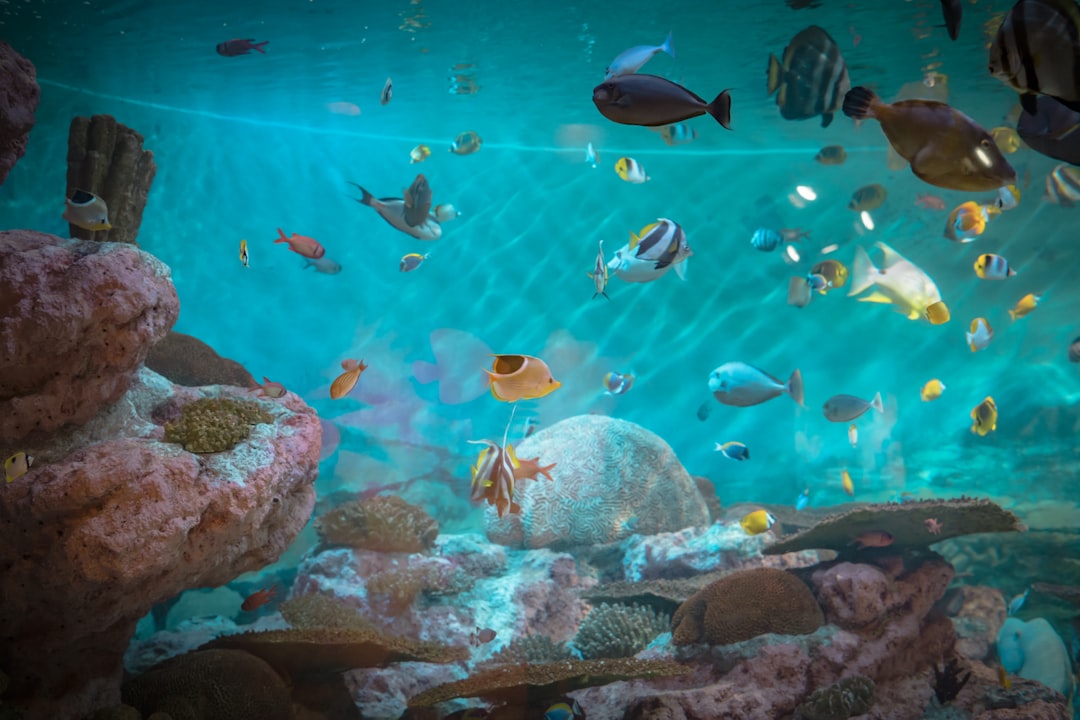
A well-executed display tank turns a mid-tier kopitiam into an Instagram destination, but cafes that skip the permits and weight calculations usually pay twice. Aquarium cafe design Singapore projects sit at the intersection of F&B licensing, BCA structural rules, and NEA hygiene expectations, and each one can delay your opening if ignored. This guide from Gensou Aquascaping at 5 Everton Park walks operators and designers through what actually matters when you commission a feature tank for a cafe space. Expect realistic SGD figures, not showroom fantasy.
Quick Facts
- Typical cafe feature tank: 500-1500 litres, $18,000-$65,000 SGD installed
- Floor loading: most HDB shop units tolerate 5 kPa; a 1000 L tank concentrates 2500 kg over 2 m² — slab check required
- NEA: tanks must not be sited above food prep or exposed service counters
- URA: external-facing tanks visible from five-foot way may trigger signage/display rules
- Monthly maintenance contracts: $400-$1200 SGD depending on volume and livestock
- Power draw: budget 300-600 W continuous for a mid-size planted display
- Noise: cafe ambient 60-70 dB masks a sump; avoid air pumps near banquette seating
Licensing and Regulatory Path
Before livestock enters the building, your F&B licence application should already reference the tank. NEA’s Food Hygiene Officers will not approve a counter where splash, drip, or maintenance runoff can reach an open food surface, so the tank needs a clear exclusion zone from prep areas and ice wells. If your cafe occupies a conservation shophouse, URA may require approval for any installation visible from the street, including internal tanks within two metres of the glass facade.
Landlords in malls like Jewel, Funan, and Orchard Central typically demand a BCA-endorsed structural letter for anything over 800 kg concentrated load. A Professional Engineer’s endorsement costs $800-$2500 and saves weeks of delay during fit-out.
Weight, Floor Loading, and Structural Reality
A filled 1500 litre tank with rock hardscape and cabinet weighs around 3.5 tonnes once water, substrate, and sump are included. Strata-title shop units, rental HDB shops, and upper-floor cafes in older buildings were rarely designed for this. Gensou’s standard practice is to spread load with a 25 mm marine ply plinth and request the PE to confirm the slab rating. On raised timber platforms common in cafe fit-outs, we add a steel-reinforced base so deflection stays under 3 mm at full load.
Sizing the Tank to the Space
Cafe sightlines matter more than sheer volume. A 180 cm long, 60 cm deep rimless display at seated eye level (around 90 cm floor-to-waterline) reads better than a 250 cm tank tucked behind a counter. Keep the tank visible from the ordering queue — that is where customers photograph it. For narrow shophouses under 3.5 m wide, consider a 120 x 50 x 50 cm peninsula at 300 litres, which gives three-sided viewing without blocking service flow.
Livestock That Suits a Public Space
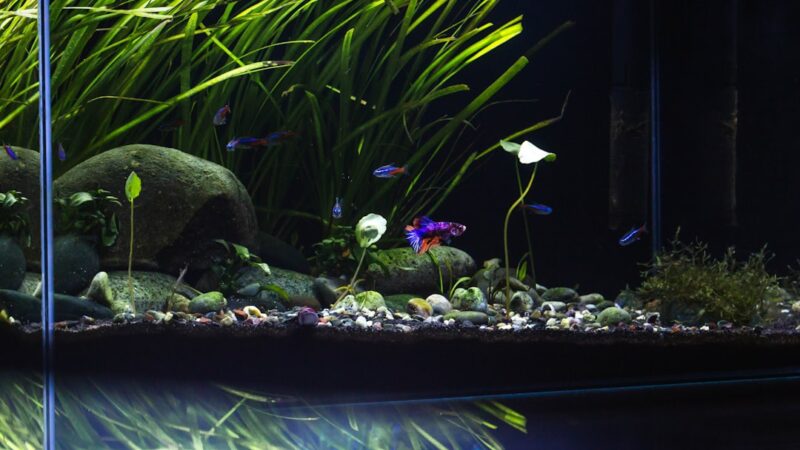
Cafe environments experience temperature swings from aircon cycling, door traffic, and occasional 32°C afternoons when customers prop the door open. Hardy community species handle this best: cardinal tetras, harlequin rasboras, and Trigonostigma espei form visible schools that read well from a distance. Avoid shy fish that hide during peak hours, and skip any species requiring dim lighting since cafe tanks run bright to compete with ambient light. Nuisance algae appears within three weeks without a cleanup crew, so amano shrimp (Caridina multidentata) and nerite snails are non-negotiable.
Equipment Choices That Survive Commercial Use
Residential-grade kit fails under cafe duty cycles. Specify a canister or sump rated at 2-3 times display volume turnover, a controllable DC return pump for quiet operation, and an auto top-off system so staff are not topping up with tap jugs each morning. A UV steriliser at 9-18 W reduces disease risk in a tank that cannot be quarantined on short notice. Lighting should run on a commercial timer with photoperiod matched to operating hours — 7 to 8 hours daily is plenty.
Realistic SGD Pricing Tiers
A 300 litre planted peninsula with cabinet, filtration, lighting, livestock, and installation lands at $12,000-$18,000 SGD. A 600 litre feature wall with aquasoil, hardscape imported from Aquaflora or Tropica, and Twinstar lighting runs $25,000-$40,000. For 1200-1500 litre statement pieces with integrated cabinetry and custom CO2, budget $55,000-$90,000. These figures exclude the PE letter, electrical works, and any builder’s intervention.
Maintenance Contracts and Daily Operations
Your staff should handle feeding twice daily and glass wiping — nothing else. A fortnightly professional service covers water changes, filter cleaning, livestock health checks, and algae management. Expect $400-$600 monthly for tanks under 500 litres and $800-$1200 for larger systems. Skipping this and assigning the barista to top up is how cafes end up with green water by month three.
Common Design Mistakes
Three errors repeat across Singapore F&B installs: placing the tank under an aircon vent (causes temperature shock and evaporation spikes), building cabinetry without a removable front panel (blocks every future repair), and specifying a tank taller than staff can reach without a ladder. Plan for maintenance access from day one — a 90 cm cabinet height with top clearance of 40 cm makes weekly service possible.
Related Reading
Aquarium for Bakery Cafe Singapore
Aquarium for Restaurant Singapore
Aquarium Maintenance Cost Singapore
Custom Aquarium Build Guide Singapore
Aquarium Stand Weight Guide