Reef Tank Lighting Beginner Guide: LED, T5, Hybrid
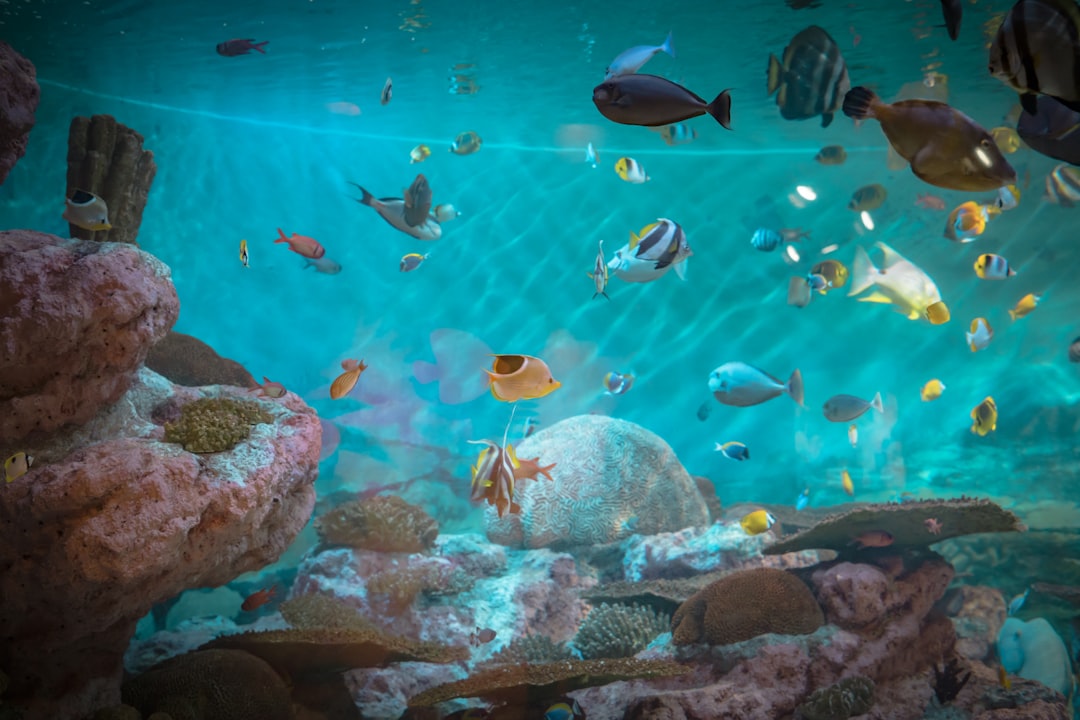
Reef lighting is both the single largest ongoing cost and the most visible feature of a reef tank — you stare at it every evening. Pick the wrong fixture and corals pale, growth stalls, and you waste months wondering why the frags you paid SGD 80 each for look worse than the LFS display. This reef tank lighting beginner guide from Gensou Aquascaping at 5 Everton Park covers the three fixture classes running on SG reefs today, with honest PAR numbers, SGD pricing, and coverage recommendations for HDB-sized tanks. The physics is spectral coverage; the art is in the programme.
What Corals Need From Light
Corals host zooxanthellae — symbiotic algae that photosynthesise and supply the coral’s energy. These algae peak absorption at 400-450 nm (royal blue and violet) with smaller bands in red and green. A fixture loaded with 6500 K “daylight” white looks bright to your eye but delivers poor spectral coverage for coral growth. Reef-specific fixtures deliver a heavy blue spectrum with balanced secondary channels for colour pop, measured in PAR (photosynthetically active radiation) at substrate level. This guide sits inside our broader Saltwater Reef Tank Master Guide reference.
LED Fixtures — The Current Standard
Modern reef LEDs dominate SG reefkeeping for good reason: programmable spectrum, low heat output in warm ambient, 50,000 hour lamp life, and precise PAR control. AI Prime 16HD (SGD 580) is the nano standard, covering 60 cm tanks with full tunable spectrum. Radion XR15 Gen 6 (SGD 1,100) delivers flagship-grade output for 60-75 cm tanks carrying SPS. Kessil A360X (SGD 920) offers the “disco ball” shimmer effect beloved on LPS and softie displays.
Budget LED Options
Chihiros WRGB II Slim Reef (SGD 380) punches well above its price on nano tanks up to 60 cm, delivering reef-appropriate spectrum with app control. Noopsyche K7 Pro II (SGD 280 on Shopee) covers 45 cm nanos with adequate PAR for softies and LPS. For beginners unsure of the long-term commitment, the Chihiros route saves SGD 200 versus entry AI fixtures while growing LPS and softies reliably. Upgrade only becomes necessary if you commit to SPS.
T5 Fluorescent — Still Relevant
T5 HO fluorescent bars remain the SPS colour benchmark decades after LEDs arrived. ATI Sunpower 6×54 W (SGD 850-1,000) delivers wide spread and smooth spectrum with zero disco shimmer — many SPS keepers swear corals colour up faster under T5 than any LED. Downsides: bulbs need annual replacement at SGD 25 each, heat output runs 30-40% higher than LED, and spectrum is fixed by bulb selection. On SG electricity tariffs, T5 costs roughly SGD 120 more per year than equivalent LED.
Hybrid Fixtures — Best of Both
Hybrid lights combine T5 bars with LED pucks in one housing. ATI Straton (SGD 1,400) and Giesemann PulzarUX 6×39 W + 6×60 W (SGD 1,800) integrate programmable LED channels with dimmable T5. You get T5’s smooth spectrum and shimmerless spread, plus LED programmability and shimmer when wanted. Pricey, but the SPS reefer’s preferred solution above 90 cm tank length. Overkill for a beginner’s first 60 cm reef.
Coverage and Tank Length
Point-source LEDs like AI Prime and Radion cover roughly 45 cm square at proper mounting height. A 120 cm reef needs two Radions or three Primes, mounted 25-30 cm above the water surface. T5 bars cover the full length but at fixed spread. For a beginner 60 cm tank, one AI Prime or Chihiros WRGB II Reef handles the whole display. A 90 cm tank needs two AI Primes or one Radion XR30. Under-lighting is the most common beginner error on tanks above 75 cm.
PAR Targets by Coral Type
Softies and LPS thrive at 75-150 PAR on the rockscape. Mixed reef with some SPS wants 150-300 PAR on upper rockwork. SPS-dominant tanks target 300-450 PAR at the top of the scape where acros sit. A PAR meter (Apogee MQ-510 SGD 550 for quantum-corrected SG water reading) is the only way to verify actual delivery. Beginners burning corals from ramping lights too hot too fast is the number-one reason frags stay pale and turn brown.
Programme Ramping in SG
A typical reef day runs 10-11 hours of total light: 1 hour dawn blues, 6 hours full spectrum, 1 hour dusk blues, then moon. Ramp over 60 minutes at both ends, never snap on/off. SG reefers with open-top tanks often cap peak intensity below 80% to reduce heat load on the chiller — the last 20% of LED output is mostly heat with marginal PAR gain. Acclimate new corals by running lights at 50% peak for 2 weeks before gradual ramp-up.
Heat and the Chiller Relationship
Every watt of light energy eventually becomes heat in the tank. A 150 W LED fixture on a 200 litre reef pushes 2-3°C temperature rise during photoperiod without active cooling. Chiller sizing must account for light wattage plus skimmer and pumps — a Hailea HC-130A (SGD 450) handles a nano with a 60 W Prime; a mid-size 400 litre reef with a Radion XR30 plus powerheads needs a JBJ Arctica DBE-200 (SGD 1,200). Closed canopies compound this — stick to open-top or slotted lids.
Budgeting and Realistic Spending
A first-year reef under 60 cm budget: Chihiros WRGB II Reef SGD 380, suspension mount SGD 60. Total SGD 440. Mid-commitment 75 cm reef: AI Prime 16HD SGD 580, suspension SGD 80, total SGD 660. Full-commitment 90 cm SPS reef: two Radion XR15 Gen 6 SGD 2,200, RMS arms SGD 200, total SGD 2,400. Lighting is where beginners should spend before cutting on skimmers or flow — pale corals from weak light is a slow visible failure.
Related Reading