
Aquascape Ideas Complete Guide: From Iwagumi to Jungle
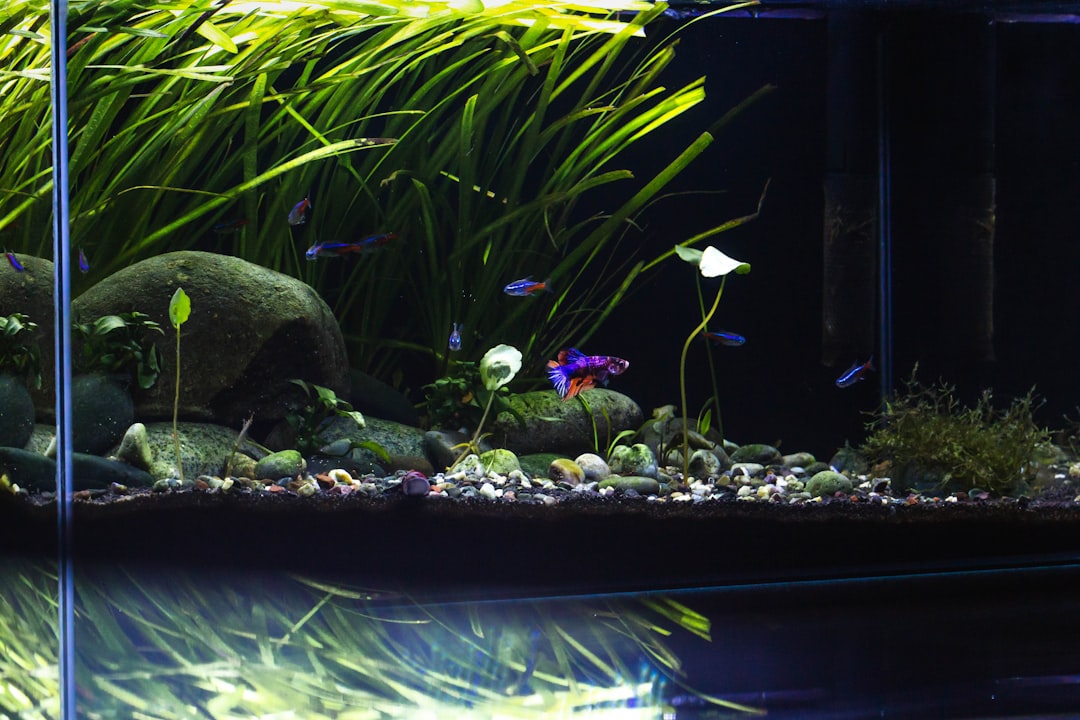
An aquascape is design with biology — rocks and wood arranged like sculpture, plants grown like a garden, fish chosen like accent colours on a palette. This aquascape ideas complete guide from Gensou Aquascaping at 5 Everton Park walks through the major schools and the variations that actually fit Singapore HDB living rooms and condo consoles, from 45 cm Iwagumi cubes to 120 cm jungle displays. Every layout below names specific plants, stone and stocking so you can recreate it rather than just admire it on Pinterest. Start with one style, commit to its discipline, and your tank stops looking like a random collection of wet things.
Classic Iwagumi Minimalism
The purest aquascape — three or five stones in odd-numbered composition, a single carpeting plant, nothing else. Use Seiryu for sharp blue-grey lines or Ohko for softer earth tones from the rock and stone range. Monte Carlo or dwarf hairgrass forms the carpet, ember tetras or green neon tetras as the only livestock. High light, CO2 injection, weekly water changes — technically demanding but visually the cleanest scape in the hobby.
Nature Aquarium Triangle
Takashi Amano’s signature composition — a tall mass on one side tapering to open substrate on the other, with foreground, midground and background planted like a hillside garden. A 60 cm tank takes three Ohko stones stacked to form a triangular mass on the left, hairgrass transitioning to Rotala on the slope, and open sand on the right as visual breathing space. Add a school of Hemigrammus rhodostomus swimming in and out of the planted mass to complete the illusion.
Nature Aquarium Concave
Two masses — one on each side — with a valley down the middle drawing the eye into imagined depth. Place Manten or Seiryu stone clusters at both ends, plant the sides with staggered stem plants, and leave the central sand path open. The Manten rock carries the grey-blue weathered look that suits this layout. Works brilliantly on 90 cm footprints because the valley needs horizontal space to read.
Dutch Street Layout
Rows of stem plants in graduated heights and contrasting colours, arranged in diagonal “streets” that draw the eye across the tank. Red Ludwigia, green Rotala rotundifolia, pink Limnophila aromatica, purple Pogostemon erectus — each species forms a distinct block. No hardscape, no negative space, just disciplined horticulture. Requires weekly trimming and a full CO2 rig.
Jungle Overgrowth
Controlled chaos — large-leaf swords, tall Vallisneria, java fern Windelov on knotted driftwood, Cryptocoryne wendtii carpet, and floating Amazon frogbit creating dappled light. Lower maintenance than Dutch or Iwagumi because growth is the aesthetic. A pair of blue rams and a school of rummynose tetras sit comfortably in this kind of scape.
Diorama and Forced Perspective
Modern competition-style scapes that mimic above-water landscapes — miniature mountains with distant valleys, forests with winding paths. Use fine-grained sand for “roads”, Bucephalandra and Riccardia moss for “forests” on driftwood branches, and small-leaf plants like Rotala ‘Mini Butterfly’ for foreground “trees”. Spider wood from Qian Hu’s driftwood section bends into tree-branch shapes naturally.
Wabi-Kusa Open-Top
A wide, shallow open tank or large bowl, a central mound of emersed plants rising above the waterline, a single betta or small shrimp colony below. No filter, relies on dense planting. Works beautifully on dining tables or café counters where the scape becomes almost a living bouquet.
Biotope Blackwater
Scientific rather than decorative — replicate a specific habitat down to substrate, leaf litter, pH and stocking. A Southeast Asian peat swamp uses sand, spider wood, ketapang leaves, alder cones, and stocks chili rasboras and licorice gouramis. Amber water, tannin-stained, low pH. This is as close as Singapore tap water gets to wild habitat with only minor adjustments.
Paludarium and Riparium Hybrids
Submerged scape with emersed plants rising above the waterline on driftwood or ledges. Singapore’s humidity keeps the terrestrial half lush without extra misters. Fits rimless tanks with a Sim Lim custom acrylic lid cut for ventilation — a quiet 60 cm paludarium reads like a living terrarium in a condo study.
Matching Style to Skill and Space
Beginners suit jungle or low-tech nature scapes, because forgiving plant choices cover mistakes. Intermediate scapers tackle concave or triangular nature layouts. Iwagumi and Dutch demand discipline, CO2, high light and weekly trimming — advanced territory. Pick the style your schedule can actually support, and the tank will still look good next year.
Related Reading



