Iwagumi Aquascape Complete Guide: Japanese Minimalism
Iwagumi is the purest expression of Japanese aquascaping — three to five stones, a carpet plant and nothing else. No driftwood, no busy midground, no distractions. Takashi Amano codified the style in the 1990s, borrowing directly from traditional Japanese rock garden composition, and it remains the first discipline ADA contest judges look for. This iwagumi aquascape complete guide from Gensou Aquascaping at 5 Everton Park covers the Oyaishi-Fukuseki-Soeishi composition rules, carpet plant choices for Singapore’s soft PUB tap water, and the stone sourcing reality for hobbyists who cannot import Seiryu directly. This guide sits inside our broader Planted Tank Complete Hub reference.
Origins of the Style
Iwagumi literally translates as “rock formation” and draws from Heian-era Japanese garden tradition. Amano formalised its aquatic application across his 1994 Nature Aquarium World volumes, using odd-numbered stone groupings to avoid visual symmetry and carrying Zen asymmetric balance — known as fukinsei — into the tank. A proper iwagumi is not decoration; it is spatial poetry with three or five voices reading as one mountain range.
The Three Stone Roles
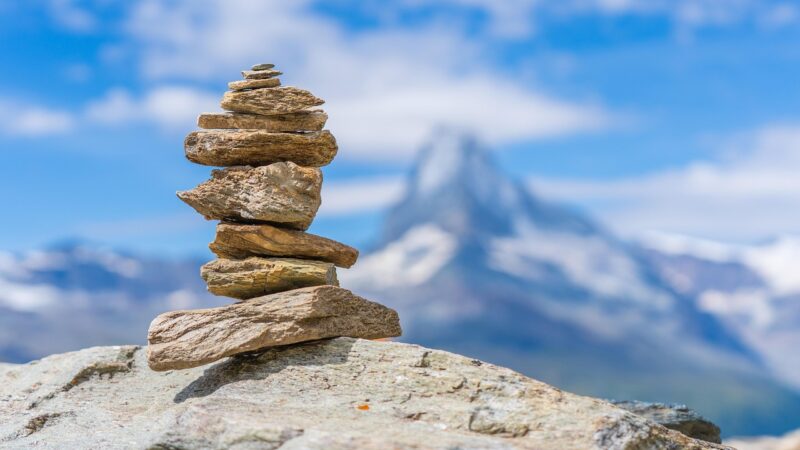
Every iwagumi has an Oyaishi (father stone) as the largest and tallest, set off-centre at the golden ratio point. Fukuseki (second stone) stands about 60% the height of Oyaishi, leaning toward the father stone to reinforce the composition. Soeishi (third stone) sits smallest, roughly 40%, acting as counterweight. Five-stone compositions add Suteishi (sacrificial stones) at 20-30% height, almost buried, to create foothill suggestion.
Seiryu, Manten and Ohko Substitutes
Classic iwagumi uses Seiryu — a blue-grey limestone with sharp veining — but Singapore imports are scarce. Manten rock at Iwarna Aquafarm sells for SGD 8-15 per kg and mimics Seiryu’s vertical striation beautifully. Carousell occasionally lists imported Seiryu offcuts at SGD 20-40 per piece. Ohko dragon stone (SGD 12-20 per kg) has a rougher face and suits more organic iwagumi variants. Browse options through rock and stone and the dedicated Manten rock listing.
Stone Selection Principles
Choose stones from the same geological family — mixing Seiryu with lava rock reads as chaotic. All pieces should share a directional grain so the eye follows vein lines from Oyaishi down to Soeishi. Avoid perfectly symmetric stones; the best iwagumi pieces have one obvious “face” and a defined base. Budget 7-9 kg of total stone for a 60 cm tank; a 90 cm Oyaishi keystone alone runs 3-4 kg.
Substrate and Slope
Nutrient-rich aquasoil is mandatory for iwagumi because carpet plants are heavy root-feeders. JUN Aquasoil Brown provides slow-release ammonia for the first 8 weeks and lasts 18-24 months. Slope substrate from 3 cm at the front glass to 8-10 cm at the rear to give depth perception. Terracing with fine gravel helps hold the slope; place stones first, then soil in around their bases.
Carpet Plant Options
Hemianthus callitrichoides “Cuba” (HC) is the iwagumi carpet benchmark — 1-2 cm tall, dense pearl-like leaves, needs strong light and CO2. Monte Carlo (Micranthemum tweediei) is the easier alternative, tolerating mid-light and reaching 3-4 cm. Glossostigma elatinoides grows taller at 4-5 cm and suits larger 90 cm tanks. Eleocharis acicularis “mini” brings grass texture for a subtly different look. Source tissue-culture cups from live plants for algae-free starts.
Lighting and CO2 Requirements
Iwagumi is firmly high-tech. A 60 cm tank needs 35-45 W of quality planted LED (Chihiros WRGB II Pro, ADA Solar RGB) and 30-35 bubbles per minute of pressurised CO2 from CO2 systems. Photoperiod starts at 6 hours during the first month to control algae, ramping to 8-9 hours once the carpet fills in. PAR at substrate should hit 50-80 for HC Cuba, 30-50 for Monte Carlo.
Planting the Carpet
Separate tissue-culture HC into pea-sized clumps with tweezers from aquascaping tools. Plant at 1.5-2 cm spacing in a grid across the intended carpet zone — tighter spacing wastes stock, looser spacing lets algae colonise bare soil. Dry-start method is a cheat code: plant emersed on wet soil, seal the tank with cling film for 4-6 weeks until the carpet is dense, then flood. Survival jumps from 60% to 95%.
Livestock That Honours the Minimalism
A uniform school of 20-30 small fish reinforces the zen aesthetic — cardinal tetras, ember tetras, galaxy rasboras or a single species of harlequins. Never mix three species in an iwagumi; the eye reads chaos. A clean-up crew of Amano shrimp (10-15 in a 60 cm) and two nerite snails handles algae without disrupting the scape. Avoid plecos and bottom-feeders — they uproot HC daily.
Maintenance Rhythm
Weekly 50% water changes for the first month strip excess nutrients and prevent algae during the ugly phase. Drop to 30% after the carpet locks in. Prune the carpet with curved scissors every 2-3 weeks, never letting it exceed 3 cm — untrimmed HC detaches from substrate in sheets. Dose liquid micros daily and macros 2-3 times weekly using the Estimative Index method; root tabs go in around the stones every 3 months.
Related Reading